
Anemia Mukt Bharat (AMB) Abhiyaan
- 01 Jul 2026
In News:
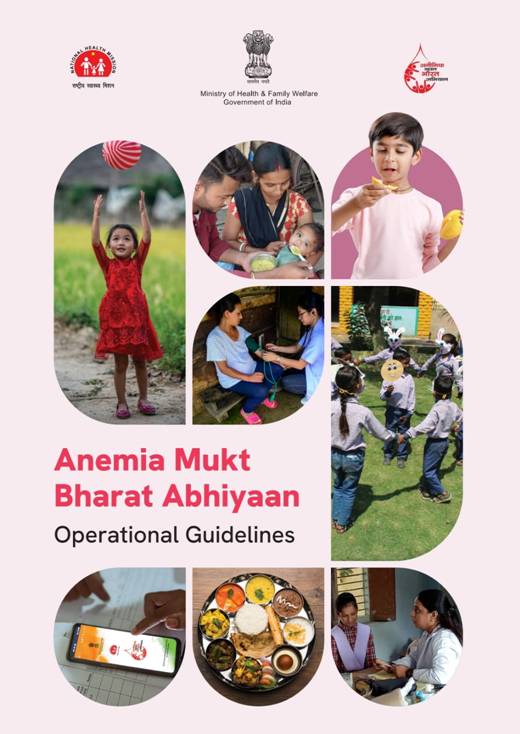
The Ministry of Health and Family Welfare has released the Anemia Mukt Bharat (AMB) Abhiyaan Operational Guidelines, marking eight years of the flagship initiative. The revised guidelines introduce a strengthened strategy aimed at accelerating India's efforts to reduce anemia through improved screening, treatment, digital monitoring, and community participation.
What is Anemia Mukt Bharat (AMB)?
Launched in 2018 under the National Health Mission (NHM), Anemia Mukt Bharat (AMB) is the Government of India's flagship programme to reduce the prevalence of anemia through a life-cycle approach. The programme addresses both nutritional and non-nutritional causes of anemia by targeting vulnerable population groups through preventive, diagnostic, and therapeutic interventions.
Key Highlights of the Revised Operational Guidelines
The revised guidelines mark a significant shift in India's anemia control strategy by moving from prophylactic (preventive) care towards therapeutic care, emphasising early diagnosis, active case management, and continuous follow-up.
A major reform is the expansion of the earlier 6×6×6 strategy into a 7×7×7 framework by introducing:
- 7th Beneficiary Group:Low Birth Weight (LBW) babies (0–6 months) to break the intergenerational cycle of anemia.
- 7th Intervention:"Eating Right", promoting regular consumption of diversified, iron-rich diets.
- 7th Institutional Mechanism: A digitally integrated Monitoring and Evaluation Framework to improve accountability and programme monitoring.
The programme also adopts the T4 Strategy—Test, Treat, Talk and Track—replacing the earlier T3 (Test, Treat, Talk) model. The addition of "Track" ensures systematic referral, follow-up, and continuity of care for beneficiaries.
For severe anemia and cases unresponsive to oral iron therapy, particularly among pregnant and lactating women, the guidelines institutionaliseIntravenous Iron Therapy using Ferric Carboxymaltose (FCM) and Iron Sucrose as standard treatment options.
Digital Integration
To strengthen programme implementation, a centralized Anemia Mukt Bharat Portal will integrate data from multiple health platforms, including:
- JANANI Portal (maternal health screening)
- RBSK Portal (Rashtriya Bal SwasthyaKaryakram)
- U-WIN Portal (Universal Immunization Programme)
This integrated digital architecture will facilitate real-time monitoring, beneficiary tracking, and evidence-based decision-making.
Major Interventions under AMB
The programme adopts a comprehensive strategy to address anemia across different stages of life. Key interventions include:
- Prophylactic Iron-Folic Acid (IFA) supplementation through age-specific, colour-coded tablets and syrups.
- Biannual deworming under the National Deworming Day (NDD) conducted every year on 10 February and 10 August for children and adolescents, while pregnant women receive deworming during the second trimester through antenatal care.
- Food fortification by promoting iron and folic acid-fortified foods in government nutrition programmes.
- Screening and treatment of non-nutritional causes of anemia such as malaria, haemoglobinopathies (including Sickle Cell Disease), and fluorosis.
- Community mobilisation through Jan Bhagidari and Jan Chetna campaigns to promote behavioural change and awareness.
What is Anemia?
Anemia is a condition in which the blood has insufficient healthy red blood cells or haemoglobin to adequately transport oxygen to body tissues. Although iron deficiency is the most common cause, anemia may also result from deficiencies of folate, Vitamin B12, and Vitamin A, as well as chronic diseases and inherited blood disorders.
According to the World Health Organization (WHO):
- Women of reproductive age are considered anaemic when haemoglobin is below 12 g/dL.
- Children below five years are considered anaemic when haemoglobin is below 11 g/dL.
Health Impacts
Anemia has serious consequences across all age groups. It causes fatigue, reduced physical capacity, impaired cognitive development, weakened immunity, and lower productivity.
Among pregnant women, anemia significantly increases the risk of:
- Maternal mortality.
- Premature delivery.
- Low Birth Weight (LBW) babies.
- Perinatal mortality.
The condition disproportionately affects:
- Children below five years.
- Adolescent girls.
- Pregnant and postpartum women.
Extent of the Problem
According to NFHS-5, anemia continues to be a major public health challenge in India:
- 67.1% of children below five years.
- 59.1% of adolescent girls (15–19 years).
- 57.0% of women (15–49 years).
- 52.2% of pregnant women.
Globally, the WHO estimates that anemia affects:
- 40% of children aged 6–59 months.
- 37% of pregnant women.
- 30% of non-pregnant women aged 15–49 years.