
Birth Anniversary of Lokmata Ahilyabai Holkar
- 02 Jun 2026
In News:
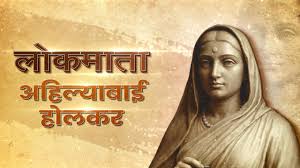
Prime Minister Narendra Modi recently paid tribute to Ahilyabai Holkar on her birth anniversary, remembering her wisdom, compassion, administrative excellence, and unwavering commitment to public welfare. Revered as “Lokmata” (Mother of the People), Ahilyabai Holkar remains one of India's most celebrated women rulers and a timeless symbol of inclusive governance, social reform, and cultural renaissance.
Early Life and Rise to Power
- Ahilyabai Holkar was born on 31 May 1725 in Chondi, in present-day Maharashtra. In 1733, she married Khanderao Holkar, the son of Malhar Rao Holkar, ruler of Malwa and founder of the Holkar dynasty.
- Her life took a dramatic turn when Khanderao Holkar died during the Siege of Kumher Fort in 1745. Although she intended to commit sati, Malhar Rao Holkar prevented her from doing so and instead trained her in military affairs, administration, and statecraft. Following the death of Malhar Rao Holkar in 1766 and her son Male Rao Holkar in 1767, Ahilyabai assumed the reins of the Malwa kingdom and became the ruler of Indore in 1767.
- She appointed Tukoji Rao Holkar as commander of her army and shifted the capital of the Holkar state to Maheshwar, which emerged as a major centre of administration, trade, and culture.
Contributions to Governance and Society
Ahilyabai Holkar's reign is widely regarded as a golden period of peace, prosperity, and welfare-oriented governance. She emphasized justice, efficient administration, and public welfare, earning immense respect from her subjects.
A pioneering social reformer, she promoted:
- Women's education
- Widow remarriage
- Opposition to harmful social practices such as sati
- Welfare and upliftment of marginalized communities, including the Bhil and Gond tribes and lower castes
Her governance reflected a rare combination of social sensitivity and administrative efficiency, making her one of the earliest champions of inclusive development in India.
Cultural and Religious Legacy
Ahilyabai Holkar played a transformative role in preserving India's civilizational heritage. During the 18th century, she undertook the reconstruction and restoration of several important Hindu pilgrimage sites.
Her most notable achievements include:
- Reconstruction of the Kashi Vishwanath Temple
- Restoration of the Somnath Temple
Both temples are among the most revered Jyotirlingas of Lord Shiva. She also sponsored the construction and renovation of numerous temples, ghats, wells, and dharamshalas across the Indian subcontinent.
A great patron of arts and literature, she supported scholars and poets such as:
- Khushali Ram
- Moropant
- Anantaphandi
Economic Contributions
Ahilyabai transformed Maheshwar and Indore into thriving centres of commerce and trade. She actively promoted the Maheshwari weaving industry, leading to the emergence of the famous Maheshwari Sarees, which today enjoys Geographical Indication (GI) tag recognition.
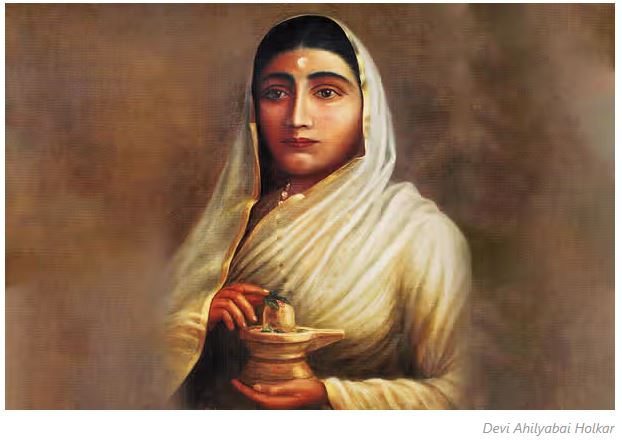
Ahilyabai Holkar
- 31 May 2025
In News:
On the 300th birth anniversary of Maharani Ahilyabai Holkar, the Prime Minister will participate in the Mahila Sashaktikaran Maha Sammelan in Bhopal to honour her enduring legacy.
Historical Background
- Born: 31 May 1725
- Ruled: Malwa region (1767–1795) as part of the Maratha Confederacy
- Dynasty: Holkar
- Capital: Maheshwar (now in Madhya Pradesh)
Initially serving as a regent, Ahilyabai Holkar became the sovereign ruler after her husband and father-in-law’s deaths. Her rule is widely regarded as the golden age of the Holkar dynasty.
Governance and Administrative Reforms
- Ahilyabai was known for her equitable justice system, exemplified by the sentencing of her own son for a capital crime.
- She abolished discriminatory practices, such as the law confiscating property from childless widows.
- Courts for dispute resolution were established, and she remained accessible to the public, holding daily audiences.
- She broke gender norms by not observing purdah, a rare move for female rulers of the time.
Military Leadership
- Trained under Malhar Rao Holkar, she led her forces in battle.
- Appointed Tukoji Rao Holkar (Malhar Rao’s adopted son) as army commander.
- In 1792, she engaged a French officer, Chevalier Dudrenec, to modernize her army by establishing four battalions.
Cultural and Architectural Contributions
- A patron of literature and arts, she invited scholars like Moropant, Ananta Gandhi, and Khushali Ram to her court.
- Promoted craft and industry, notably founding the Maheshwar textile industry—famous today for Maheshwari sarees.
- Commissioned the construction and restoration of hundreds of Hindu temples and dharamshalas across India.
- Her most iconic act was the renovation of the Kashi Vishwanath Temple in Varanasi in 1780.
- Also contributed to infrastructure development, including roads, wells, forts, and rest houses.
Titles and Recognition
- Referred to as ‘Punyashlok’, meaning one as pure as sacred chants.
- British historian John Keay called her the ‘Philosopher Queen’.
Demise and Succession
Ahilyabai passed away on 13 August 1795 at the age of 70. She was succeeded by Tukoji Rao Holkar, who later abdicated in favour of Jaswant Rao Holkar. Jaswant Rao remained the last Holkar to rule independently until 1804.