
16th-Century Vijayanagara Inions Unearthed in Seshachalam Forest
- 26 Jun 2026
In News:
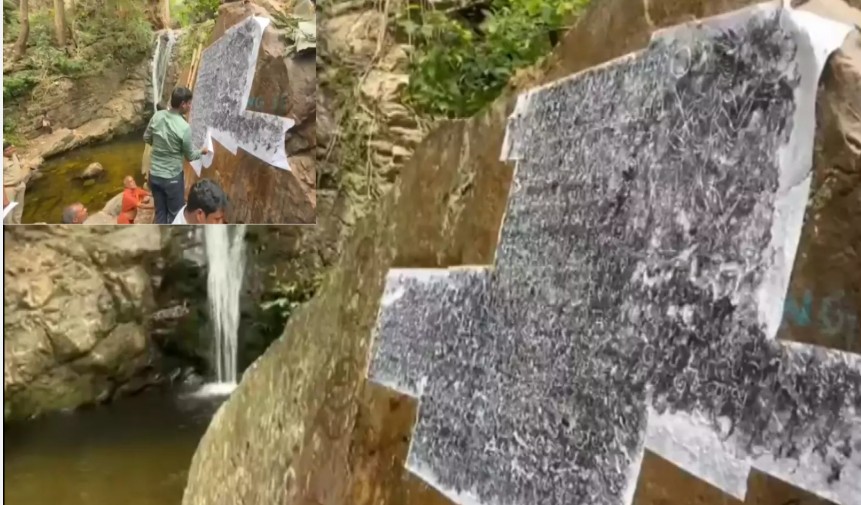
The Archaeological Survey of India (ASI) has discovered three 16th-century inions belonging to Vijayanagara king Sadasivaraya in the Seshachalam Forest of Tirupati district, Andhra Pradesh.
About the Discovery
- The newly discovered inions have been precisely dated to 31 July 1554 CE and are engraved in Telugu, Tamil, and Kannada, reflecting the linguistic diversity and administrative inclusiveness of the Vijayanagara Empire.
- The inions primarily record the religious activities of King Sadasivaraya, who visited Papavinasa on a pilgrimage and commissioned the construction of a Shiva temple and a monastery (Mutt) during his visit.
Key Findings
The inions throw light on several aspects of Vijayanagara administration and religious patronage:
- They record the construction of a Shiva temple and Mutt at Papavinasa under the patronage of King Sadasivaraya.
- They mention the assignment of tax revenues (Kaanika) and land grants from two villages to finance daily worship, food offerings (Naivedya), and temple maintenance at the GudimallamParasurameswara Temple.
- The inions also refer to SadasivaBasavanna Odeya, a disciple of LingannaVodaya of Bendekeri, and Peddayya, son of Chembhaperiya, who served as the composer and temple accountant.
These records provide valuable insights into the financial management and institutional support extended to temples during the Vijayanagara period.
Historical Significance of Gudimallam Temple
The inions reaffirm the importance of the GudimallamParasurameswara Temple, widely regarded as India's oldest surviving Shiva temple, dating back to the 2nd century BCE.
The discovery establishes that the shrine continued to receive direct royal patronage, land grants, and financial support under the Vijayanagara rulers despite the growing prominence of nearby pilgrimage centres such as Tirumala. It highlights the continuity of Shaivite worship and the preservation of ancient sacred sites during the medieval period.
Vijayanagara Empire (1336–1646 CE)
The Vijayanagara Empire was one of the greatest empires of medieval South India. It was founded in 1336 CE by Harihara I and Bukka Raya I of the Sangama Dynasty on the banks of the Tungabhadra River. The empire served as a major political, cultural, and economic power for over three centuries.
The empire was ruled successively by four dynasties:
- Sangama
- Saluva
- Tuluva
- Aravidu
Its golden age was witnessed during the reign of Krishnadevaraya (Tuluva Dynasty), who is remembered for his military successes, efficient administration, literary contributions, and patronage of the Ashtadiggajas, the celebrated group of eight Telugu scholars. He also authored the famous Telugu work Amuktamalyada.
Administration
The Vijayanagara administration was characterised by the Nayankara (Amara-Nayaka) System, under which military chiefs were granted Amaram (land assignments) in return for maintaining troops, collecting revenue, and rendering military service to the king. This decentralised system played a crucial role in maintaining the empire's vast territorial control.
Art and Architecture
The empire marked the culmination of the Dravidian style of temple architecture. Important architectural features included:
- Massive Raya Gopurams
- Ornate monolithic pillars
- Spacious Kalyana Mandapas
- Intricately carved temple complexes
Prominent examples include the Vittalaswamy Temple and the Hazara Rama Temple at Hampi, a UNESCO World Heritage Site.
Foreign Accounts
The prosperity and cosmopolitan nature of the empire have been documented by several foreign travellers and envoys, including:
- Ibn Battuta (Morocco)
- Nicolo de Conti (Italy)
- Abdur Razzak (Persia)
- Domingo Paes (Portugal)
Their accounts describe the empire's flourishing trade, urban planning, military strength, and immense wealth.
Decline
The empire suffered a decisive setback after the Battle of Talikota (Rakshasi-Tangadi) in 1565, where the combined forces of the Deccan Sultanates defeated the Vijayanagara army. Although the empire continued under the Aravidu Dynasty, it gradually declined, bringing an end to one of the most remarkable phases of South Indian history.