
Accelerator Mass Spectrometry (AMS) Dating
- 12 Jul 2025
In News:
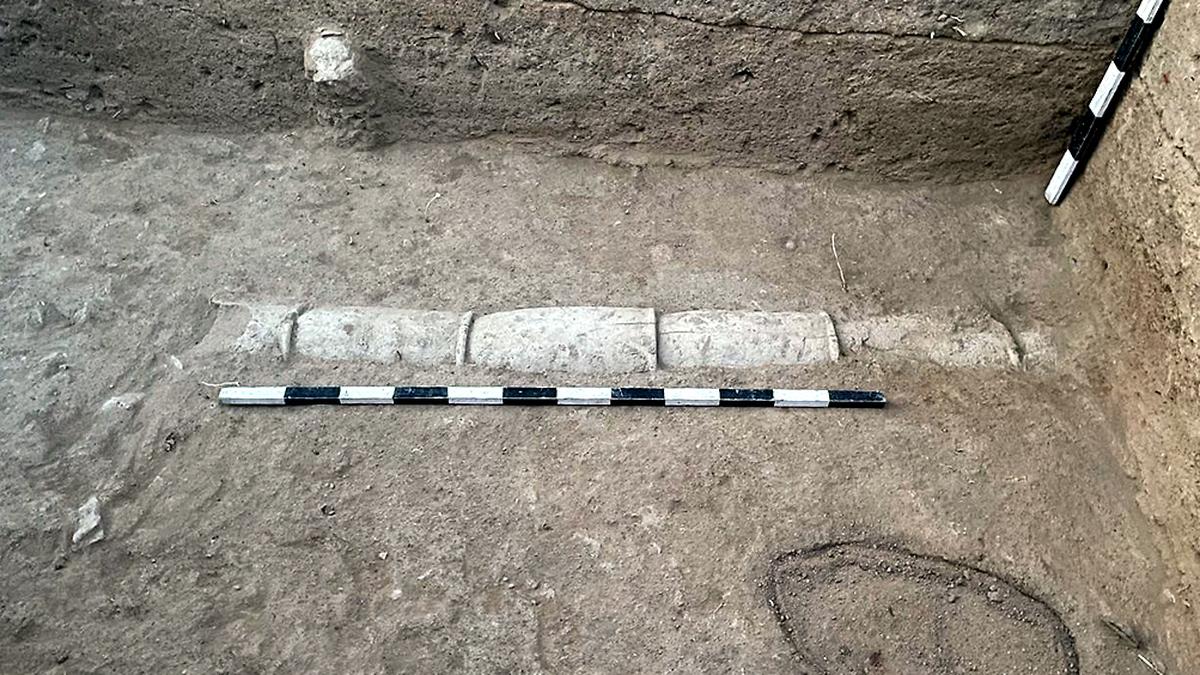
The Tamil Nadu State Department of Archaeology (TNSDA) has sent 23 charcoal samples from seven archaeological excavation sites to the Beta Analytic Laboratory in the United States for Accelerator Mass Spectrometry (AMS) dating, aiming to establish an accurate chronology of the cultural deposits unearthed during the 2024–25 excavation season.
Key Discoveries:
- Keeladi: Over 500 antiquities, 100 inscribed potsherds, including red-slipped ware with fish motifs.
- Porpanaikkottai: From 11 trenches, 1,792 antiquities such as pottery, glass beads, and bangles were found.
- Tirumalapuram: A stone slab chamber with urn burials—a first in Tamil Nadu’s megalithic excavation record.
What is AMS Dating?
- A high-precision radiocarbon dating technique that measures the Carbon-14 (C-14) content in archaeological samples.
- Unlike conventional radiometric methods, AMS counts individual atoms of C-14, not their radioactive decay.
How It Works:
- Sample Preparation: Organic samples like charcoal are chemically treated and converted to graphite.
- Ion Generation: A cesium beam bombards the graphite, generating negatively charged carbon ions.
- Acceleration: Ions are propelled by a tandem electrostatic accelerator to high kinetic energies.
- Stripping & Detection:
- Ions pass through a stripping chamber to become positively charged.
- Magnetic fields separate C-12, C-13, and C-14 isotopes based on mass.
- C-14 atoms are counted to calculate the sample’s age.
Advantages of AMS Dating:
|
Feature |
AMS Dating |
Conventional Radiocarbon Dating |
|
Sample Size |
As little as 20 mg |
Requires ≥10 grams |
|
Precision |
Higher – atom-level count |
Lower – based on decay measurement |
|
Time |
Results within hours to days |
1–2 days or more |
|
Destructiveness |
Less destructive, ideal for rare artifacts |
More sample consumed |
|
Sensitivity |
Detects trace C-14 levels in minute samples like seeds, blood, etc. |
Limited sensitivity |
Applications of AMS:
- Archaeology: Dating of charcoal, wood, bones, pottery layers.
- Climate Science: Carbon mapping in marine and sediment systems.
- Geology/Oceanography: Sediment and core dating.
- Biomedical Research: Drug microdosing, tracing labeled compounds.
Kolhapuri Chappals
- 04 Jul 2025
In News:
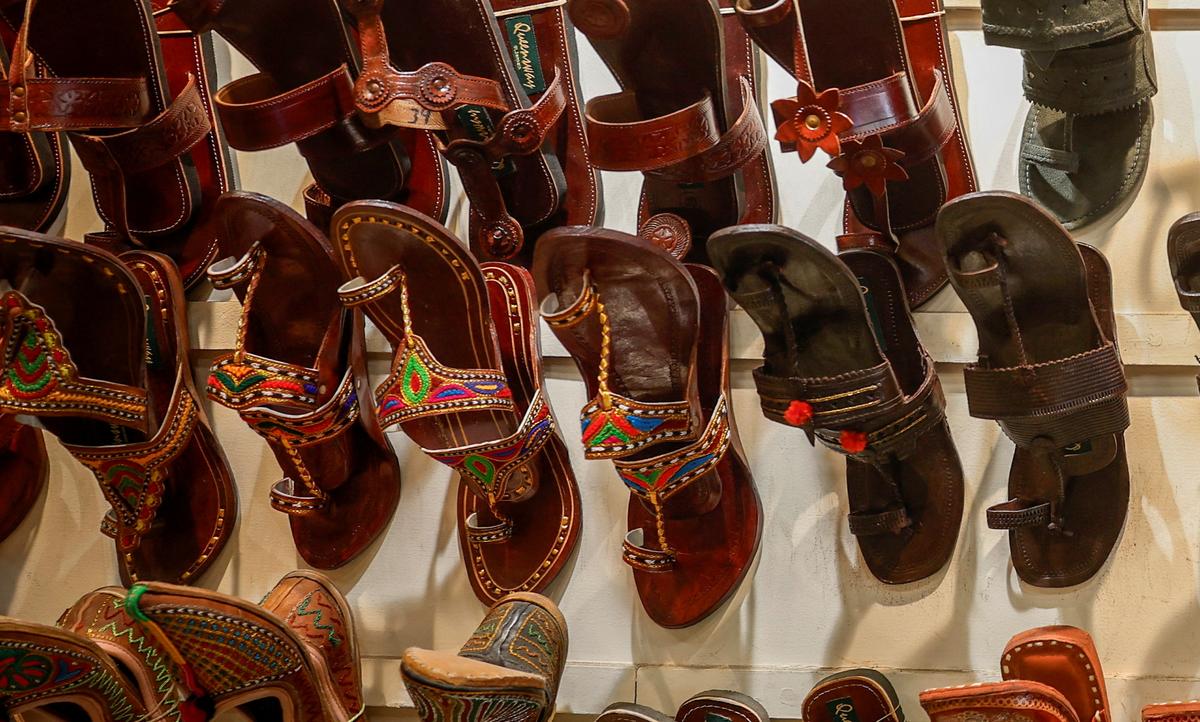
Italian luxury fashion house Prada, after public criticism, has acknowledged that its Men’s Spring/Summer 2026 collection sandals were inspired by India’s traditional handcrafted footwear — the Kolhapuri chappals, a product with Geographical Indication (GI) status.
About Kolhapuri Chappals
Origin:
- Named after Kolhapur city in Maharashtra, India
- Handcrafted tradition dates back to the 13th century
Design & Craftsmanship:
- Made from 100% leather (cow, buffalo, or goat)
- Vegetable-tanned using natural dyes – non-toxic and eco-friendly
- Typicallyopen-toed with a T-strap design
- Traditionally in tan and brown shades with oil, natural, or polish finishes
- Time-intensive craftsmanship – can take up to six weeks per pair
Cultural & Economic Value:
- Recognised under the Geographical Indications (GI) Act of India
- Symbol of sustainable fashion, durability, and local artisanal skill
- Leather molds to feet over time, ensuring custom comfort and longevity
The Controversy: Cultural Appropriation vs Cultural Inspiration
- Criticism emerged after Prada launched sandals resembling Kolhapuris without credit
- Public and media backlash led to acknowledgement of Indian inspiration
- Highlights the importance of:
- Ethical recognition of traditional knowledge and cultural heritage
- Protection of GI-tagged products from unauthorized imitation
- Global awareness of India’s artisanal heritage