
India Re-elected to IMO Council (2026–27 Term)
- 02 Dec 2025
In News:
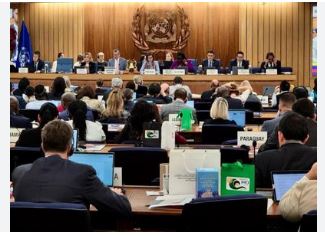
India has been re-elected to the Council of the International Maritime Organization (IMO) in Category B, securing 154 out of 169 votes at the 34th IMO Assembly in London (Nov 2025). This is the second consecutive term in which India has obtained the highest vote tally in its category.
This outcome reflects India’s expanding role in global maritime trade, governance, and sustainability initiatives.
What is the IMO Council?
The IMO Council is the executive organ of the International Maritime Organization, functioning between Assembly sessions.
Key Features
- Constituted under: IMO Convention (1948; in force 1958)
- Election: Every two years by the IMO Assembly
- Total Members: 40 countries
- Divided into three categories (A, B, C)
Category B
- Includes 10 nations with the largest interest in international seaborne trade.
- Current Category B Members:Australia, Brazil, Canada, France, Germany, India, Netherlands, Spain, Sweden, UAE
Functions of the IMO Council
The Council:
- Supervises IMO’s work between Assembly sessions
- Coordinates administrative and financial functions
- Prepares agenda, work programmes, and strategic plans
- Oversees implementation of international maritime conventions
- Promotes cooperation in:
- Maritime safety
- Environmental protection
- Decarbonisation of shipping
- Maritime digitalisation
- Security
- Seafarer welfare
Significance of India’s Re-election
1. Recognition of Maritime Importance
- Reflects India’s growing role in international seaborne trade
- Positions India among leading maritime powers influencing global shipping regulations
2. Policy Influence
India gains a stronger voice in:
- Green shipping and decarbonisation frameworks
- Maritime safety and security norms
- Digital transformation of maritime logistics
- Global standards for sustainable ports and supply chains
3. Alignment with India’s Maritime Vision
- Supports the Maritime Vision 2047 goal of making India a global maritime hub
- Reinforces India’s push for:
- Port-led development
- Modern logistics
- Resilient and smart maritime infrastructure
4. Diplomatic & Strategic Value
- Enhances India’s role in maritime multilateralism
- Strengthens cooperation in the Indian Ocean Region (IOR) and beyond
About the International Maritime Organization (IMO)
|
Aspect |
Details |
|
Established |
By UN Convention (1948); came into force in 1958 |
|
First Session |
1959 |
|
Headquarters |
London, United Kingdom |
|
Specialised Agency of |
United Nations |
|
Objective |
Safe, secure, efficient, and environmentally sound shipping worldwide |
Major Functions of IMO
- Develops global maritime treaties such as:
- SOLAS – Safety of Life at Sea
- MARPOL – Prevention of Marine Pollution
- STCW – Standards of Training, Certification & Watchkeeping
- Regulates:
- Ship design, construction, and operation
- Pollution control from ships
- Seafarer training and certification
- Promotes sustainable maritime transport in line with SDG 14 (Life Below Water)