
Protection & Indemnity (P&I) Insurance Product
- 02 Aug 2026
In News:
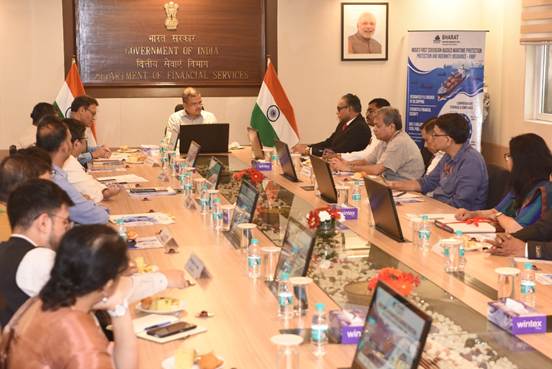
The Department of Financial Services (DFS), Ministry of Finance, launched India's first sovereign-backed Protection & Indemnity (P&I) insurance product under the Bharat Maritime Insurance Pool (BMIP) to strengthen domestic marine insurance and reduce dependence on foreign insurers.
What is the Protection & Indemnity (P&I) Insurance Product?
- The Protection & Indemnity (P&I) Insurance Product is India's first sovereign-backed marine liability insurance designed to provide comprehensive financial protection to shipowners and charterers against third-party liabilities arising during maritime operations.
- It has been designed by The New India Assurance Company Limited and operates under the Bharat Maritime Insurance Pool (BMIP) with sovereign backing.
- The initiative aims to build a self-reliant marine insurance ecosystem, ensure uninterrupted liability coverage for Indian shipping, and reduce dependence on foreign Protection & Indemnity Clubs.
Key Features
- Provides combined indemnity coverage of up to USD 1.5 billion backed by a sovereign guarantee.
- Covers third-party liabilities, including:
- Crew and cargo liabilities
- Marine pollution and oil spill compensation
- Wreck removal expenses
- Supported by a 24×7 global network of port correspondents for legal assistance, emergency response, and claims settlement.
- Expands BMIP coverage beyond Cargo and Hull War Risks to include comprehensive Protection & Indemnity (P&I) liabilities.
About Bharat Maritime Insurance Pool (BMIP)
- The Bharat Maritime Insurance Pool (BMIP) is a sovereign-backed marine insurance mechanism operationalised by the Department of Financial Services (DFS) to provide domestic marine insurance solutions, particularly during periods of geopolitical uncertainty.
- It was initially established to provide Cargo and Hull War Risk Insurance and has now been expanded to include Protection & Indemnity (P&I) Insurance.
Transgender Persons (Protection of Rights) Amendment Bill, 2026

- 16 Mar 2026
In News:
- The Union Government has introduced the Transgender Persons (Protection of Rights) Amendment Bill, 2026 in the Lok Sabha to modify provisions of the Transgender Persons (Protection of Rights) Act, 2019.
- The proposed amendments seek to redefine the term “transgender person” and alter the existing framework of gender recognition, including changes to the right to self-perceived gender identity.
Background: Transgender Persons (Protection of Rights) Act, 2019
The Transgender Persons (Protection of Rights) Act, 2019 was enacted to prohibit discrimination against transgender persons and ensure their welfare, inclusion, and equal access to opportunities in education, employment, healthcare, and public services.
The law was enacted in response to the landmark Supreme Court judgment in NALSA v. Union of India (2014), which:
- Recognised transgender persons as the “third gender”, and
- Affirmed the right to self-determination of gender identity as part of Article 21 (Right to Life and Personal Liberty).
The 2019 Act also introduced provisions for identity certification, welfare schemes, and protection against discrimination.
Key Provisions of the Amendment Bill, 2026
1. Removal of the Right to Self-Perceived Gender Identity: The Bill proposes the deletion of Section 4(2) of the 2019 Act, which currently guarantees the right of transgender persons to self-identify their gender without medical intervention. This change shifts the framework from self-identification to institutional verification.
2. Redefinition of “Transgender Person”
The amendment proposes a narrower definition that includes:
- Socio-cultural identities: Hijra, Kinner, Aravani, Jogta, Eunuch
- Persons with intersex variations
- Individuals with congenital biological variations in sexual characteristics
However, the revised definition excludes persons identifying solely on the basis of self-perceived gender identity or gender fluidity.
The definition also includes individuals forced to adopt transgender identity through coercive practices, such as mutilation, castration, or forced hormonal procedures.
3. Creation of a Medical Authority
- The Bill introduces a Medical Authority (Medical Board) headed by a Chief Medical Officer (CMO) to examine cases related to gender identity certification.
- This authority will provide recommendations before certification is granted.
4. Changes in Certification Procedure
Under the proposed framework:
- The District Magistrate (DM) will issue a transgender certificate only after reviewing the recommendation of the medical authority.
- The earlier system allowed relatively simpler issuance based on declaration.
5. Revision of Gender Certificate After Surgery: Individuals undergoing Sex Reassignment Surgery (SRS) must apply for a revised gender certificate reflecting the updated gender identity. Earlier, such revisions were optional.
6. Reporting Requirement for Hospitals: Hospitals performing SRS procedures will be required to report such operations to the District Magistrate for documentation and regulatory purposes.
7. Change of Name in Official Records: The amendment provides transgender persons the right to change their first name in official documents, subject to the revised certification criteria.
8. Expanded Offences and Punishments: The Bill strengthens penal provisions with graded punishments including imprisonment and fines up to ?5 lakh for offences such as:
- Denial of access to public places
- Forced labour
- Expulsion from homes
- Other forms of discrimination and abuse
Investor Education and Protection Fund Authority (IEPFA)

- 05 Aug 2025
In News:
The Investor Education and Protection Fund Authority (IEPFA), established in 2016 under the Companies Act, 2013, functions under the Ministry of Corporate Affairs (MCA) with the mandate of safeguarding investor interests, refunding unclaimed financial assets, and promoting financial literacy across India.
Mandate and Fund Structure
The Investor Education and Protection Fund (IEPF) consists of amounts that remain unclaimed for seven years, including:
- Unpaid dividends,
- Application money due for refund,
- Matured deposits and debentures,
- Accrued interest on investments,
- Grants and donations received from government or other entities.
The fund is utilized to refund unclaimed shares/dividends to rightful investors and to spread financial awareness among citizens.
Recent Developments: Integrated Portal
IEPFA is in the final phase of testing its Integrated Portal, a unified digital platform aimed at:
- Streamlining claim processes for unclaimed shares/dividends,
- Enhancing accessibility for both investors and companies,
- Integrating stakeholders such as depositories and the Public Financial Management System (PFMS).
Companies have been urged to upload their IEPF-1/7 SRNs with prescribed templates to enable smooth data verification and claim processing.
Key Features of the New System
- Simplified claims for low-value refunds through reduced documentation.
- Integrated Call Center to strengthen grievance redressal and ensure responsive communication with stakeholders.
- Temporary disruptions may occur during transition, but the reforms promise faster, transparent, and investor-friendly outcomes.
Investor Awareness Initiatives
IEPFA also undertakes extensive financial literacy campaigns through programs like:
- Niveshak Didi,
- Niveshak Panchayat,
- NiveshakShivir.
These initiatives empower citizens, particularly in rural and semi-urban areas, to make informed financial decisions and protect themselves from fraud and mismanagement.
Significance
- For Investors: Easier access to unclaimed assets and improved grievance redressal.
- For Companies: Structured compliance framework and digital integration with regulators.
- For Governance: Strengthens India’s financial ecosystem by combining investor protection with financial literacy.
Protection of Interests in Aircraft Objects Bill, 2025

- 04 Apr 2025
In News:
The Protection of Interests in Aircraft Objects Bill, 2025, recently passed by the Rajya Sabha, aims to implement two key international agreements in India’s legal framework:
- Cape Town Convention on International Interests in Mobile Equipment (2001)
- Protocol to the Convention on Matters Specific to Aircraft Equipment
Objective:
To provide legal clarity and security to stakeholders in the aviation leasing industry by integrating global standards into Indian law.
Background:
- India became a signatory in 2008 after Cabinet ratification in 2007.
- The Cape Town Convention addresses complex issues of cross-border leasing and financing of high-value mobile assets like aircraft, helicopters, and engines.
- With over 86.4% of India's 840 commercial aircraft under leasing arrangements, there was an urgent need for a dedicated legal framework.
Key Provisions:
- Directorate General of Civil Aviation (DGCA) is designated as the registry authority.
- Responsible for registration and deregistration of aircraft.
- Creditors must notify the DGCA prior to initiating recovery actions in case of defaults.
- In case of default by airlines:
- Creditors can reclaim aircraft or related equipment within two months, or as per a mutually agreed period.
- Lessors and airlines are required to regularly inform the DGCA about dues and lease activities.
- The central government is empowered to make rules for the implementation of the convention and protocol.
Expected Benefits:
- Enhances legal protection for creditors and lessors.
- Reduces leasing costs by an estimated 8–10%, potentially lowering airfares for consumers.
- Encourages the growth of a domestic aircraft leasing industry, reducing dependence on foreign jurisdictions like Ireland, Singapore, and Dubai.
Civil Aviation Minister’s Remarks:
- The Bill addresses a long-standing legislative vacuum.
- It will bolster investor confidence and attract leasing businesses to India.
- Airfare regulation remains complex and is influenced by multiple factors including fuel prices, leasing charges, and maintenance costs.
Environment Protection (End-of-Life Vehicles) Rules, 2025

- 31 Jan 2025
In News:
MoEFCC Notifies Rules for End-of-Life Vehicles to Minimize Waste and Pollution.
Key Highlights:
Notified by: Ministry of Environment, Forest and Climate Change (MoEF&CC)
Effective from: April 1, 2025
Legal Basis: Environment Protection Act, 1986
Objective: To promote environmentally sound management of end-of-life vehicles (ELVs), enable recycling and reuse of vehicle components, and reduce resource extraction, pollution, and waste generation.
Key Features of the ELV Rules, 2025
1. Scope and Coverage
- Applicable to all vehicle categories including electric vehicles (EVs), e-rickshaws, and e-carts.
- Exempted vehicles: Agricultural tractors, trailers, combine harvesters, and power tillers.
- Exempted waste types: Batteries, plastics, tyres, used oil, and e-waste (governed under separate waste management rules).
2. Extended Producer Responsibility (EPR)
- Vehicle producers are mandated to meet annual scrapping targets based on the age of vehicles:
- Transport vehicles: 15 years
- Non-transport vehicles: 20 years
- Producers must fulfill their EPR obligations for all vehicles introduced into the domestic market, including those used internally.
- Annual EPR declarations must be submitted to the Central Pollution Control Board (CPCB) by April 30 each year.
- Producers must promote ELV deposition at designated collection centres or Registered Vehicle Scrapping Facilities (RVSFs).
3. Responsibilities of Stakeholders
- Registered Owners & Bulk Consumers: Required to deposit ELVs at designated centres or RVSFs within 180 days of becoming unfit.
- Collection Centres:
- Handle ELVs in an environmentally responsible manner.
- Maintain records and ensure safe storage and transfer to RVSFs.
- Registered Vehicle Scrapping Facilities (RVSFs):
- Undertake depollution, dismantling, segregation, and recycling.
- Ensure environmentally sound disposal of non-recyclables via authorized TSDFs.
- Issue EPR certificates based on the volume of steel processed; valid for 5 years.
4. Monitoring, Compliance, and Penalties
- CPCB and State Pollution Control Boards (SPCBs) are responsible for:
- Registration, inspection, and audit of producers, RVSFs, and bulk consumers.
- Taking action against non-compliance, including suspension or cancellation of registration.
- Levying environmental compensation for violations that cause harm to public health or the environment.
5. Registration & Certification
- Producers register with CPCB; RVSFs and bulk consumers with respective SPCBs.
- Registration certificates are issued within 15 days of application via a centralized online portal.
- EPR certificates are non-transferable and allow adjustment of both current and backlog obligations.
Related Policy and Incentives by MoRTH
The Ministry of Road Transport and Highways (MoRTH) supports the ELV Rules through:
- Vehicle Scrapping Policy: Targets voluntary phasing out of unfit and polluting vehicles.
- Motor Vehicles (Registration and Functions of Vehicle Scrapping Facility) Rules, 2021: Provides operational criteria for RVSFs.
- Central Motor Vehicles (Amendment) Rules, 2021:
- Waiver of registration fee for buyers submitting ELV Certificates of Deposit.
- Concession in motor vehicle tax: 25% for non-transport, 15% for transport vehicles.
Electric Mobility Push
- MoRTH has issued several notifications promoting EVs, including:
- Permit exemptions for battery-operated and ethanol/methanol-fueled vehicles.
- Fee exemptions for registration and renewals.
- Tourist permit benefits for EVs and distinct registration marks for visibility.
PM E-DRIVE Scheme
- Launched by Ministry of Heavy Industries on 29th September 2024 with a ?10,900 crore outlay.
- Aims to support electric 2-wheelers, 3-wheelers, ambulances, trucks, and buses with ?3,679 crore in demand incentives.
- Targets subsidization of over 28 lakh EVs.
International Coral Reef Initiative (NewsOnAIR)

- 04 Oct 2023
Why in the News?
Recently, the International Coral Reef Initiative (ICRI) announced its commitment to obtain both public and private investments to support the conservation and restoration of coral ecosystems.
About the International Coral Reef Initiative:
- It was established in 1994 with founding members including Australia, France, Japan, Jamaica, the Philippines, Sweden, Britain, and the United States.
- It now boasts a membership of 45 countries, collectively representing three-quarters of the world's coral reefs.
- India is one of these member countries.
- This initiative serves as a global partnership between nations and organizations dedicated to preserving coral reefs and their related ecosystems worldwide.
- It's important to note that the decisions made by ICRI are not legally binding on its members.
- ICRI's work is frequently recognized in United Nations documents, emphasizing its significant role in cooperation, collaboration, and advocacy on the international stage.
Objectives of ICRI include:
- Promoting the adoption of best practices for sustainable management of coral reefs and associated ecosystems.
- Building capacity to effectively manage and protect these ecosystems.
- Raising awareness at all levels about the challenges faced by coral reefs worldwide.
The Central Consumer Protection AuthoRITY (CCPA) (The Hindu)
- 25 Oct 2023
What is the News ?
The Central Consumer Protection Authority (CCPA), has sent notices to 20 IAS coaching institutes across the country for issuing “misleading” advertisements.
Facts About:
CCPA is a regulatory authority set up under Section 10(1) of the Consumer Protection Act, 2019 and came into force on 20th July, 2020.
The Ministry of Consumer Affairs is the nodal ministry.
Composition:
- It will be led by a Chief Commissioner, with only two other commissioners as members, one of whom will deal with goods cases and the other with services cases.
- There will be a Director General in charge of the CCPA's Investigation Wing.
- Additionally, District Collectors will have the authority to look into claims of consumer rights abuses, unfair business practices, and deceptive or false advertising.
The goal is to promote, protect, and enforce the rights of consumers as a group.
- It will be given the authority to: conduct investigations into violations of consumer rights and file complaints/prosecute violators.
- Order the recall of dangerous goods and services, the cessation of unfair trade practices and misleading advertisements, and the imposition of penalties on manufacturers, endorsers, and publishers of misleading advertisements.
Digital Personal Data Protection Act, 2023 (The Hindu)
- 22 Sep 2023
What is the News ?
The Central Government has announced that companies and entities may have approximately one year to comply with the regulations outlined in the Digital Personal Data Protection (DPDP) Act, 2023. Smaller organizations or startups might be granted even more time for compliance.
Facts About:
The DPDP Act is a legal framework in India designed to protect individuals' personal data and ensure it's only shared with their consent. It governs the processing of digital personal data to safeguard privacy in the digital age.
Applicability:
- It applies to digital personal data processed within India, regardless of its origin (online or offline).
- It also applies to data processing outside India if it involves offering goods or services to Indian data subjects.
Evolution:
- It originates from the recommendations of the Justice BN Srikrishna-led Expert Committee, leading to the introduction of the Personal Data Protection Act in 2019.
- After consultations and revisions, the Digital Personal Data Protection Act, 2023, was enacted by both houses of Parliament.
Key Stakeholders:
- Data Principal (DP): The data owner who must give consent for data generation and processing.
- Data Fiduciary: The entity collecting, storing, and sharing data, acting as a "Consent Manager."
- Data Processor: The entity processing data on behalf of a data fiduciary.
- Data Protection Officer (DPO): An individual appointed by a data fiduciary to oversee data protection compliance.
Individuals have rights such as the right to information, correction, erasure, grievance redressal, and the right to nominate someone to exercise these rights in case of incapacity or death.
National Commission for Protection of Child Rights (NCPCR) (Indian Express)
- 25 Jul 2023
Why in the News?
The National Commission for Protection of Child Rights (NCPCR) recently addressed the Manipur DGP, urging the filing of an FIR against three individuals.
About the National Commission for Protection of Child Rights (NCPCR):
- NCPCR is a statutory body set up in March 2007 under the Commissions for Protection of Child Rights (CPCR) Act, 2005.
- It is under the administrative control of the Ministry of Women & Child Development.
- The Commission's mandate is to ensure that all laws, policies, programmes, and administrative mechanisms are in consonance with the child rights perspective as enshrined in the Constitution of India and also the UN Convention on the Rights of the Child.
- It inquires into complaints relating to a child's right to free and compulsory education under the Right to Education Act, 2009.
- It monitors the implementation of Protection of Children from Sexual Offences (POCSO) Act, 2012.
Composition of NCPCR:
- This commission has a chairperson and six members of which at least two should be women.
- All of them are appointed by Central Government for three years.
- The maximum age to serve in commission is 65 years for Chairman and 60 years for members.
Functions and responsibilities of NCPCR:
- Examine and assess current safeguards for child rights and propose effective implementation strategies.
- Submit periodic reports to the central government on the efficacy of these safeguards.
- Conduct investigations into child rights violations and recommend legal action when appropriate.
- Raise awareness about child rights and available safeguards through diverse channels, such as publications, media, and seminars.
- Conduct inspections of institutions housing children, including juvenile homes, and suggest remedial measures if required.
- Investigate complaints and proactively address issues related to child rights deprivation, violation, and non-implementation of protective laws.