
Prevention of Insults to National Honour (Amendment) Bill, 2026
- 01 Aug 2026
In News:
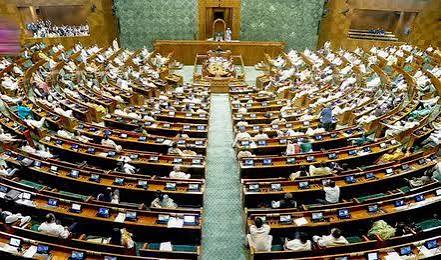
Parliament passed the Prevention of Insults to National Honour (Amendment) Bill, 2026, extending statutory protection to Vande Mataram by penalising its intentional obstruction or disrespect during official singing.
What is the Prevention of Insults to National Honour (Amendment) Bill, 2026?
The Bill amends the Prevention of Insults to National Honour Act, 1971 to bring Vande Mataram (National Song) under its legal protection, similar to the National Anthem (Jana Gana Mana).
The amendment seeks to remove the existing legal gap, as the National Song previously had no statutory protection despite its historic significance in India's freedom movement.
The Government cited the 24 January 1950 Constituent Assembly proceedings, where Dr. Rajendra Prasad stated that Vande Mataram would enjoy equal honour with the National Anthem.
Key Provisions
The Bill extends Section 3 of the 1971 Act to cover Vande Mataram, making it an offence to intentionally prevent its singing or disturb an assembly during its rendition.
The offence carries imprisonment up to 3 years, a fine, or both, while repeat offenders are liable to a minimum imprisonment of one year under Section 3A.
About the Prevention of Insults to National Honour Act, 1971
The Act protects India's national symbols from acts of intentional disrespect.
- Section 2: Prohibits insult to the National Flag and the Constitution of India.
- Section 3: Prohibits preventing or disturbing the singing of the National Anthem.
- Section 3A (2003 Amendment): Prescribes enhanced punishment for repeat offences.
About Vande Mataram
Vande Mataram, meaning "Mother, I Bow to Thee," was composed by Bankim Chandra Chattopadhyay in Sanskritised Bengali and first published in Bangadarshan (1875) before appearing in Anandamath (1882).
It was later set to music by Rabindranath Tagore and became one of the foremost symbols of India's freedom movement.
The first two stanzas were adopted as the National Song by the Congress Working Committee in 1937. On 24 January 1950, Dr. Rajendra Prasad affirmed that Vande Mataram would enjoy equal honour with Jana Gana Mana, though the Constitution does not explicitly recognise a National Song.
Role in the Freedom Struggle
Vande Mataram became the rallying cry of the Swadeshi Movement following the Partition of Bengal (1905) and inspired nationalist movements across the country.
It was first sung at the 1896 Calcutta Session of the Indian National Congress by Rabindranath Tagore. The song was repeatedly banned by the British because of its role in mobilising anti-colonial protests.
It also featured prominently in nationalist organisations and publications, including Bande Mataram led by Bipin Chandra Pal and Sri Aurobindo, and was associated with leaders such as Madam Bhikaji Cama and Madan Lal Dhingra.
MHA Protocol
The Ministry of Home Affairs prescribes that when both are performed officially, Vande Mataram should precede Jana Gana Mana.
People are expected to stand during its official rendition, though this requirement does not apply when it is played in films, documentaries, or newsreels.
The National Song may be performed during Presidential and gubernatorial functions, flag ceremonies, official cultural events, and schools are encouraged to begin the day with its community singing.