
Superbugs
- 29 Nov 2025
In News:
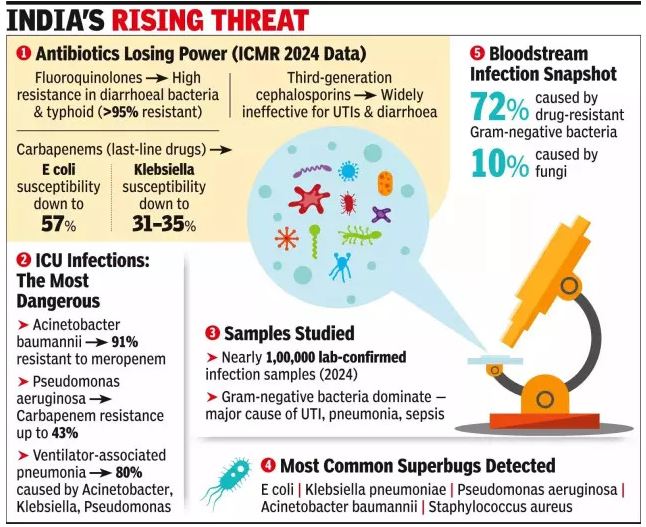
The Indian Council of Medical Research (ICMR), through its Antimicrobial Resistance Research & Surveillance Network (AMRSN) Report 2024, has warned that common infections in India are becoming increasingly difficult to treat due to rapidly rising antimicrobial resistance (AMR). Routine and even last-line antibiotics are losing effectiveness against widely prevalent hospital pathogens.
Key Findings of AMRSN Report 2024
- Common infections affected: Urinary tract infections (UTIs), pneumonia, sepsis, and diarrhoeal diseases.
- Failing antibiotics:
- Fluoroquinolones
- Third-generation cephalosporins
- Carbapenems (last-line drugs)
- Piperacillin–tazobactam
- Based on nearly one lakh lab-confirmed samples from major hospitals, drug-resistant Gram-negative bacteria dominate hospital infections.
Major Superbugs Identified
- Escherichia coli (E. coli):
- Leading cause of UTIs, abdominal and bloodstream infections.
- Shows declining susceptibility even to strong antibiotics.
- Klebsiella pneumoniae:
- Major cause of pneumonia and sepsis.
- Resistant to piperacillin–tazobactam in ~75% cases and to carbapenems in most samples.
- Acinetobacter baumannii:
- Particularly severe in ICUs.
- Shows ~91% resistance to meropenem, severely limiting treatment options.
- Pseudomonas aeruginosa:
- Rising resistance, especially in ventilator-associated pneumonia.
Overall, 72% of bloodstream infections and most ventilator-associated pneumonia cases were caused by highly drug-resistant Gram-negative bacteria.
Fungal Resistance Trends
- Candida auris: Nearly 10% resistance among isolates.
- Aspergillus species: Around one-third resistant to amphotericin B, a key antifungal drug.
What are Superbugs?
Superbugs are bacteria or fungi resistant to multiple antimicrobial drugs, making routine infections hard or impossible to treat.
Key causes:
- Overuse and misuse of antibiotics
- Incomplete treatment courses
- Excessive use of high-end antibiotics in hospitals
- Gene transfer between microbes
Implications of Rising AMR
- Treatment failure: Doctors are forced to use toxic or expensive drug combinations.
- Higher mortality: ICU infections become life-threatening.
- Longer hospital stays: Increased isolation and healthcare burden.
- Economic impact: Higher treatment costs and productivity losses.
- Public health risk: Routine infections may resemble the pre-antibiotic era in severity.
Significance for India
- Highlights the urgent need for antibiotic stewardship, infection prevention and control (IPC) protocols, and rational prescribing.
- Underlines the importance of regulated antibiotic sales, stronger surveillance, and new drug discovery.
- Signals India’s contribution to the global AMR crisis, threatening progress toward SDG 3 (Good Health and Well-being).