
Scheme to Promote Manufacturing of Sintered Rare Earth Permanent Magnets (REPM)
- 29 Nov 2025
In News:
The Union Cabinet, chaired by the Prime Minister, has approved the Scheme to Promote Manufacturing of Sintered Rare Earth Permanent Magnets (REPM) with a total financial outlay of ?7,280 crore. This is a first-of-its-kind initiative aimed at establishing a domestic and integrated REPM manufacturing ecosystem in India, reducing import dependence and strengthening strategic supply chains.
What are Rare Earth Permanent Magnets (REPM)?
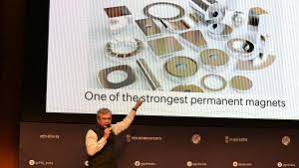
REPMs, such as Neodymium–Iron–Boron (NdFeB) and Samarium–Cobalt (SmCo) magnets, are among the strongest permanent magnets globally. They are critical components in electric vehicles (EVs), wind turbines, electronics, aerospace, defence systems, and strategic technologies. Owing to their strategic importance, REPMs are classified as critical materials worldwide.
Key Features of the Scheme
- Objective: Establish 6,000 Metric Tonnes Per Annum (MTPA) of integrated REPM manufacturing capacity in India.
- Nature: Central Sector scheme focused on end-to-end manufacturing.
- Manufacturing Scope: Conversion of rare earth oxides → metals → alloys → finished REPMs, enabling full value-chain integration.
- Beneficiaries: Capacity to be allocated to five beneficiaries through a global competitive bidding process, with up to 1,200 MTPA per beneficiary.
- Duration: 7 years
- 2 years: Gestation period for setting up facilities
- 5 years: Incentive disbursement period
Financial Structure
- Total Outlay: ?7,280 crore
- Sales-linked incentive: ?6,450 crore (linked to REPM sales for five years)
- Capital subsidy: ?750 crore for setting up integrated manufacturing facilities
Rationale for the Scheme
- Rising Demand: India’s REPM demand is projected to double by 2030, driven by EVs, renewables, electronics and defence.
- Import Dependence: India currently imports almost its entire REPM requirement (~900 tonnes annually).
- Supply Chain Vulnerability: Global shortages during 2021–22 led to 200–300% price spikes, highlighting strategic risks.
- Mineral Potential: India has the 5th-largest rare earth reserves (~6.9 million tonnes), mainly in Andhra Pradesh, Odisha, Kerala, Jharkhand and Rajasthan, but lacks downstream manufacturing.
Strategic Significance
- Atmanirbhar Bharat: Establishes India’s first integrated REPM manufacturing facilities, enhancing self-reliance.
- National Security: Secures supply for defence, aerospace and strategic sectors.
- Energy Transition: Supports electric mobility and renewable energy, contributing to Net Zero 2070 goals.
- Global Positioning: Aims to position India as a key player in the global REPM market, currently dominated by China (≈85–90% share).
- Employment & Industrial Growth: Generates skilled employment and strengthens advanced manufacturing capabilities.
Complementary Measures
The scheme aligns with broader initiatives such as the National Critical Mineral Mission (2025), modernisation of rare earth processing by IREL (India) Limited, R&D by BARC, ARCI and IITs, and international cooperation through platforms like the Minerals Security Partnership (MSP).