
Ellora Caves
- 03 Dec 2025
In News:
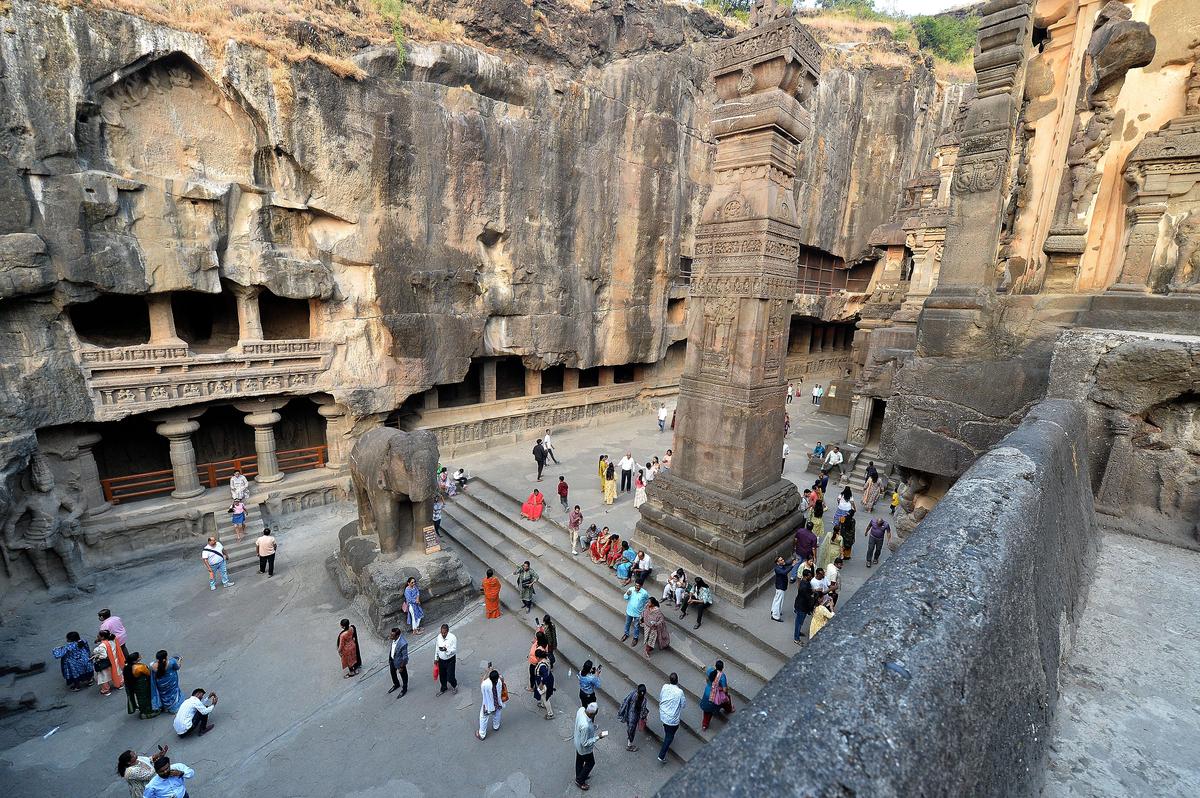
The Ellora Caves, located in Chhatrapati Sambhajinagar (Maharashtra), are among India’s earliest UNESCO World Heritage Sites (inscribed in 1983) and represent one of the largest rock-cut cave complexes in the world. While the caves themselves are globally renowned, the wider Ellora–Khultabad heritage zone contains several historically important but lesser-known monuments that remain under-promoted.
Ellora Caves: Core Facts
Chronology
Constructed between 6th and 10th centuries CE, Ellora reflects continuous religious activity over centuries.
|
Group |
Cave Numbers |
Period |
Features |
|
Buddhist |
1–12 |
c. 600–800 CE |
Viharas (monasteries), chaitya halls, meditation cells |
|
Hindu |
13–29 |
c. 600–900 CE |
Grand sculptural programs, mythological panels |
|
Jain |
30–34 |
c. 800–1000 CE |
Intricate carvings, emphasis on asceticism and detail |
Architectural & Cultural Significance
1. Kailasa Temple (Cave 16)
- Largest monolithic rock-cut structure in the world
- Dedicated to Lord Shiva
- Excavated top-down from a single basalt rock mass
- Estimated 1.5–2 lakh tonnes of rock removed
- Notable features:
- Nandi Mandapa
- Life-size elephant sculptures
- Panels like Ravana shaking Mount Kailasa
- Highly developed Dravidian temple architecture in rock-cut form
2. Multi-Religious Coexistence
- Rare site where Buddhist, Hindu, and Jain monuments coexist
- Demonstrates religious tolerance and artistic continuity in early medieval India
3. Rock-Cut Engineering
- Multi-storeyed structures carved from solid basalt
- Includes pillars, halls, stairways, windows, and elaborate façades
Wider Ellora–Khultabad Heritage Zone
Beyond the caves, the surrounding regionespecially Khultabad, located on the hill above Ellora—contains monuments reflecting layered religious and political history.
1. Malik Ambar’s Tomb
- Mausoleum of Malik Ambar, the Ethiopian-origin military leader and statesman of the Ahmadnagar Sultanate
- Known for administrative reforms and resistance against the Mughals
- Represents Deccan Sultanate architecture
2. Tomb of the First Peshwa
- Refers to an early holder of the Peshwa title (used before and during the Maratha period)
- Highlights the region’s pre-Maratha and Maratha-era political history
3. Empty Tomb of the Last Ottoman Caliph
- Memorial structure linked to the last Ottoman Caliph, Abdulmejid II
- Built by his daughter, who was married into the Hyderabad Nizam’s family
- SymbolisesIndia’s historical connections with West Asia and the Ottoman world
4. Khultabad’s Religious Traditions
- Known for Sufi shrines and long-standing Islamic spiritual traditions
- Also associated with earlier local cults and Naga veneration, indicating continuity of sacred geography
Tourism & Heritage Significance
- Ellora is part of a major heritage circuit including:
- Ajanta Caves
- Daulatabad Fort
- Khultabad monuments
- Together, these sites form a dense cultural landscape spanning:
- Ancient Buddhist heritage
- Early medieval Hindu and Jain architecture
- Deccan Sultanate history
- Maratha-era legacy
- Indo-Islamic and trans-regional Islamic connections