
India–ASEAN Summit 2025
- 31 Oct 2025
In News:
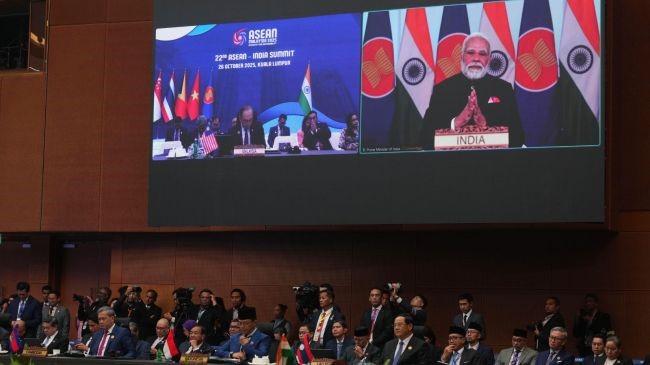
- Prime Minister Narendra Modi virtually addressed the 22nd India–ASEAN Summit in Kuala Lumpur, reaffirming India’s commitment to enhancing cooperation in maritime security, digital inclusion, resilient supply chains, and economic integration.
- During the address, he announced that 2026 will be celebrated as the “ASEAN–India Year of Maritime Cooperation,” reflecting an intensified focus on the Indo-Pacific maritime domain. The remarks aligned with ASEAN’s theme under Malaysia’s chairmanship — “Inclusivity and Sustainability.”
Evolution of India–ASEAN Engagement
India’s engagement with ASEAN has evolved over more than three decades:
- 1992: Sectoral Dialogue Partnership initiated.
- 1996: Upgraded to Full Dialogue Partnership.
- 2002: India began regular participation in ASEAN Summits.
- 2009: ASEAN–India FTA in Goods (AITIGA) came into force;
- 2015: Services and Investment Agreements added.
- 2014 onwards: Transition from “Look East” to Act East Policy, increasing political, cultural and strategic connectivity.
- 2022: Partnership elevated to Comprehensive Strategic Partnership.
The partnership is grounded in shared civilisational links, especially through Buddhism, historical maritime routes, and cultural exchanges dating back to the Gupta and Srivijaya eras.
Recent Summit Highlights: Strategic Messaging
Despite PM Modi’s long-standing practice of physical participation in ASEAN summits, his virtual presence this year was noted as an unusual departure. Given the symbolic importance of leader-level diplomacy in ASEAN's consensus-driven ecosystem, some observers considered his absence a missed opportunity, especially amid strengthening bilateral ties with Malaysia after upgrading relations to a Comprehensive Strategic Partnership.
Nevertheless, PM Modi reaffirmed India’s intent to complement ASEAN’s Community Vision 2045 and India’s national vision of Viksit Bharat 2047, framing both as convergent long-term goals. He highlighted India’s role as a First Responder in regional crises, a position increasingly recognised across Southeast Asia.
Unlike previous years featuring extensive multi-point proposals, the 2025 address emphasised consolidation over expansion, centred primarily on maritime cooperation — a significant signal as the Philippines assumes ASEAN chairmanship in 2026 amid rising maritime tensions in the South China Sea.
Key Pillars of Cooperation
1. Maritime Security & Indo-Pacific Cooperation
- Joint patrols, coordinated naval exercises, and enhanced maritime domain awareness.
- Blue economy initiatives under the ASEAN–India Year of Maritime Cooperation (2026).
2. Economic Integration
- Review of the ASEAN–India Trade in Goods Agreement (AITIGA) to address market access constraints, streamline rules of origin, and reduce non-tariff barriers.
- Policymakers are urged to prioritise long-term regional integration over short-term protectionist anxieties.
3. Digital & Green Economy
- Cooperation in digital public infrastructure, cybersecurity, AI governance, renewable energy, green ports, and climate-resilient supply chains.
4. Connectivity Projects
- Acceleration of India–Myanmar–Thailand Trilateral Highway.
- Progress on the Kaladan Multi-Modal Transit Corridor, strengthening multimodal and economic connectivity.
5. Cultural Diplomacy & People-to-People Links
- ICCR scholarships, academic exchanges, tourism linkages, and the ASEAN–India Network of Think Tanks (AINTT).
- Emphasis on shared civilisational heritage and cultural exchanges.
Initiatives & Institutional Mechanisms
- ASEAN–India Plan of Action (2026–2030) focusing on trade, innovation, food security, agriculture, health, and education.
- India’s ?500 crore ASEAN–India Fund supporting capacity building, agriculture, and connectivity projects.
- Track 1.5 dialogue platforms reveal growing regional acknowledgement of India’s strategic role in Southeast Asia.
East Timor Joins ASEAN
- 28 Oct 2025
In News:
East Timor (Timor-Leste) was formally admitted as the 11th member of the Association of Southeast Asian Nations (ASEAN) at the 47th ASEAN Summit in Kuala Lumpur, marking the organisation’s first expansion since the late 1990s.
Historical Milestone for East Timor
- Prime Minister Xanana Gusmão declared the moment “historic,” noting that ASEAN membership reflects both the aspirations and resilience of the Timorese people. President José Ramos-Horta, a Nobel Peace Prize laureate, and Gusmão—both icons of the independence movement—lead the nation as it navigates socio-economic challenges such as high unemployment, persistent malnutrition, and widespread poverty (with 42% of the population living below the national poverty line).
- East Timor’s journey to statehood has been arduous. A former Portuguese colony for over four centuries, it declared independence in 1975, only to face a 24-year occupation by Indonesia that claimed tens of thousands of lives. AUN-supervised referendum in 1999 paved the way to sovereignty, which was finally restored in 2002, making it one of the world’s youngest nations.
Why East Timor’s ASEAN Membership Matters
Malaysian Prime Minister Anwar Ibrahim, chairing the summit, emphasised that East Timor’s entry “completes the ASEAN family,” reflecting shared regional identity and a commitment to equitable growth. Analysts view the expansion as a declaration of ASEAN’s inclusivity and adaptability, especially amid global geopolitical volatility and rising protectionism.
Membership grants East Timor greater access to:
- ASEAN’s free trade arrangements
- Regional investment opportunities
- Broader markets and labour mobility
- Platforms for cooperation in education, technology, and digital economy
For a small, resource-dependent nation with a youthful demographic—nearly two-thirds of its people are under 30—ASEAN integration offers new possibilities for job creation, capacity building, and economic diversification. With oil and gas reserves declining, the government seeks fresh pathways for economic resilience.
East Timor: Key Facts
- Official Name: Democratic Republic of Timor-Leste
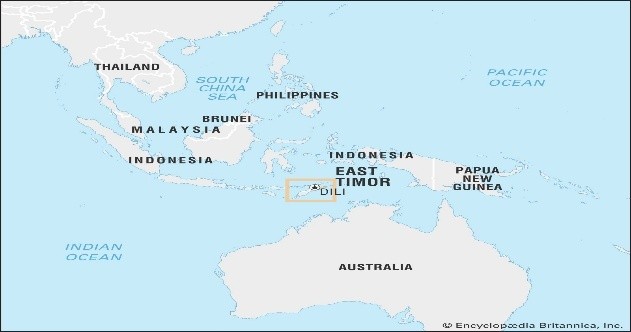
- Location: Eastern half of Timor Island in the Malay Archipelago; bordered by Indonesia and the Timor Sea
- Capital: Dili
- Geography: Mountainous terrain; highest peak Mount Tatamailau (2,963 m); tropical climate; rich biodiversity
- Population: ~1.4 million
- Economy: Predominantly dependent on hydrocarbons
East Timor applied for ASEAN membership in 2011 and was granted observer status in 2022, culminating in full accession in 2025.
About ASEAN and Its Relevance
- The Association of Southeast Asian Nations (ASEAN) is a regional intergovernmental organisation established in 1967 with the signing of the Bangkok Declaration by Indonesia, Malaysia, the Philippines, Singapore, and Thailand. Its headquarters is located in Jakarta, Indonesia.
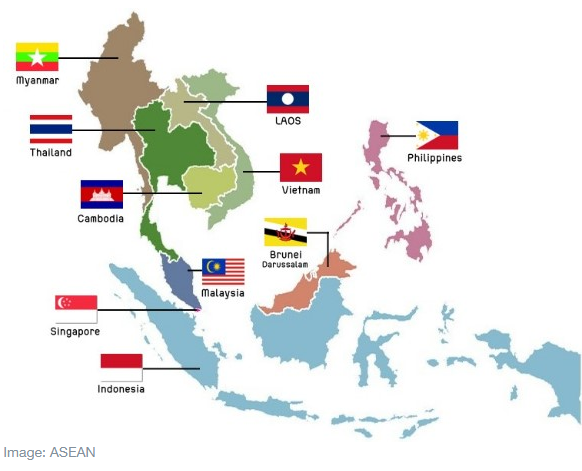
- Current Membership (11 Countries):Indonesia, Malaysia, Philippines, Singapore, Thailand, Brunei, Vietnam, Laos, Myanmar, Cambodia, and East Timor.
- Core Goals:
- Promote political stability through dialogue and diplomacy
- Advance economic integration via AFTA and RCEP
- Strengthen cooperation on climate change, disaster response, and transnational threats
- Foster socio-cultural exchange and people-to-people connectivity
- Engage global powers through mechanisms like ASEAN+3 and East Asia Summit (EAS)
Significance for Regional Dynamics
East Timor’s accession:
- Reinforces ASEAN’s commitment to regionalism and openness, countering trends of protectionism
- Expands the bloc’s political influence and strengthens its collective strategic posture
- Enhances ASEAN’s identity as a community representing diverse political and economic systems
- Encourages equitable development within the region’s smallest and youngest member state
India-ASEAN and EU Cooperation on Counter-Terrorism
- 23 Mar 2025
In News:
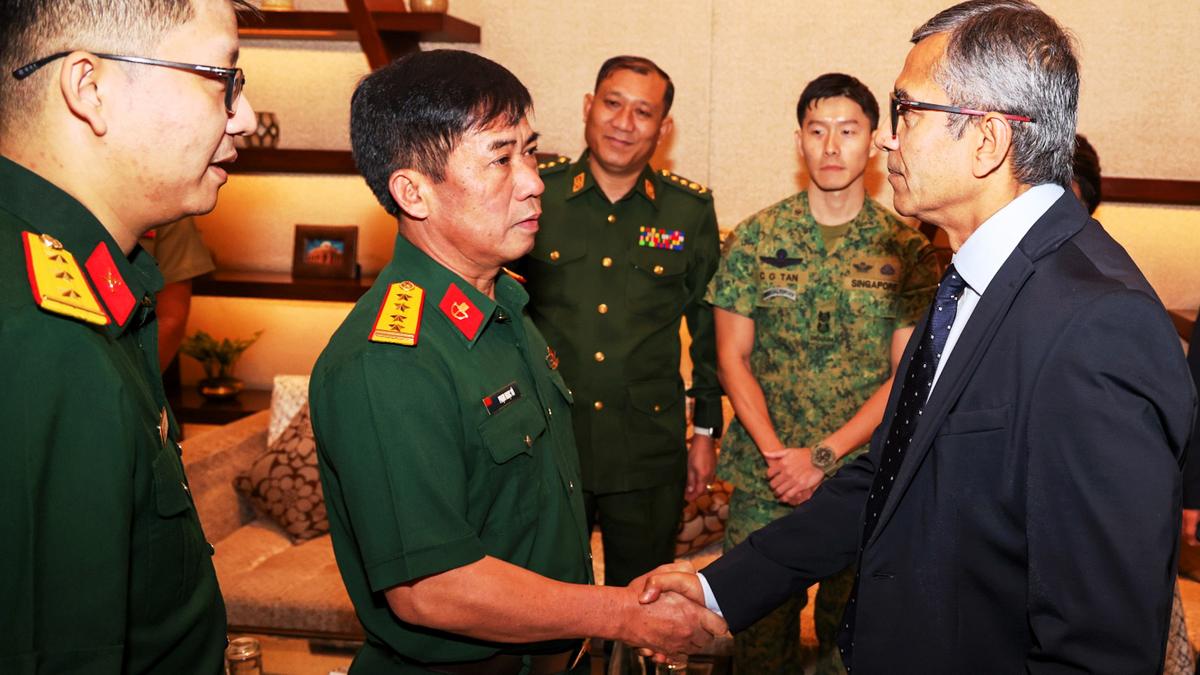
- 14th ASEAN Defence Ministers’ Meeting-Plus (ADMM-Plus) Experts’ Working Group on Counter-Terrorism (EWG on CT) was held in New Delhi.
- India and Malaysia took over as co-chairs for the 2024–2027 cycle, succeeding Myanmar and Russia (2021–2024).
- Two major exercises were announced:
- Table-top Exercise in Malaysia – 2026
- Field Training Exercise in India – 2027
- These are part of the EWG on CT 2024–2027 Work Plan.
Purpose and Agenda:
- To devise a comprehensive and coordinated counter-terrorism strategy.
- To share on-ground experiences of ASEAN and partner nations’ defence forces.
- Focus on evolving threats like violent extremism, radicalisation, and terrorism financing.
Participants in ADMM-Plus EWG on CT:
- ASEAN Member States: Indonesia, Malaysia, Philippines, Singapore, Thailand, Brunei, Vietnam, Laos, Myanmar, Cambodia.
- Dialogue Partners: India, China, U.S., Russia, Japan, South Korea, Australia.
- ASEAN Secretariat also participated.
India-EU Counterterrorism Engagement:
- On the sidelines of the Raisina Dialogue, the European Union (EU) conducted a technical workshop in New Delhi on preventing and countering violent extremism.
- Organized with the Embassy of the Netherlands and attended by security experts from EU states like Belgium, Bulgaria, Germany, and the Netherlands, as well as the Strong Cities Network (SCN).
- Discussions focused on:
- De-radicalisation strategies
- Rehabilitation of extremists
- Whole-of-government approaches
- Risk evaluation and reintegration
- Reinforced the India-EU commitment made during the EU College of Commissioners' visit to India and in the Joint Leaders' Statement.
About ASEAN:
- Established: August 8, 1967 (Bangkok Declaration)
- Headquarters: Jakarta, Indonesia
- Motto: "One Vision, One Identity, One Community"
- Members (10):
- Founding (1967): Indonesia, Malaysia, Philippines, Singapore, Thailand
- Later: Brunei (1984), Vietnam (1995), Laos & Myanmar (1997), Cambodia (1999)
- Population: ~662 million (2022)
- Combined GDP: $3.2 trillion (2022)
ASEAN Institutional Mechanisms:
- ASEAN Summit – Annual heads-of-state meeting.
- ASEAN Coordinating Council (ACC) – Implements decisions and agreements.
- ASEAN Regional Forum (ARF) – India joined in 1996; focuses on regional security dialogue.
- ASEAN Secretariat – Administrative support to ASEAN initiatives.
India-ASEAN Relations:
- Sectoral Dialogue Partner since 1992; Full Dialogue Partner since 1996.
- India-ASEAN FTA:
- Goods (2009)
- Services & Investments (2014)
- Strategic Partnership: Established in 2012.
- India in ADMM-Plus: Actively participates in defence and security cooperation mechanisms.
- ASEAN Future Forum: Proposed by Vietnam (2023); India is a founding member.
6th ASEAN-India Trade in Goods Agreement (AITIGA) Joint Committee Meeting
- 25 Nov 2024
In News:
The 6th ASEAN-India Trade in Goods Agreement (AITIGA) Joint Committee and related meetings for discussions on the review of the AITIGA were held recently in Vanijya Bhawan, New Delhi.
Key Highlights:
Key Negotiation Areas
- 8 Sub-Committees under the AITIGA Joint Committee discussed:
- Market access, rules of origin, SPS measures, standards and technical regulations.
- Customs procedures, economic and technical cooperation, trade remedies, and legal and institutional provisions.
- 5 Sub-Committees met physically during this round of negotiations.
Progress in Discussions
- Textual Discussions: Sub-Committees made progress in discussions on various provisions.
- Tariff Negotiations: Initial steps towards initiating tariff negotiations were covered.
High-Level Meetings Leading to AITIGA Review
- 21st ASEAN-India Economic Ministers Meeting: Held in September 2024 in Vientiane, Laos.
- 21st ASEAN-India Summit: Held in October 2024 in Vientiane, Laos.
Both meetings urged the Joint Committee to expedite negotiations and aim for the conclusion of the review in 2025.
Bilateral Meetings
- ASEAN delegates held separate bilateral meetings with Thailand and Indonesia to discuss bilateral trade issues.
- Indian and ASEAN Chief Negotiators met to align on the ongoing issues and future steps.
India's Review Demands
- Request for Review: India sought a review of AITIGA (implemented in 2010), citing disproportionate trade benefits favoring ASEAN countries.
- India’s Objectives:
- Enhanced Market Access: India pushed for ASEAN countries, especially Vietnam, to commit to greater market-opening for Indian goods.
- Stricter Rules of Origin (ROO): India requested more stringent ROO provisions to prevent Chinese goods from entering India via ASEAN countries at preferential rates.
Trade Relationship and Economic Impact
- Bilateral Trade:
- Total trade with ASEAN reached USD 121 billion in FY 2023-24.
- Trade during April-October 2024 was USD 73 billion, marking a 5.2% growth.
- Trade Deficit: India’s trade deficit with ASEAN widened from USD 4.98 billion in FY 2010-11 to USD 38.4 billion in 2023-24.
- ASEAN accounts for 11% of India’s global trade.
Future Outlook
- The next meeting of the AITIGA Joint Committee is scheduled for February 2025 in Jakarta, Indonesia.
- The review process aims to further enhance sustainable trade between India and ASEAN countries.
11th ASEAN Defence Ministers’ Meeting-Plus (ADMM-Plus)
- 23 Nov 2024
In News:
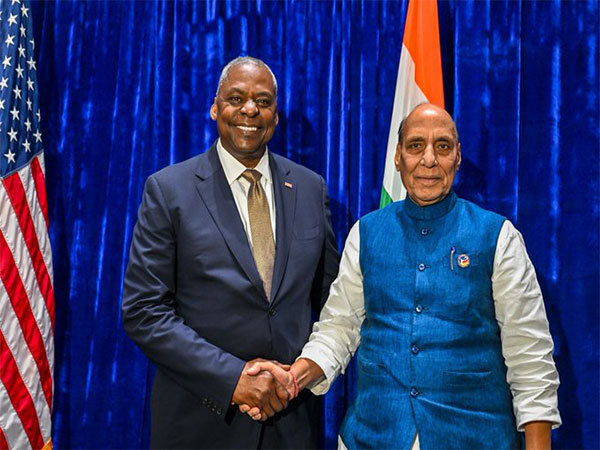
The 11th ADMM-Plus held in Vientiane, Laos saw Union Defence Minister Rajnath Singh engage in discussions with his counterparts from the United States, Japan, and the Philippines.
Focus: The talks centered on strengthening defence partnerships, regional security, and enhancing cooperation among Indo-Pacific nations.
ASEAN Defence Ministers’ Meeting-Plus (ADMM-Plus):
- Platform for Dialogue: The ADMM-Plus is a key platform for ASEAN and its eight Dialogue Partners—Australia, China, India, Japan, New Zealand, Republic of Korea, Russia, and the United States.
- Establishment: The inaugural ADMM-Plus was held in HàN?i, Vietnam on 12 October 2010.
- Annual Meetings: Since 2017, the ADMM-Plus has met annually to enhance dialogue and cooperation amidst an increasingly complex regional security environment.
Objectives:
- Capacity Building: To aid ASEAN members in addressing shared security challenges.
- Promote Trust and Transparency: Enhance mutual trust and confidence between ASEAN and partner nations.
- Regional Peace and Stability: Focus on cooperation in defence and security to counter transnational security challenges.
- ASEAN Security Community: Contribute to realizing the ASEAN Security Community, as per the Bali Concord II, aiming for peace, stability, democracy, and prosperity in the region.
- Vientiane Action Programme: Facilitate ASEAN's efforts towards a peaceful, secure, and prosperous ASEAN with outward-looking relations with Dialogue Partners.
ASEAN-India Trade in Goods Agreement (AITIGA)
- 13 May 2024
Why is it in the News?
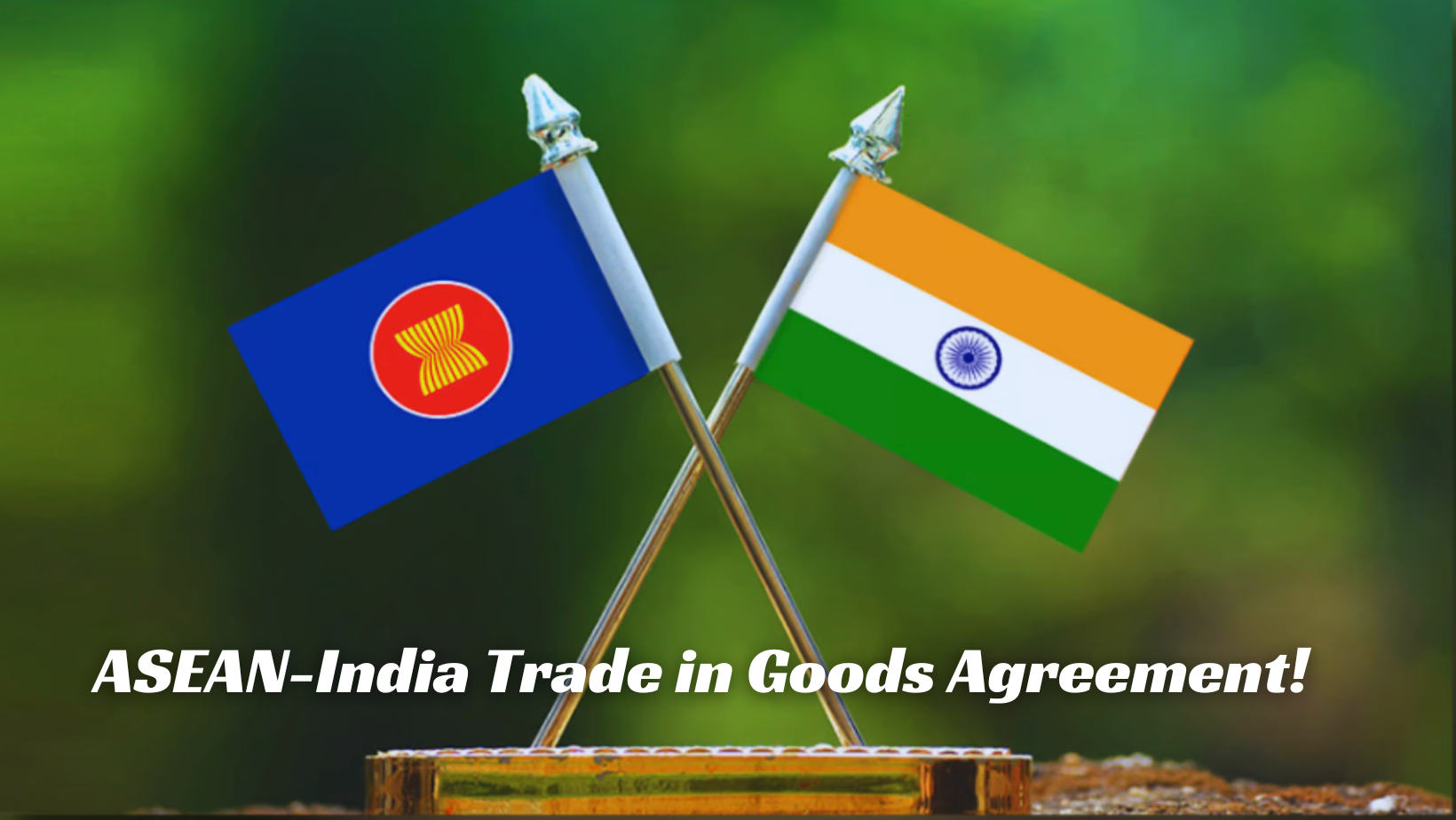
The 4th joint committee meeting for the review of AITIGA (ASEAN-India Trade in Goods Agreement) was held in Putrajaya, Malaysia recently.
About ASEAN-India Trade in Goods Agreement (AITIGA):
- The ASEAN-India Trade in Goods Agreement (AITIGA) is a trade deal between the ten member states of ASEAN and India.
- ASEAN and India signed the Agreement at the 7th ASEAN Economic Ministers-India Consultations in Bangkok, Thailand in 2009.
- The Agreement, which came into effect in 2010, is sometimes referred to as the ASEAN-India Free Trade Agreement.
- The Agreement has led to steadily increasing trade between ASEAN and India since its signing.
- In 2019-20, trade between India and ASEAN was worth US$86 billion.
- Though this represented a decline from US$97 billion in 2018-19 because of the COVID-19 pandemic, it was an increase from US$81.3 billion in the 2017-18 financial year.
- It covers trade in physical goods and products and it does not apply to trade in services.
- ASEAN and India signed a separate ASEAN-India Trade in Services Agreement in 2014.
About the Association of the Southeast Asian Nations (ASEAN):
- The Association of the Southeast Asian Nations (ASEAN) is a geopolitical and economic organization established to accelerate economic growth, social progress and cultural development among its ten (10) member states.
- It also aims to promote peace and stability in the region, active collaboration and mutual assistance on matters of common interest, Southeast Asian studies, and maintain close and beneficial cooperation with other regional and international organizations.
- It was established on 8 August 1967 in Bangkok, Thailand with the signing of the ASEAN Declaration by the founding members of ASEAN, namely Indonesia, Malaysia, the Philippines, Singapore and Thailand.
- Brunei Darussalam then joined in 1984, Viet Nam in 1995, Lao PDR and Myanmar in 1997, and Cambodia in 1999, making up the current 10 Member States of ASEAN.
- The ASEAN Secretariat was set up in February 1976 and is based in Jakarta, Indonesia.
Global Alliance for Incinerator Alternatives (GAIA)
- 19 Apr 2024
Why is it in the News?
The Global Alliance for Incinerator Alternatives (GAIA) Asia Pacific, in collaboration with other environmental organizations, has called on the Association of Southeast Asian Nations (ASEAN) to take decisive action in response to plastic pollution.
About Global Alliance for Incinerator Alternatives (GAIA):
- The Global Alliance for Incinerator Alternatives (GAIA) is an alliance of over 1,000 grassroots groups, NGOs, and individuals working towards a transition from a linear, extractive economy to a circular system.
- GAIA's primary objective is to create a world that prioritizes people's right to a safe and healthy environment, free from toxic pollution and resource depletion.
- GAIA envisions a just, zero-waste world where communities' rights are respected, and ecological limits are acknowledged. To achieve this vision, the alliance focuses on:
- Eliminating Incineration: GAIA advocates for alternatives to incineration and promotes waste management practices that protect the environment and public health.
- Promoting Zero Waste: The alliance supports the adoption of zero-waste strategies, emphasizing waste reduction, reuse, and recycling to conserve resources and reduce pollution.
- Addressing Plastic Pollution: GAIA recognizes the global plastic pollution crisis and works on initiatives to reduce plastic waste and promote sustainable alternatives.
- Mitigating Climate Change: GAIA advocates for climate-friendly waste management practices, emphasizing the importance of reducing greenhouse gas emissions from waste disposal.
What is Incineration?
- Incineration is a waste treatment process that involves burning hazardous materials at high temperatures to destroy contaminants.
- This process takes place in an "incinerator," a furnace specifically designed to safely burn hazardous materials within a combustion chamber.
- Various types of hazardous materials can be treated through incineration, including soil, sludge, liquids, and gases.
- While incineration effectively destroys many harmful chemicals such as solvents, polychlorinated biphenyls (PCBs), and pesticides, it does not destroy metals like lead and chromium.
- Modern incinerators are equipped with air pollution control mechanisms, such as fabric filters, scrubbers, and electrostatic precipitators.
- These technologies help remove fly ash and gaseous contaminants generated during the incineration process, mitigating its environmental impact.
- Despite its benefits in waste treatment, incineration remains a topic of debate due to concerns about residual pollutants and the potential for contributing to greenhouse gas emissions.
India, and ASEAN discuss the review of the trade agreement
- 20 Feb 2024
Why is it in the News?
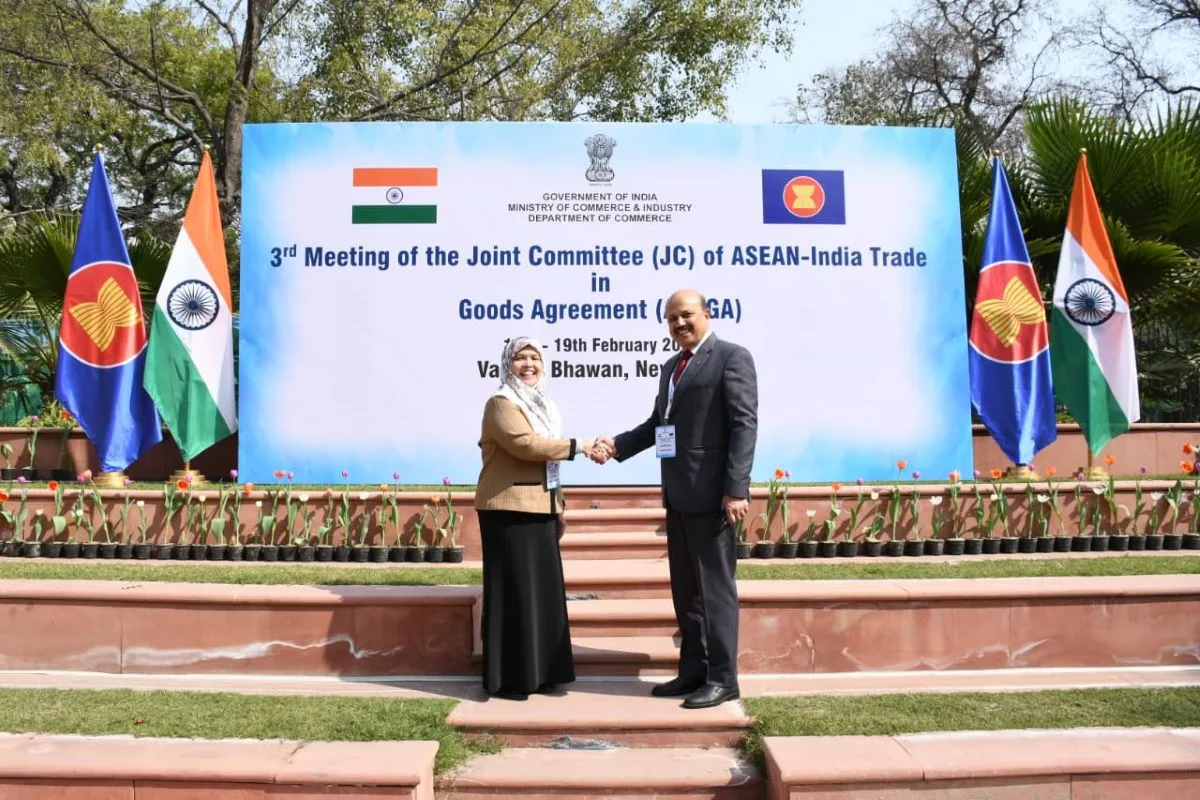
India hosted the 3rd meeting of the AITIGA Joint Committee, which focused on reviewing the ASEAN-India Trade in Goods Agreement at Vanijya Bhawan in New Delhi from February 16th to 19th, 2024.
About the ASEAN-India Trade in Goods Agreement (AITIGA):
- The ASEAN-India Trade in Goods Agreement (AITIGA) is a trade deal between the ten member states of ASEAN and India.
- ASEAN and India signed the Agreement at the 7th ASEAN Economic Ministers-India Consultations in Bangkok, Thailand in 2009.
- The Agreement, which came into effect in 2010, is sometimes referred to as the ASEAN-India Free Trade Agreement.
- The Agreement originated out of the Framework Agreement on Comprehensive Economic Cooperation between India and ASEAN created in 2003.
- The Framework Agreement laid a sound basis for the establishment of an ASEAN-India Free Trade Area (FTA), which includes FTA in goods, services and investment.
- The Agreement has led to steadily increasing trade between ASEAN and India since its signing.
- In 2019-20, trade between India and ASEAN was worth US$86 billion.
About ASEAN:
- The Association of Southeast Asian Nations, or ASEAN is an intergovernmental organization of ten Southeast Asian countries:
- Brunei, Cambodia, Indonesia, Laos, Malaysia, Myanmar, the Philippines, Singapore, Thailand, and Vietnam.
- ASEAN's primary objectives are to promote political and economic cooperation and regional stability among its member states.
- The organization operates on the principles of mutual respect, non-interference in internal affairs, and consensus-building. ASEAN's motto, "One Vision, One Identity, One Community," underscores its commitment to fostering unity and solidarity among Southeast Asian nations.
- Economically, ASEAN has made significant strides towards integration through initiatives like the ASEAN Economic Community (AEC), aimed at creating a single market and production base.
- This has facilitated trade, investment, and economic development within the region.
- Additionally, ASEAN serves as a platform for dialogue and cooperation on a wide range of issues, including security, environmental sustainability, cultural exchange, and disaster management.
20th ASEAN India Economic Ministers’ Meeting (PIB)
- 23 Aug 2023
What is the News ?
India participated in the 20th ASEAN-India Economic Ministers’ Meeting.
Facts About:
- The 20th ASEAN-India Economic Ministers’ meeting was held in Semarang, Indonesia.
- The Economic Ministers or their representatives from all the 10 ASEAN countries viz. Brunei, Cambodia, Indonesia, Laos, Malaysia, Myanmar, Philippines, Singapore, Thailand and Vietnam participated in the meeting.
- The Democratic Republic of Timor-Leste also joined the Meeting as an observer.
- The Ministers reviewed the bilateral trade and investment relations between India and ASEAN and underscored their commitment to strengthen and enhance the economic partnership between India and ASEAN to ensure that the ASEAN-India Comprehensive Strategic Partnership delivers meaningful benefits for both sides, particularly in the post-pandemic era.
- The Ministers also interacted with the ASEAN-India Business Council (AIBC).
- The main agenda of this year’s meeting was the timely review of the ASEAN-India Trade in Goods Agreement (AITIGA) which was signed in 2009.
- India and ASEAN registered a bilateral trade of USD 131.5 billion in 2022-23. The trade with ASEAN accounted for 11.3% of India’s global trade in 2022-23.
ASEAN-India Trade in Goods Agreement (AITIGA):
- AITIGA is a trade deal between the ten member states of ASEAN and India.
- ASEAN and India signed the Agreement at the 7th ASEAN Economic Ministers-India Consultations in Bangkok, Thailand in 2009. The Agreement, which came into effect in 2010, is sometimes referred to as the ASEAN-India Free Trade Agreement.
- The Agreement has led to steadily increasing trade between ASEAN and India since its signing.
- The Agreement originated out of the Framework Agreement on Comprehensive Economic Cooperation between India and ASEAN created in 2003.
- It covers trade in physical goods and products and not services trade.
ASEAN and India signed a separate ASEAN-India Trade in Services Agreement in 2014.
Along with the ASEAN-India Investment Agreement, the three agreements collectively form the ASEAN-India Free Trade Area.
- Under the Agreement, ASEAN and India have committed to progressively eliminating duties on 76.4 percent of goods and to liberalize tariffs on over 90 percent of goods.
Source: https://pib.gov.in/PressReleaseIframePage.aspx?PRID=1950902#:~:text=Shri%20Rajesh%20Agrawal%2C%20Additional%20Secretary,%2C%20Minister%20of%20Trade%2C%20Indonesia.