
PRAXIS Mission
- 29 Jul 2026
In News:
NASA has selected the Planetary Rings Autonomous EXploration with In-situ Sampling (PRAXIS) mission concept under the NASA Innovative Advanced Concepts (NIAC) Phase I (2026)programme. The mission aims to directly sample particles from planetary ring systems, offering new insights into their origin and evolution.
What is the PRAXIS Mission?
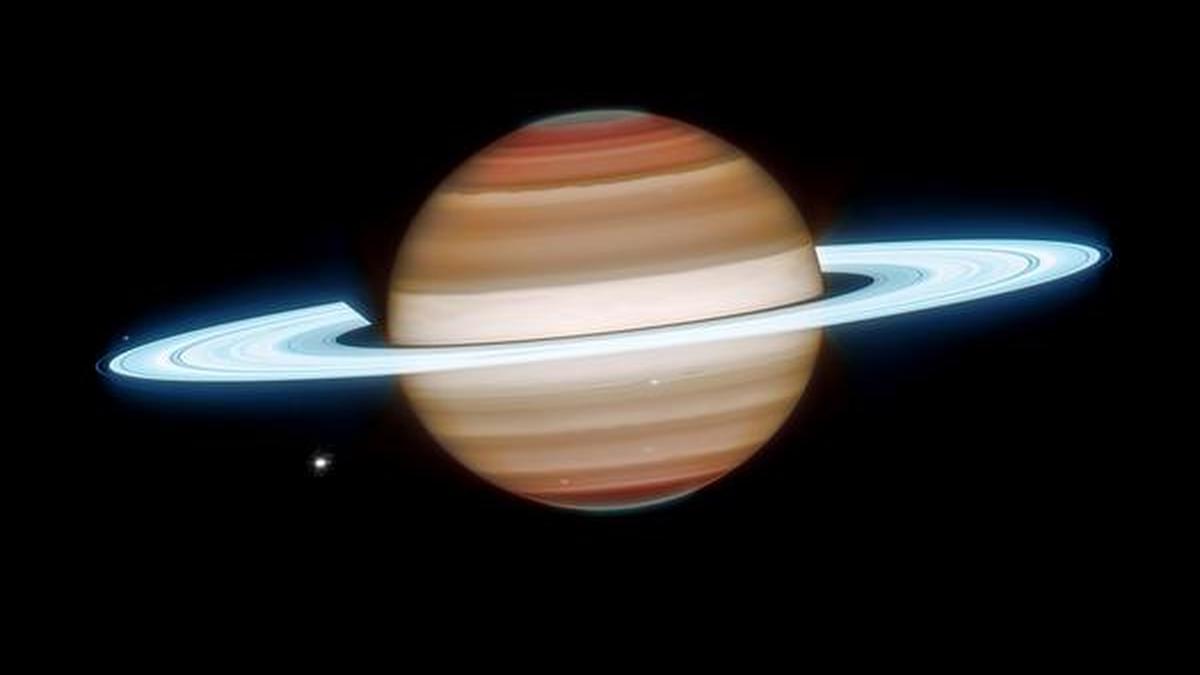
- PRAXIS (Planetary Rings Autonomous EXploration with In-situ Sampling) is a next-generation robotic mission concept developed by NASA to perform the first direct sampling and in-situ analysis of planetary ring particles.
- The mission is designed to study the rings of Saturn, Uranus, Neptune, and smaller ringed bodies such as the Centaurs Chariklo and Chiron.
Key Features
- PRAXIS will use a bio-inspired robotic explorer powered by Artificial Intelligence (AI) to autonomously navigate through planetary rings while avoiding collisions.
- The spacecraft combines robotic autonomy, precision sampling, and on-site scientific analysis. It employs a sport-casting-inspired sampling mechanism to capture free-floating ring particles and carries miniaturised scientific instruments for real-time analysis.
- The mission is planned to graze the ring plane rather than travel deep inside the rings, reducing operational risk.
How Will the Mission Work?
- After identifying a suitable target particle, the spacecraft will perform a touch-and-go sampling operation using a long deployable boom while maintaining a safe distance from surrounding particles.
- Following sample collection, the spacecraft will move to different regions or gaps within the ring system to obtain additional samples. AI-assisted instruments will analyse the collected particles by measuring their size, porosity, and composition.
Significance
PRAXIS is expected to provide the first direct observations of millimetre- to centimetre-sized ring particles, a key priority identified in planetary science. The mission could significantly improve understanding of the formation, structure, composition, and evolution of planetary ring systems, advancing knowledge of the Solar System.