
Moken People (Sea Nomads)
- 30 Jul 2026
In News:
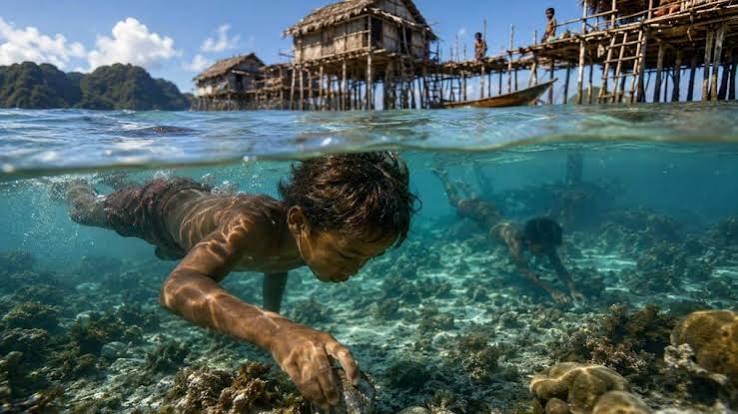
Scientists have confirmed that Moken sea nomad children living along the Andaman Sea possess exceptional underwater vision, enabling them to see underwater with nearly twice the clarity of other children by constricting their pupils through years of diving practice.
Who are the Moken People?
- The Moken are an indigenous sea nomadic community living along the Andaman Sea off the coasts of Thailand and Myanmar. Often referred to as "Sea Nomads" or "Sea Gypsies", they are among the last surviving sea-based nomadic communities in the world.
- Their name, in the Moken language, means "sea drowned." They have traditionally moved among nearly 800 islands in the Andaman Sea, following seasonal winds, tides, and marine resources.
Key Features
- The Moken traditionally live and travel in wooden boats called Kabang, relying on fishing, free diving, and shellfish collection for their livelihood.
- Children begin swimming and diving from an early age, developing exceptional underwater skills such as free diving, spear fishing, and reef navigation.
- The Moken speak an Austronesian language, a language family widely spoken across Southeast Asia and Oceania.
- Most Moken remain stateless, lacking citizenship in either Thailand or Myanmar, largely due to their traditional nomadic lifestyle.
Why are the Moken Famous?
- The Moken gained international recognition during the 2004 Indian Ocean Tsunami, when many community members survived after recognising natural warning signs such as the unusual retreat of seawater and moving to safer locations based on their traditional ecological knowledge.
- Their remarkable underwater vision is considered an adaptation developed through continuous exposure to the marine environment rather than a genetic trait.