
Ancient Buddhist Site of Sarnath Inscribed on UNESCO World Heritage List
- 27 Jul 2026
In News:
At the 48th Session of the World Heritage Committee in Busan, South Korea, the Ancient Buddhist Site of Sarnath was inscribed on the UNESCO World Heritage List.
With this inion, India now has 45 UNESCO World Heritage Sites, ranking 6th globally and 2nd in the Asia-Pacific region.
About the Ancient Buddhist Site of Sarnath
Sarnath is one of the four principal Buddhist pilgrimage sites, closely associated with the life of Gautama Buddha.
It was inscribed under:
- UNESCO Criterion (iii): Exceptional testimony to the Buddhist spiritual tradition.
- UNESCO Criterion (vi): Direct association with Buddha’s First Sermon (Dharmachakra Pravartana) and the establishment of the Buddhist Sangha.
Location
- Located at Sarnath, near Varanasi, Uttar Pradesh.
- The World Heritage property comprises:
- Chaukhandi Stupa
- Archaeological Remains of Sarnath, including:
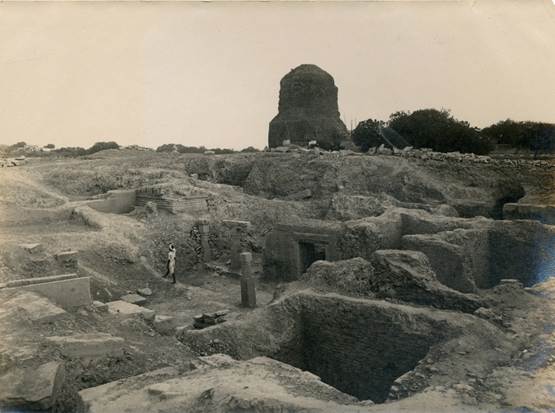
- Dhamekh Stupa
- Dharmarajika Stupa
- Mulagandhakuti Vihara
- Ashokan Pillar site
Historical Significance
- Ancient names: Rishipatana, Ishipatana and Mrigadava.
- In the 6th century BCE, Gautama Buddha delivered his First Sermon (Dharmachakra Pravartana) here after attaining enlightenment at Bodh Gaya.
- The sermon introduced the Four Noble Truths, the Noble Eightfold Path, and marked the foundation of the Buddhist Sangha.
- The site flourished under Mauryan, Kushan, and Gupta patronage before declining in the 12th century CE.
- Rediscovered in the 18th century, it has been extensively excavated by the Archaeological Survey of India (ASI).
Major Monuments
- Dhamekh Stupa – Marks the place where Buddha delivered his first sermon.
- Chaukhandi Stupa – Commemorates Buddha's meeting with his first five disciples.
- Dharmarajika Stupa – One of the earliest stupas built by Emperor Ashoka.
- Mulagandhakuti Vihara – Ancient monastery believed to mark Buddha's residence during his stay.
- Ashokan Pillar – Its Lion Capital was adopted as the National Emblem of India.
- Sarnath Site Museum (established in 1904) houses renowned Gupta-period Buddhist sculptures, including the celebrated Dharmachakra Pravartana Buddha.