
Vikram-I Rocket & India’s Private Space Ecosystem
- 01 Dec 2025
In News:
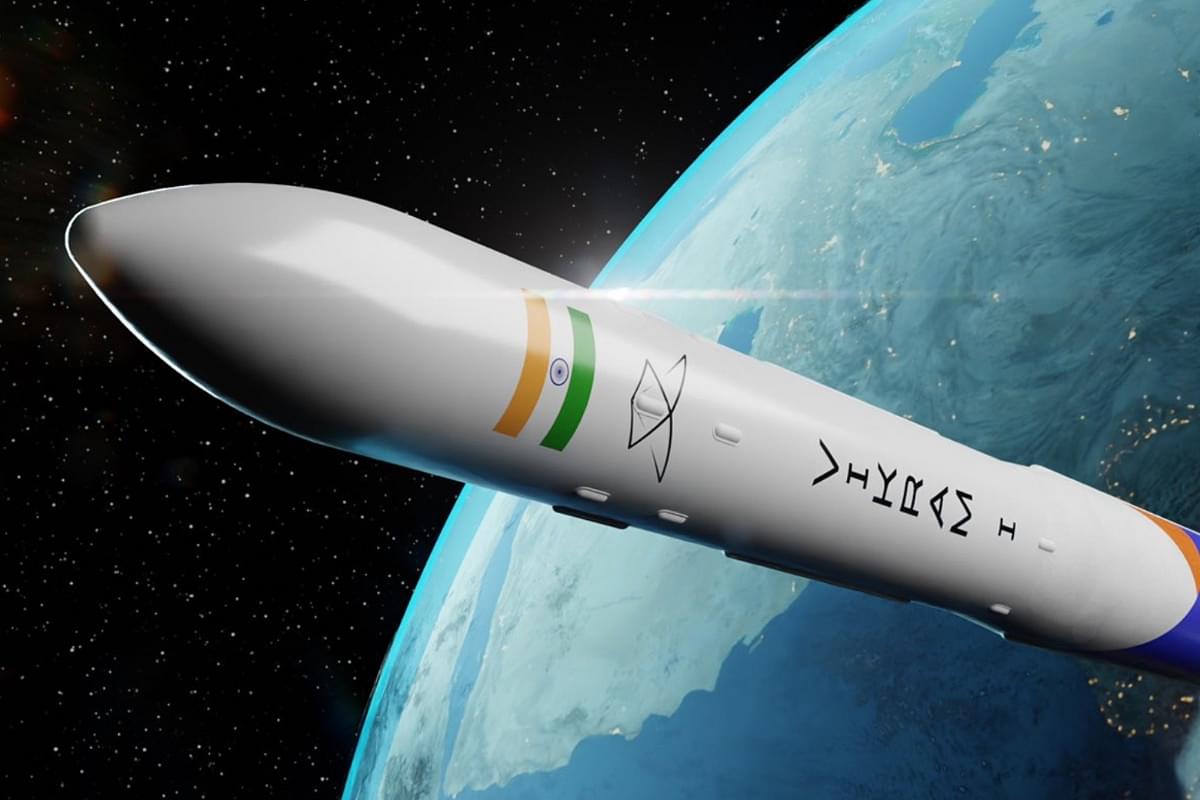
The Prime Minister of India, Narendra Modi, recently inaugurated the Infinity Campus of Skyroot Aerospace and unveiled its first orbital-class launch vehicle, Vikram-I. This milestone highlights the rapid expansion of India’s private space sector following recent space sector reforms.
About Skyroot Aerospace
- India’s leading private space startup.
- Founded by Pawan Chandana and Bharath Dhaka, former scientists of ISRO.
- Became the first Indian private company to launch a rocket to space with the successful sub-orbital launch of Vikram-S (November 2022).
Vikram-I Rocket: Key Features
- Type: India’s first private orbital-class launch vehicle.
- Naming: Named after Vikram Sarabhai, father of India’s space programme.
- Height: ~20 metres.
- Stages: Four-stage rocket
- Stages 1–3: Solid-fuelled
- Stage 4: Hypergolic liquid stage (cluster of four Raman engines using MMH fuel and NTO oxidiser).
- Thrust: ~1,200 kN.
- Structure: All-carbon composite for high strength-to-weight efficiency.
- Payload Capacity:
- Up to 350 kg to Low Earth Orbit (LEO)
- Up to 260 kg to Sun-Synchronous Orbit (SSO)
- Mission-specific capacities (e.g., ~290 kg to 500 km SSO; ~480 kg to 500 km LEO at 45° inclination).
- Launch Readiness: Designed for rapid launches (within ~24 hours from any location).
- Target Segment: Small satellite and multi-satellite launch missions.
Technological Innovations
- 3D-printed rocket engines.
- Advanced avionics with real-time guidance and navigation.
- Ultra-low-shock pneumatic separation systems for satellite safety.
- Hybrid propulsion architecture combining solid stages with a precise liquid upper stage.
Strategic & Economic Significance
- Expected debut: Early 2026.
- Supports India’s goal of a ~$77 billion space economy by 2030.
- Reduces launch burden on ISRO and ensures indigenous, on-demand access to orbit.
- Boosts downstream applications in defence, disaster management, environment monitoring, communication, and infrastructure.
- Strengthens India’s position as a global hub for cost-effective small satellite launches.