
Humboldt Penguin
- 25 Nov 2025
In News:
Chile has reclassified the Humboldt penguin as Endangered, citing a sharp population decline along its Pacific coastline. Scientists warn that without stronger conservation measures, the species may face further decline.
About the Humboldt Penguin
- Scientific Name: Spheniscus humboldti
- Habitat Range: Coastal regions of Chile and Peru, closely associated with the Humboldt Current in the Pacific Ocean.
- Global Distribution: Nearly 80% of the world’s population is found along Chile’s coast.
- Population Trend: Declined from about 45,000 (late 1990s) to fewer than 20,000 at present.
Physical Features
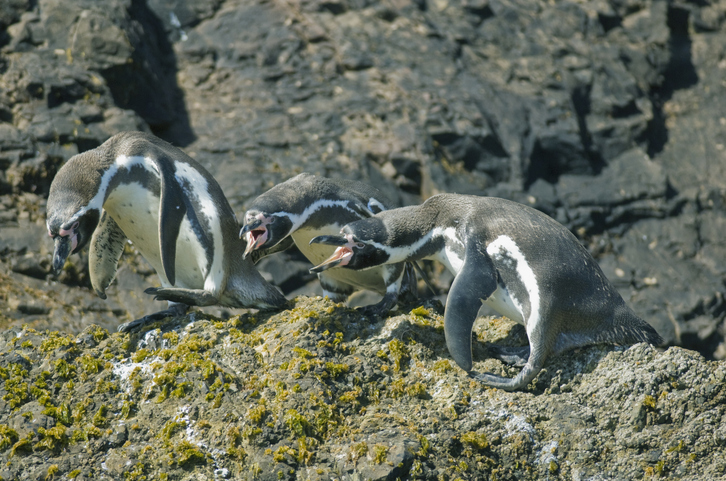
- White C-shaped band extending from the eye around the head
- Distinct black breast band
- Pink fleshy patch around the eyes (thermoregulation)
Diet and Behaviour
- Diet: Carnivorous; feeds mainly on anchovies, sardines, herring, and small marine organisms.
- Nesting: Uses burrows, caves, and guano deposits; does not form large chick crèches, unlike many other penguin species.
Conservation Status
- Chile (National): Endangered
- IUCN: Vulnerable
- CITES: Appendix I (commercial trade prohibited)
Major Threats
- Overfishing & Bycatch: Competition with commercial fisheries; deaths in fishing nets
- Habitat Loss & Pollution: Coastal degradation and marine pollution
- Climate Change: Disruption of food availability and breeding cycles
- El Niño Events: Alter ocean productivity, reducing prey
- Disease: Outbreaks such as avian (bird) flu
Conservation Concerns
- Experts warn that continued pressures could push the species from Endangered to Critically Endangered.
- Reclassification highlights the need for:
- Stricter sustainable fishing regulations (industrial and small-scale)
- Protection of breeding and feeding habitats
- Integrated conservation measures beyond legal reclassification