
RailTech Policy and e-RCT Digitisation
- 28 Feb 2026
In News:
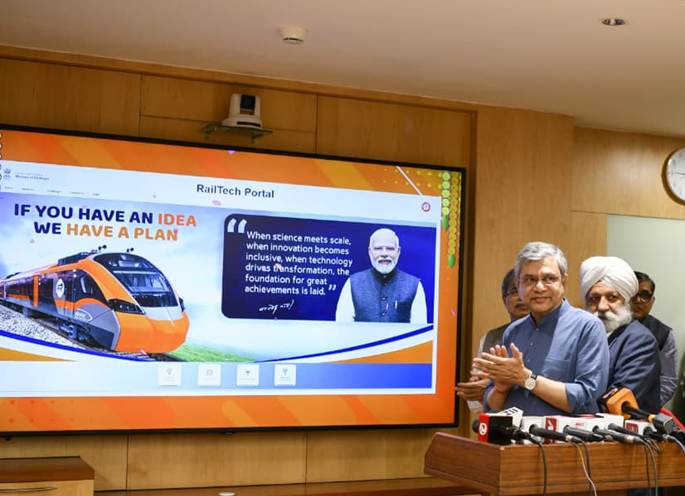
Under its flagship “52 Reforms in 52 Weeks” initiative (2026), the Ministry of Railways has announced two major structural reforms:
- RailTech Policy
- Complete Digitisation of the Railway Claims Tribunal (e-RCT)
These reforms aim to promote innovation, enhance transparency, and improve citizen-centric service delivery within Indian Railways — one of the world’s largest public transport systems.
RailTech Policy:
Objective
- The RailTech Policy seeks to create a structured, innovation-friendly ecosystem that enables startups, innovators, industry, and research institutions to collaborate with Indian Railways.
- It marks a shift from rigid vendor-based procurement systems to a technology-driven, trial-and-adoption framework.
Key Features
1. RailTech Portal
- A dedicated, end-to-end digital single-window platform
- Simplified, single-stage submission of proposals
- Enables innovators to directly approach Railways
2. Funding Mechanism
- Railways to support up to 50% of development funding for viable solutions
- Prototype development grants doubled
- Scale-up grants increased more than three times
- Successful solutions to receive long-term implementation orders
3. Inspiration from Best Practices: The framework draws lessons from:
- iDEX (Defence sector)
- Startup frameworks of MeitY
- Telecom innovation policies
Key Innovation Areas
The policy focuses on operational safety, efficiency, and administration, including:
- AI-based Elephant Intrusion Detection System (EIDS)
- AI-based fire detection in coaches
- Drone-based broken rail detection
- Rail stress monitoring systems
- Obstruction detection in foggy environments
- Sensor-based load calculation devices on parcel vans
- AI-based coach cleaning monitoring
- Solar panels on coaches
- AI-enabled pension and dispute resolution systems
The emphasis is on predictive maintenance, passenger safety, security enhancement, and administrative efficiency.
Digitisation of Railway Claims Tribunal (e-RCT)
Legal Basis
The Railway Claims Tribunal (RCT) was established under the Railway Claims Tribunal Act, 1987.
It adjudicates claims relating to:
- Compensation for death/injury in railway accidents
- Untoward incidents
- Loss or non-delivery of goods
- Refund of fares and freight
Currently, RCT functions through 23 benches (Principal Bench at Delhi).
Features of e-RCT System
The reform introduces complete end-to-end digitisation across all 23 benches (to be completed within 12 months).
Core Components
1. E-Filing
- 24×7 online filing from anywhere
- Uploading of petitions and documents
- Instant SMS/email acknowledgement
- Online scrutiny and defect rectification
2. Case Information System (CIS)
- Centralised database
- Auto-allocation of cases
- Real-time tracking from filing to disposal
- Hearing scheduling and monitoring
3. Document Management System (DMS)
- Digital storage of pleadings, notices, orders
- Digitally signed records
- Secure record management with disaster recovery
Additional Features
- Paperless courts
- Hybrid hearings (physical virtual)
- Online pronouncement of orders and judgments
- Automated alerts and compliance tracking
- Centralised data on pendency and disposal
Citizen-Centric Benefits
The e-RCT reform ensures:
- Faster disposal through automated workflows
- Reduced adjournments due to online hearings
- Elimination of travel burden
- Real-time case status updates
- Cost savings on travel, printing, courier
- Improved transparency and accountability
The model may be extended to other tribunals such as the Central Administrative Tribunal (CAT) if successful.
“52 Reforms in 52 Weeks” Initiative
Launched in 2026, the initiative commits Indian Railways to implement one structural reform per week, aiming at comprehensive transformation.
Earlier reforms include:
- Continuous end-to-end cleaning of general coaches
- Expansion of Gati Shakti Cargo Terminals to over 500 hubs
The broader vision aligns with digital governance, infrastructure modernisation, and administrative efficiency.