
Dugong
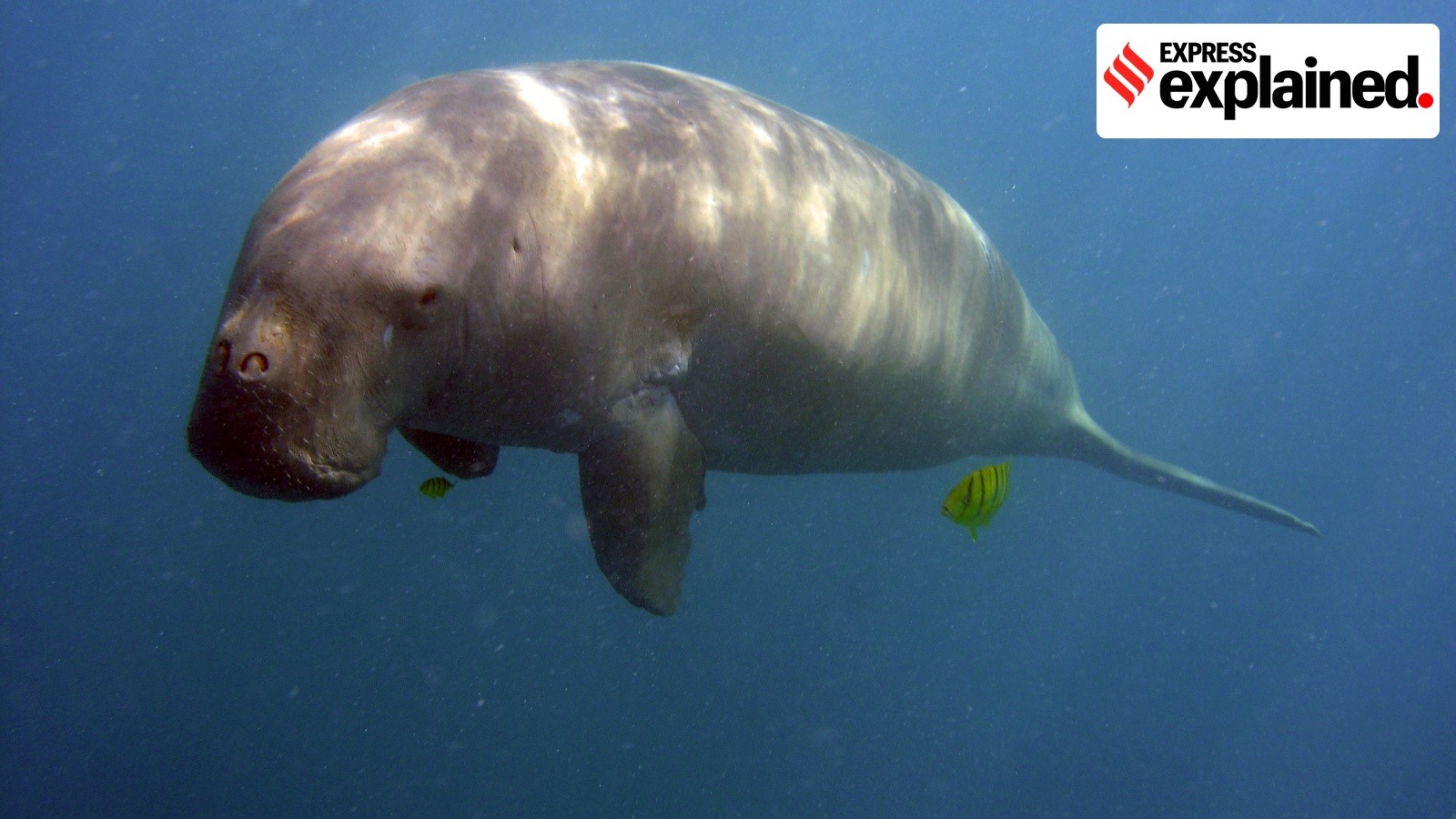
- 21 Nov 2025
In News:
A new global report released at the International Union for Conservation of Nature (IUCN) Conservation Congress in Abu Dhabi has warned that India’s dugong populations in the Gulf of Kutch, Gulf of Mannar–Palk Bay, and Andaman & Nicobar Islands face serious long-term survival risks due to habitat degradation and human pressures.
About Dugong
- Scientific Name:Dugong dugon
- Type: Large herbivorous marine mammal
- Evolutionary Links: Closely related to manatees; distantly related to elephants
- Common Name: Sea cow (inspired ancient “mermaid” myths due to gentle behaviour)
Distribution & Habitat
- Global: Warm, shallow coastal waters of the Indian and Pacific Oceans; largest stable population near north-western Australia
- India (Major Habitats):
- Gulf of Mannar–Palk Bay
- Andaman and Nicobar Islands
- Gulf of Kutch
- Prefer calm, shallow (<10 m) coastal waters with abundant seagrass meadows
Key Biological Features
- Size: Up to 3 m long; 300–420 kg
- Morphology: Whale-like tail fluke; paddle-shaped flippers
- Diet:Exclusively herbivorous—feeds on seagrass
- Consumption: ~ 30–40 kg of seagrass/day
- Ecological Role:
- Act as “ecosystem engineers”—natural grazing maintains healthy seagrass
- Seagrass meadows function as blue carbon sinks, aiding climate regulation
- Life History: Long-lived (up to 70 years) but very low reproductive rate (calving once every 3–7 years)
Conservation Status
- IUCN Red List:Vulnerable (declining trend since 1982)
- India:Schedule I, Wild Life (Protection) Act, 1972 (highest legal protection)
Population Status in India (Indicative)
- Gulf of Mannar–Palk Bay: ~ 150–200 individuals (largest remaining group)
- Andaman & Nicobar Islands:<50 individuals
- Gulf of Kutch:<20 individuals(Exact estimates are difficult due to turbid waters and elusive behaviour.)
Major Threats
- Habitat Loss & Seagrass Degradation: Coastal pollution, sedimentation, dredging, port development
- Fisheries Bycatch: Accidental entanglement in fishing nets—primary cause of mortality
- Marine Pollution & Heavy Metals: Detection of arsenic, cadmium, chromium, mercury and lead in dugong tissues (linked to industrial discharge, agricultural runoff, untreated wastewater)
- Slow Reproduction: Limits population recovery
Conservation Measures in India
- MoEFCC Task Force (2010) on dugong conservation
- National Dugong Recovery Programme with Tamil Nadu, Gujarat, A&N
- Dugong Conservation Reserve, Palk Bay (2022)—448 sq km to protect seagrass and dugongs
- Ongoing need for stronger enforcement, bycatch reduction, and incentive-based fisheries management