
Black-Headed Ibis
- 10 Nov 2025
In News:
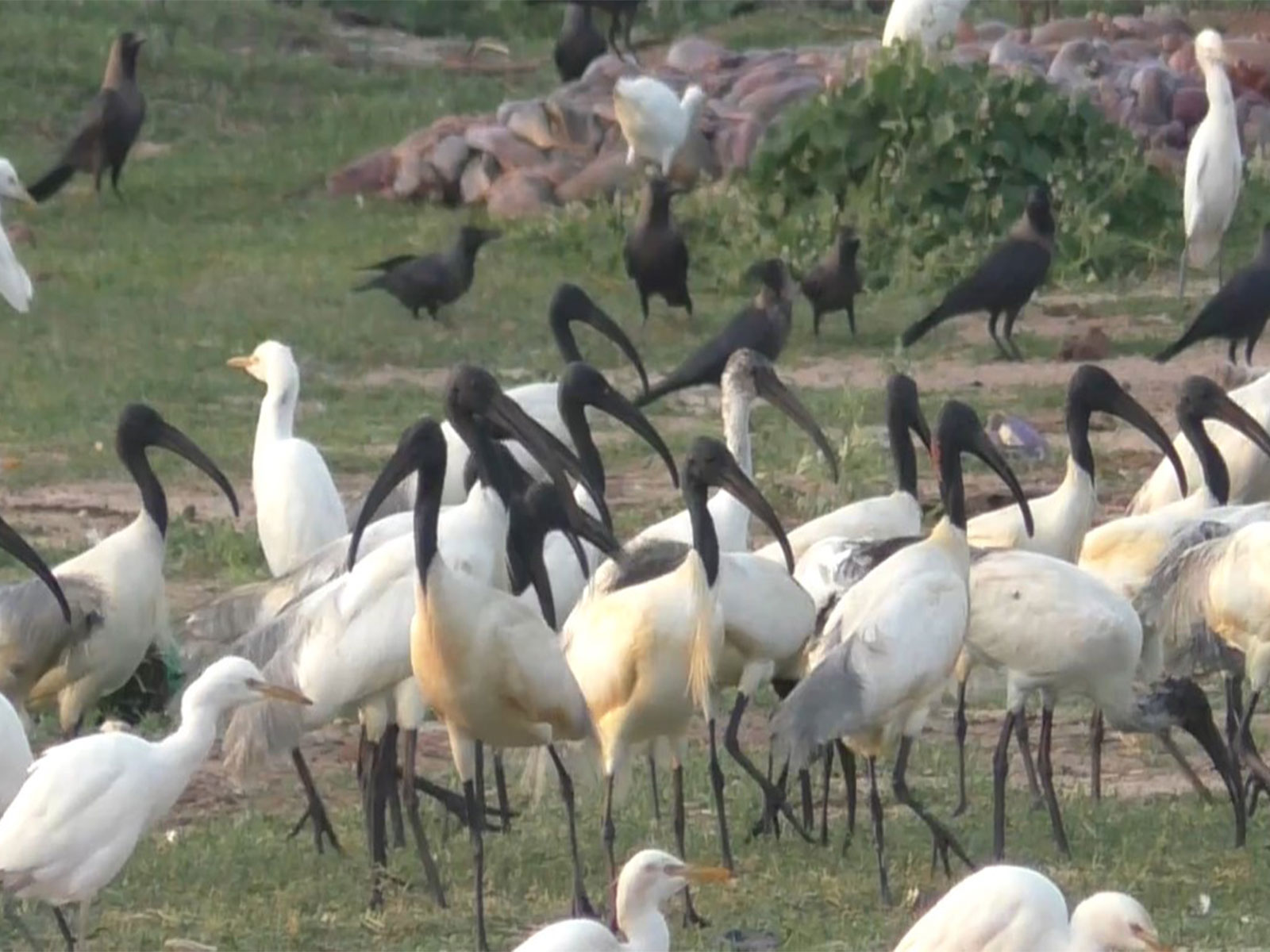
Recent sightings of a flock of Black-headed Ibis (Oriental White Ibis) in the salt pan regions of Thoothukudi district, Tamil Nadu, have drawn the attention of bird enthusiasts, ecologists, and conservationists. Such observations are significant not only for avifaunal studies but also as indicators of wetland health and ecological recovery, especially in coastal and human-modified landscapes.
About the Black-Headed Ibis
The Black-headed Ibis (Threskiornis melanocephalus), also known as the Oriental white ibis, Indian white ibis, or black-necked ibis, belongs to the family Threskiornithidae. It is a large wading bird, measuring about 65–76 cm in length, adapted to a wide variety of aquatic environments, which is why it is classified as a wader bird.
Morphologically, it is distinctive as the only native ibis species in its range with an overall white plumage combined with a black head and neck. Both males and females appear similar. Adults have greyish tail feathers, which turn jet black during the breeding season, adding to their ornamental appearance. The species is characterised by a long, curved bill, suited for probing mud and shallow water in search of food.
Habitat, Distribution and Ecology
The Black-headed Ibis is widely distributed across South and Southeast Asia, ranging from India westwards to Sri Lanka and eastwards up to Japan. It primarily inhabits wetlands, including lakes, marshes, riverbanks, and flooded agricultural fields. Notably, it is also found in coastal areas such as salt pans, as seen in Thoothukudi, and occasionally forages in dry fields and human-modified landscapes.
Its diet mainly consists of fish, insects, crustaceans, and other small aquatic organisms, making it an important component of wetland food webs. The presence of ibises, along with species such as flamingos, pelicans, and rosy starlings, reflects adequate food availability and suitable habitat conditions.
Conservation Status and Significance
At the global level, the Black-headed Ibis is classified as ‘Least Concern’ under the IUCN Red List. However, in parts of Asia, it is sometimes regarded as ‘Near Threatened’, owing to wetland degradation, pollution, altered hydrology, and habitat loss. This highlights the importance of regional conservation perspectives even when a species is not globally threatened.
The recent sightings in the salt pans of Thoothukudi are seen by experts as a positive ecological signal, suggesting improved habitat conditions following seasonal changes, particularly after the northeast monsoon (October–January), which replenishes wetlands and associated ecosystems.
Migratory Birds and Conservation Measures
The Thoothukudi observation also fits into a broader national context of avian conservation and migratory bird protection. Across India, wetlands and coastal regions act as crucial stopovers and wintering grounds for both resident and migratory birds. In this regard, proactive conservation measures, such as the declaration of a temporary ‘Silence Zone’ around Pangti village in Wokha district, Nagaland, to protect the globally significant congregation of Amur Falcons, demonstrate growing administrative and community awareness. Scientific studies have shown that excessive noise can disturb birds, disrupt breeding behaviour, and lead to habitat abandonment, underlining the need for habitat-sensitive governance.