
2nd Regional Open Digital Health Summit (RODHS) 2025
- 23 Nov 2025
In News:
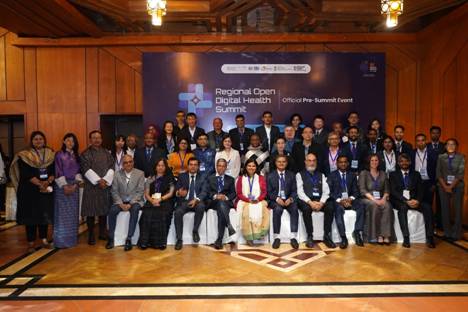
India hosted the 2nd Regional Open Digital Health Summit (RODHS) 2025 in New Delhi, bringing together South-East Asian countries to accelerate Universal Health Coverage (UHC) through Digital Public Infrastructure (DPI), open standards, and interoperable digital health systems.
About RODHS 2025
- Nature: A regional, multi-stakeholder platform to advance open, interoperable, people-centred digital health systems across the WHO South-East Asia Region.
- Organisers:
- National e-Governance Division (NeGD), Ministry of Electronics & IT
- National Health Authority (NHA)
- World Health Organization South-East Asia Regional Office (WHO-SEARO)
- UNICEF
- Participation: India, Bangladesh, Sri Lanka, Thailand, Nepal, Maldives and other South-East Asian countries.
- Context: Builds on momentum from the inaugural summit (Nairobi) and aligns digital health with SDGs and health security.
Key Objectives
- Integrate DPI and open standards into national health systems to support UHC.
- Promote interoperability, trust, skills, and community-centric design.
- Develop country-specific roadmaps for scalable digital health implementation.
- Move from pilot projects to population-scale systems.
India’s DPI Showcase
India highlighted its DPI stack and health platforms as scalable digital public goods:
- Aadhaar (digital identity)
- UPI (digital payments)
- CoWIN (vaccination platform)
- Ayushman Bharat Digital Mission (ABDM) (national digital health ecosystem)
These were presented as models for secure data exchange, federated architecture, and nationwide scale.
Major Themes & Discussions
- Open Standards & Interoperability:
- Adoption of WHO SMART Guidelines (Standards-based, Machine-readable, Adaptive, Requirements-based, Testable).
- FHIR as the global standard for health data exchange; emphasis on governance, workforce capacity and sustained investment.
- Foundational DPI for Health:Role of digital identity, payments, registries and data exchange layers in resilient health ecosystems.
- AI & Generative AI in Health:Use-cases in diagnostics, clinical documentation, multilingual engagement and data integration-enabled by interoperable data.
- Equity & Trust:UNICEF and WHO stressed privacy, child-centric design, health-worker enablement, and community adoption.
Outcomes & Significance
- Reinforced regional cooperation for interoperable digital health.
- Positioned DPI + open standards as core enablers of UHC and health system resilience.
- Encouraged joint governance between health and IT ministries to avoid silos.
- Emphasised that success should be measured by health outcomes, not just digital adoption.