
Yadava Dynasty
- 02 Mar 2026
In News:
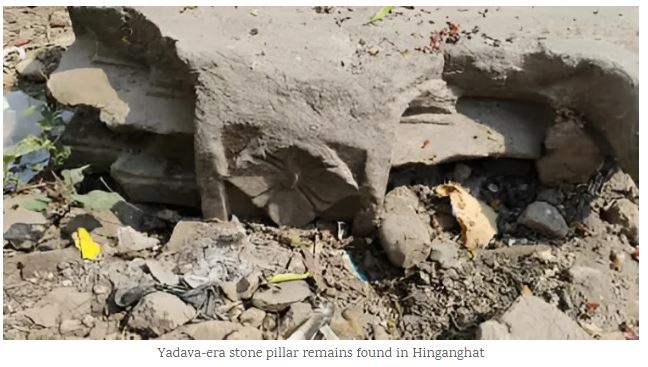
- Recently, remains of a 12th-century Mandir-style stone pillar associated with the Seuna (Yadava) dynasty were discovered along the Vena River in Hinganghat, Wardha district, Maharashtra.
- The find highlights the architectural and cultural legacy of the Yadavas in the Deccan region and provides material evidence of medieval temple construction traditions in central India.
About the Yadava (Seuna) Dynasty
The Yadava Dynasty, also known as the Seuna Dynasty, ruled a powerful Hindu kingdom in the Deccan between the 12th and 14th centuries CE.
Territorial Extent
At its peak, the Yadava kingdom extended:
- From the River Tungabhadra in the south
- To the River Narmada in the north
- Covering present-day Maharashtra, northern Karnataka, and parts of Madhya Pradesh
Political Evolution
Early Phase
- Initially feudatories of the Western Chalukyas of Kalyani.
- Rose to prominence under Bhillama V (c. 1187–1191 CE).
- Founded Devagiri (later Daulatabad) as the capital.
Zenith under Singhana (c. 1210–1247 CE)
- Grandson of Bhillama.
- Declared independence.
- Conducted military campaigns against:
- Hoysalas (South)
- Kakatiyas (East)
- Paramaras and Chalukyas (North)
This period marked the territorial and political high point of the dynasty.
Decline and Annexation
- During the reign of Ramachandra (1271–c. 1309 CE):
- In 1294, Alauddin Khalji invaded Devagiri.
- The Yadava kingdom was reduced to tributary status under the Delhi Sultanate.
- A later attempt to assert independence failed.
- In 1317, the kingdom was fully annexed by the Khalji Empire.
This marked the beginning of stronger Delhi Sultanate penetration into the Deccan.
Cultural and Architectural Contributions
1. Foundations of Marathi Culture
- The Yadavas played a crucial role in shaping early Marathi language and literature.
- Social and cultural institutions of Maharashtra evolved significantly during their rule.
2. Hemadpanti Architecture: The dynasty is closely associated with the Hemadpanti style, attributed to minister Hemadri (Hemadpant).
Key Features:
- Construction using large blocks of black stone
- Dry masonry technique (without mortar)
- Massive, durable structures
- Temple-oriented architectural designs
Numerous temples in Maharashtra are built in this style.
Tamil-Brahmi Inions in Egypt
- 13 Feb 2026
In News:
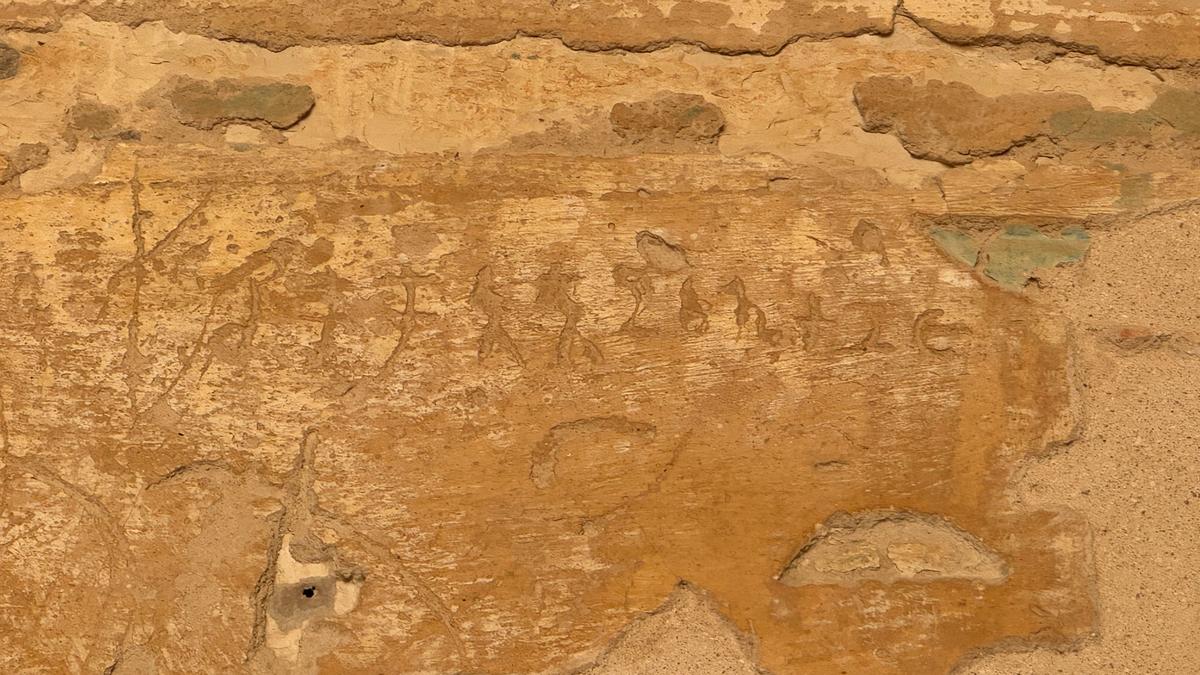
Nearly 30 Tamil-Brahmi, Prakrit and Sanskrit inions (1st–3rd century CE) have been identified inside tombs in Egypt’s Valley of the Kings, indicating direct Indian presence in Roman-era Egypt.
Researchers have documented around 30 ancient Indian inions inside six tombs at the Valley of the Kings, dating to the 1st–3rd centuries CE. These inions, written in Tamil-Brahmi, Prakrit, and Sanskrit, provide fresh evidence of maritime trade and cultural interactions between ancient Tamilakam and Roman Egypt.
About the Discovery
Location
- Found in six rock-cut tombs within the Valley of the Kings.
- The site forms part of the Theban Necropolis on the west bank of the Nile near Luxor.
Nature of Inions
- Nearly 30 inions identified.
- s used:
- Tamil-Brahmi
- Prakrit
- Sanskrit
- Suggests presence of people from diverse regions of ancient India.
Repeated Tamil Names
- The name “Cikai Korran” appears eight times across five tombs, indicating repeated visits or extended presence.
- Other names recorded: Kopan, Catan, Kiran - associated with Sangam-era Tamil culture.
- The inions resemble a graffiti tradition, similar to Greek inions left by visitors.
Link to Indo-Roman Trade
Maritime Trade Context
- Dating (1st–3rd century CE) coincides with peak Indo-Roman maritime trade.
- Trade route connected:
- Tamilakam (South India)
- Red Sea ports of Roman Egypt
- Nile Valley and Mediterranean world
Parallel Evidence
- Similar Tamil names were earlier found at Berenike, a major Roman port on the Red Sea.
- Confirms sustained contact beyond coastal ports.
Significance
- Demonstrates that Indian traders likely travelled beyond Egyptian ports into the Nile valley.
- Suggests deeper commercial and cultural exchanges, not merely port-level transactions.
- Reinforces literary references from:
- Periplus of the Erythraean Sea
- Sangam literature describing Yavana (Greek/Roman) trade.
About the Valley of the Kings
What It Is
A major burial site of pharaohs of Egypt’s New Kingdom.
Location
- West bank of the Nile River
- Near modern Luxor (ancient Thebes), Upper Egypt
- Designated a UNESCO World Heritage Site (1979) as part of Ancient Thebes.
Historical Period
- Primarily used during the 18th–20th Dynasties (c. 1539–1075 BCE).
- Royal burials from Thutmose I to Ramses X.
Architectural Features
- Rock-cut tombs with descending corridors.
- Pillared halls and burial chambers.
- Deep shafts to deter robbers.
- Walls decorated with funerary texts:
- Book of the Dead
- Book of Gates
- Book of That Which Is in the Underworld
Archaeological Importance
- Over 60 tombs discovered.
- Includes the famous tomb of Tutankhamun (KV62).
Historical Context: Tamil-Brahmi
- Early used to write Old Tamil.
- Dates back to at least the 3rd century BCE.
- Associated with the Sangam period.
- Previously found in Tamil Nadu, Sri Lanka, and Southeast Asia.
- Now documented in Egypt — expanding the geographical footprint of early Indian s.
Tamil-Brahmi Inions in Egypt
- 13 Feb 2026
In News:
Nearly 30 Tamil-Brahmi, Prakrit and Sanskrit inions (1st–3rd century CE) have been identified inside tombs in Egypt’s Valley of the Kings, indicating direct Indian presence in Roman-era Egypt.
Researchers have documented around 30 ancient Indian inions inside six tombs at the Valley of the Kings, dating to the 1st–3rd centuries CE. These inions, written in Tamil-Brahmi, Prakrit, and Sanskrit, provide fresh evidence of maritime trade and cultural interactions between ancient Tamilakam and Roman Egypt.
About the Discovery
Location
- Found in six rock-cut tombs within the Valley of the Kings.
- The site forms part of the Theban Necropolis on the west bank of the Nile near Luxor.
Nature of Inions
- Nearly 30 inions identified.
- s used:
- Tamil-Brahmi
- Prakrit
- Sanskrit
- Suggests presence of people from diverse regions of ancient India.
Repeated Tamil Names
- The name “Cikai Korran” appears eight times across five tombs, indicating repeated visits or extended presence.
- Other names recorded: Kopan, Catan, Kiran - associated with Sangam-era Tamil culture.
- The inions resemble a graffiti tradition, similar to Greek inions left by visitors.
Link to Indo-Roman Trade
Maritime Trade Context
- Dating (1st–3rd century CE) coincides with peak Indo-Roman maritime trade.
- Trade route connected:
- Tamilakam (South India)
- Red Sea ports of Roman Egypt
- Nile Valley and Mediterranean world
Parallel Evidence
- Similar Tamil names were earlier found at Berenike, a major Roman port on the Red Sea.
- Confirms sustained contact beyond coastal ports.
Significance
- Demonstrates that Indian traders likely travelled beyond Egyptian ports into the Nile valley.
- Suggests deeper commercial and cultural exchanges, not merely port-level transactions.
- Reinforces literary references from:
- Periplus of the Erythraean Sea
- Sangam literature describing Yavana (Greek/Roman) trade.
About the Valley of the Kings
What It Is
A major burial site of pharaohs of Egypt’s New Kingdom.
Location
- West bank of the Nile River
- Near modern Luxor (ancient Thebes), Upper Egypt
- Designated a UNESCO World Heritage Site (1979) as part of Ancient Thebes.
Historical Period
- Primarily used during the 18th–20th Dynasties (c. 1539–1075 BCE).
- Royal burials from Thutmose I to Ramses X.
Architectural Features
- Rock-cut tombs with descending corridors.
- Pillared halls and burial chambers.
- Deep shafts to deter robbers.
- Walls decorated with funerary texts:
- Book of the Dead
- Book of Gates
- Book of That Which Is in the Underworld
Archaeological Importance
- Over 60 tombs discovered.
- Includes the famous tomb of Tutankhamun (KV62).
Historical Context: Tamil-Brahmi
- Early used to write Old Tamil.
- Dates back to at least the 3rd century BCE.
- Associated with the Sangam period.
- Previously found in Tamil Nadu, Sri Lanka, and Southeast Asia.
- Now documented in Egypt — expanding the geographical footprint of early Indian s.
VrindavaniVastra
- 19 Nov 2025
In News:
The Government of Assam has initiated formal discussions with the British Museum to facilitate the return of the VrindavaniVastra, a priceless 16th–17th century Assamese textile that holds immense cultural, historical, and religious significance. The move is part of broader efforts to reclaim India’s cultural artefacts preserved abroad.
What is VrindavaniVastra?
- A 400-year-old traditional textile originating from Assam.
- The word Vrindavani refers to Vrindavan, the sacred land of Lord Krishna’s childhood; Vastra means cloth.
- The textile depicts:
- Scenes from Lord Krishna’s childhood.
- His lilas (divine exploits).
- Various events of Vaishnav devotional narratives.
Origin & Patronage
- Created during the rule of Koch King Nara Narayan (16th century).
- Produced under the guidance of SrimantaSankardeva, the founder of Assamese Neo-Vaishnavism.
- Sankardeva took refuge under Nara Narayan after he faced hostility from sections of Ahom-era Brahmin priests.
Weaving Technique
- Made of woven silk using the complex lampas technique.
- Lampas weaving requires:Two weavers working simultaneously, making it a technically demanding process.
- Uses a rich palette of colours:Red, yellow, green, black, white, and others.
- Combines artistic traditions from:
- Assam
- Bengal
- Tibetan and broader Himalayan influences
Historical Journey
- The textile originally consisted of 15 separate silk panels, later stitched into a continuous piece.
- The specimen held in the British Museum is:
- Nine and a half metres long
- Assembled from several draped silk sections
- It travelled from Assam to Tibet through ancient cultural exchanges.
- Acquired by the British Museum in 1904, where it remains one of the most significant exhibits from South Asia.
Cultural Significance
- A masterpiece of Assamese Vaishnavite art and a visual representation of Sankardeva’s devotional philosophy.
- Reflects a synthesis of:
- Textile craftsmanship
- Storytelling
- Religious aesthetics
- Represents the rich heritage of Sattriya tradition, associated with monasteries (sattras) founded by Sankardeva.