
UN Water Convention
- 10 Nov 2025
In News:
- Bangladesh became the first country in South Asia to accede to the UN Water Convention.
- Move highlights growing importance of transboundary water governance amid climate change and upstream interventions.
UN Water Convention
- Official Name: Convention on the Protection and Use of Transboundary Watercourses and International Lakes
- Adopted: 1992 (Helsinki)
- Entered into force: 1996
- Serviced by: United Nations Economic Commission for Europe (UNECE)
- Original scope: Pan-European region
- Global access: Open to all UN Member States since March 2016
Core Features of the Convention
- Legally binding international framework
- Promotes:
- Equitable and reasonable utilisation of shared watercourses
- Prevention, control, and reduction of transboundary impacts
- Sustainable management of international rivers and lakes
- Mandates:
- Cooperation among riparian states
- Formation of joint bodies and basin-level agreements
- Does not replace bilateral/multilateral treaties; rather supports and strengthens them
- Instrument for achieving SDGs, especially:
- SDG 6 (Clean Water and Sanitation)
- SDG 16 (Peace and Institutions)
- SDG 17 (Partnerships)
Why Bangladesh Joined – Key Drivers
- Downstream dependency:
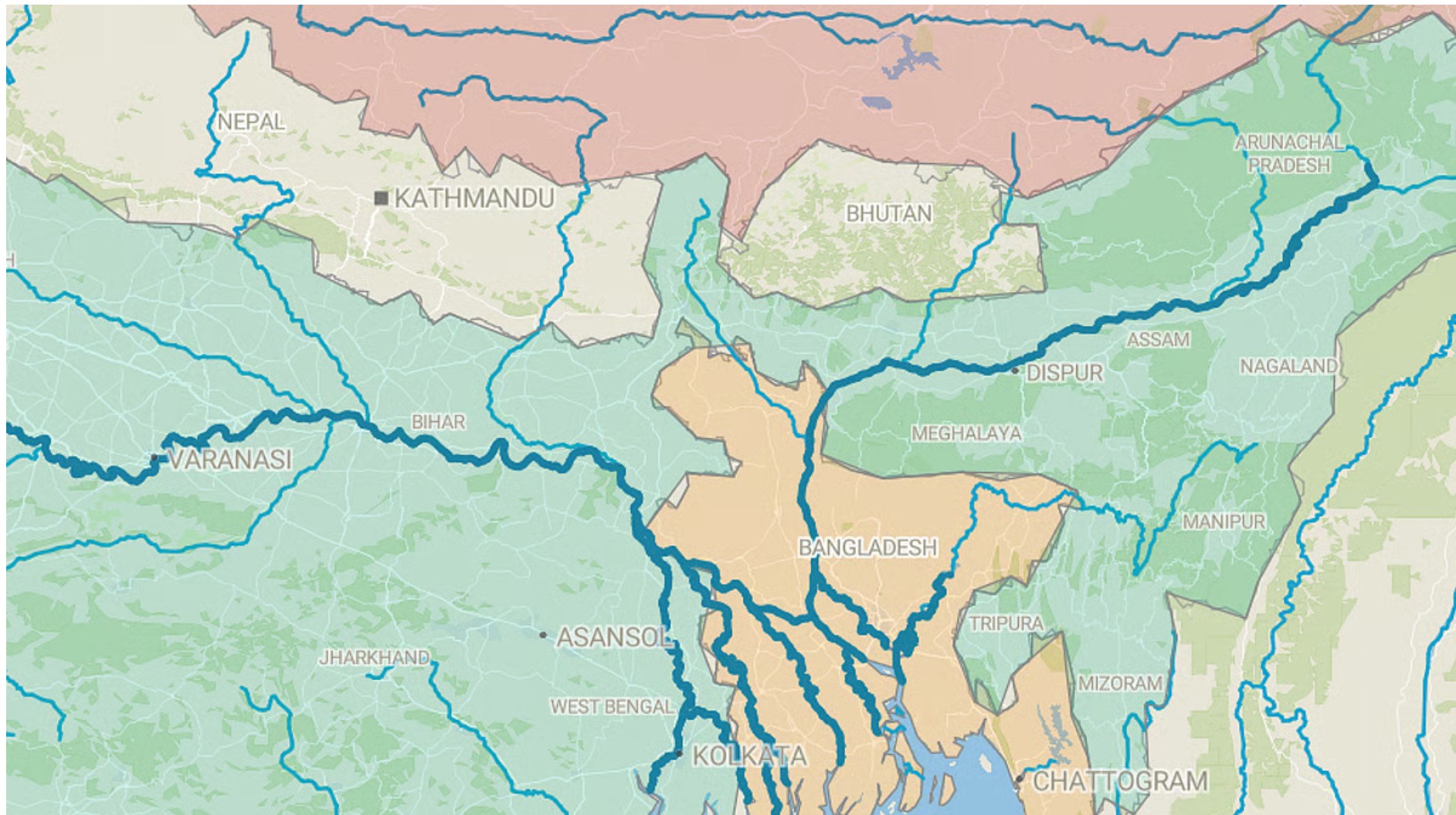
- Shares the Ganges–Brahmaputra–Meghna (GBM) basin with India and China
- Only ~7% of GBM watershed lies within Bangladesh
- Water stress indicators:
- 60% population vulnerable to floods
- 20–25% land flooded annually
- 81 of 1,415 rivers dried up or near extinction
- Salinity intrusion and sea-level rise in delta regions
- Climate change impacts:Altered Himalayan River flows
- Legal step:
- Bangladesh High Court (2019) declared rivers as “legal persons”
Regional Context
- China:Motuo Hydropower Station on Yarlung Tsangpo (Tibet) – world’s largest proposed dam
- India:
- Existing treaties:
- Indus Waters Treaty (1960) – Pakistan
- Ganges Water Treaty (1996) – Bangladesh (renewal due 2026)
- Disputes:
- Teesta River
- Tipaimukh Dam (Barak River)
- River interlinking concerns
- Existing treaties:
India’s Concerns
- Convention may:
- Strengthen Bangladesh’s negotiation position
- Influence future Ganges Treaty renegotiation
- India traditionally prefers bilateral mechanisms over multilateral water frameworks
- Possibility of:
- Nepal & Bhutan following Bangladesh
- Bangladesh exploring trilateral cooperation with China and Pakistan