
Ratanmahal Wildlife Sanctuary
- 22 Nov 2025
In News:
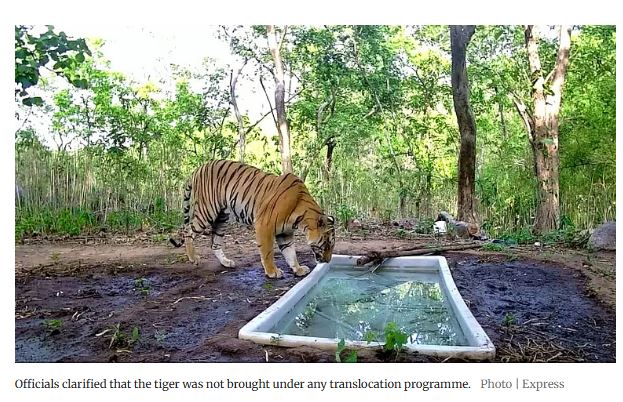
A wild tiger has established a sustained presence for about nine months in Ratanmahal Wildlife Sanctuary, marking the first long-term tiger residency in Gujarat in decades. The tiger, first sighted in February 2025, is believed to have naturally dispersed from Madhya Pradesh, highlighting improving habitat connectivity and ecosystem health along the inter-state border.
About Ratanmahal Wildlife Sanctuary
- Location:Gujarat; along the Gujarat–Madhya Pradesh border (major portion within Gujarat)
- Established: March 1982
- Also Known As:Ratanmahal Sloth Bear Sanctuary (hosts the highest sloth bear population in Gujarat)
- Hydrology: Forms the catchment of the Panam River, a key river of Central Gujarat
Habitat & Vegetation
- Forest Types:
- Dry teak forests at foothills
- Mixed deciduous forests with dry bamboo brakes on the periphery
- Plateau Vegetation: Dominance of Mahuda (Mahudo) with patches of Sadad and Timru
- Key Flora: Teak, bamboo, amla, dhavdo, kakadiyo, mahuda, tanach, charoli, ber, jamun, khakhro, dudhlo
Faunal Diversity
- Mammals: Leopard, Sloth bear, Palm civet, Indian civet, Four-horned antelope
- Birds:Loten’s sunbird, Large green barbet, Yellow-cheeked tit
- Recent Addition:Tiger (Panthera tigris)
Ecological Significance of the Tiger’s Return
- Indicator Species: Tigers are apex predators; their presence signals healthy prey base, water availability, and habitat quality.
- Natural Dispersal: The tiger was not translocated; it migrated naturally from MP, aided by landscape connectivity and population pressure there.
- Contrast with Past: A tiger that reached Mahisagar (2019) did not survive due to inadequate prey—underscoring the improved conditions now at Ratanmahal.
- Monitoring: Continuous surveillance via camera traps and field teams to track movement and behaviour.
Conservation Implications
- Unique Coexistence: Gujarat now hosts all three big cats—Asiatic lion, Indian leopard, and tiger—within the same broader landscape.
- Management Challenges: Overlapping ranges demand enhanced corridor management, conflict mitigation, and community safety measures.
- Policy Signal: Validates habitat restoration, prey augmentation, and inter-state ecological linkages.