
Rare Earth Hypothesis
- 14 Nov 2025
In News:
The Rare Earth Hypothesis has re-emerged in scientific and public discourse following rapid advances in exoplanet discovery and characterisation. New findings suggest that while Earth-sized planets may be relatively common, the conditions required for complex, multicellular life could still be exceptionally rare.
What is the Rare Earth Hypothesis?
- Proposed in 2000 by Peter Ward and Donald Brownlee.
- It argues that:
- Simple microbial life may be widespread in the universe.
- Complex life (plants, animals, intelligent beings) requires a highly specific and unlikely combination of conditions.
- This challenges the principle of mediocrity, which assumes Earth is not special and that similar life-supporting planets should be common.
Key Conditions Highlighted by the Hypothesis
The emergence and persistence of complex life depend on multiple astronomical, planetary, and biological factors, including:
- Location in a stable region of the galaxy.
- A suitable star (long-lived, stable radiation output).
- Proper placement in the habitable zone.
- A rocky planet of the right size and mass.
- Long-term atmosphere retention and surface water.
- Climate stabilisation mechanisms (e.g., carbon cycling).
- Geological activity such as tectonics.
- Presence of a large moon (for axial stability).
- A favourableplanetary system architecture.
Insights from Exoplanet Discoveries
Data from the Kepler Space Telescope has transformed understanding of planetary abundance:
- A non-negligible fraction of Sun-like (GK dwarf) stars host Earth-sized planets in their habitable zones.
- This weakens the claim that Earth’s size and orbital position are extremely rare.
However, recent studies indicate that “Earth-sized” is not the same as “Earth-like.”
Atmospheres: A Major Bottleneck
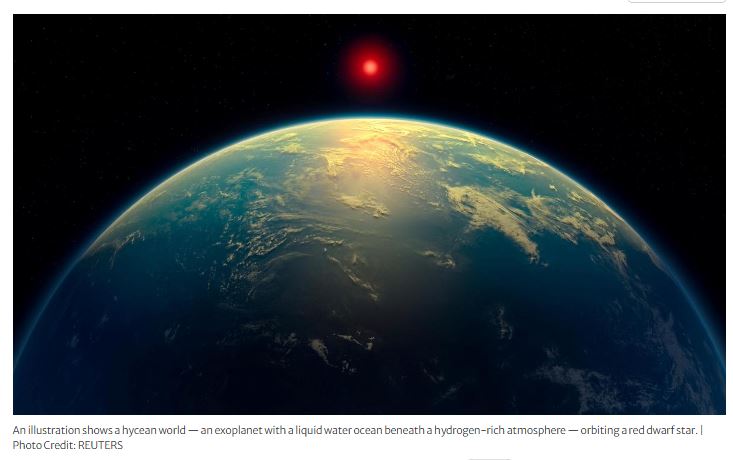
- Many potentially habitable planets orbit M-dwarf stars, which are:
- Smaller and longer-lived,
- But prone to strong flares and intense radiation.
- Such radiation can strip atmospheres and water, producing false oxygen signals that mimic life.
- Retaining an atmosphere over billions of years requires:
- Strong planetary magnetic fields,
- Adequate mass,
- Optimal distance from the star,
- Low stellar activity.
Observations using the James Webb Space Telescope (JWST) show that:
- Planets like TRAPPIST-1b and TRAPPIST-1c lack thick atmospheres.
- This reinforces the idea that habitable surface conditions may be uncommon, even when planets are Earth-sized.
Climate Stability and Plate Tectonics
- On Earth, long-term climate stability is aided by:Carbon cycling between the atmosphere, oceans, and interior.
- Plate tectonics may support this stability, but:Some models suggest alternative mechanisms (volcanism-weathering balance).
- There is no consensus yet on whether plate tectonics is essential for life, adding uncertainty to the hypothesis.
Role of Giant Planets
- Earlier views held that Jupiter-like planets shield inner planets from impacts.
- New studies show their role is context-dependent:They can either reduce or increase asteroid impacts.
- Thus, a giant planet is not a universal prerequisite for complex life.
Link to the Fermi Paradox
The Rare Earth Hypothesis offers one explanation for the Fermi Paradox:
- If complex and intelligent life is rare, then the absence of extraterrestrial contact is not surprising.
- Searches for technosignatures (e.g., radio signals) by projects like Breakthrough Listen have so far found no confirmed evidence.
Current Status
- The hypothesis is plausible but unproven.
- Future clarity may come from:
- Detection of atmospheres on temperate rocky planets,
- Better understanding of exoplanet tectonics and climate cycles,
- Discovery of biosignatures or technosignatures.