
Meerut Bugle
- 21 Nov 2025
In News:
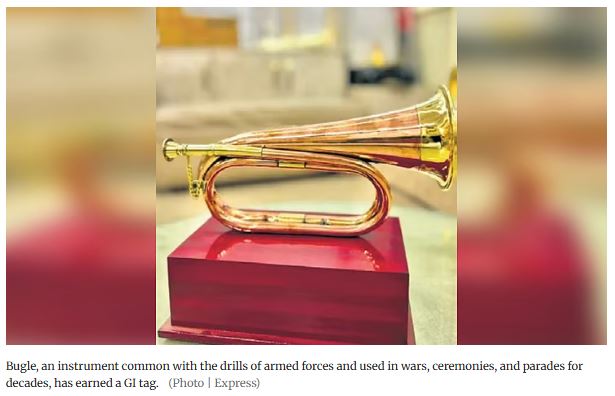
The Meerut bugle, a brass wind instrument integral to India’s military drills, parades and ceremonies, has received a Geographical Indication (GI) tag, providing legal protection and renewed recognition to a century-old craft rooted in Meerut.
About the Meerut Bugle
- What it is: A handcrafted brass wind instrument used as a command and ceremonial tool in the Army, paramilitary and police forces.
- Cultural Significance: Known for its commanding, clear tone, it occupies a place of honour in regimental bands and national ceremonies.
- Origin & Evolution:
- Bugle-making in Meerut dates back to the late 19th century (British era), when it was central to battlefield communication.
- Over time, it evolved into a specialised local industry, aligning with the growth of India’s military traditions.
- Current Use: Meerut-made bugles continue to be supplied to defence units, paramilitary forces, police organisations and training academies across India.
Key Craft Features
- Material: High-quality brass, ensuring durability and tonal accuracy.
- Process:Handcrafted workmanship, reflecting traditional skills passed down generations.
- Heritage Value: Represents a living military heritage, linking colonial-era communication tools to modern ceremonial functions.
Why the GI Tag Matters
- Authenticity & Protection: Prevents counterfeits and cheap imitations from being sold as “Meerut bugles”.
- Market Value: Enhances brand recognition, encouraging government institutions and buyers to prefer certified instruments.
- Livelihood Support: Offers a pathway to revive traditional workshops affected by rising brass prices, declining orders and imported substitutes.
- Global Exposure: Enables participation in international exhibitions, cultural fairs and heritage showcases.
About the GI Tag
- Definition: A GI tag certifies that a product originates from a specific region and possesses qualities or reputation attributable to that place.
- Legal Framework:Geographical Indications of Goods (Registration and Protection) Act, 1999 (implemented from September 2003).
- Authority:Geographical Indications Registry, under the Office of the Controller General of Patents, Designs & Trade Marks, Ministry of Commerce & Industry.
- Benefits:
- Exclusive rights to authorised producers
- Legal action against misuse
- Boosts rural/artisan livelihoods and preserves traditional knowledge
- India’s GI Landscape:600+ GI-tagged products across agriculture, handicrafts, food and manufactured goods.