
Integrated Forum on Climate Change and Trade
- 20 Nov 2025
In News:
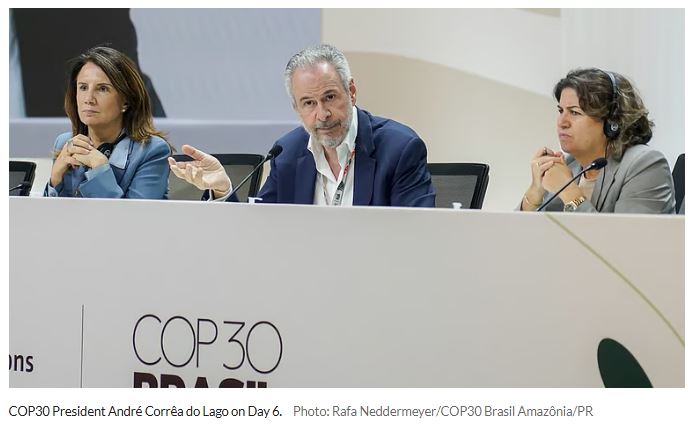
The 30th Conference of the Parties (COP30) to the United Nations Framework Convention on Climate Change formally launched the Integrated Forum on Climate Change and Trade (IFCCT) at Belém. The initiative responds to growing global concerns that climate policies and trade measures are increasingly intersectingand clashingwithout adequate coordination.
About the Integrated Forum on Climate Change and Trade
- Nature: A politically supported, non-negotiating forum
- Purpose: To provide a permanent space for countries to discuss the interface between climate action, trade policy, and development priorities
- Co-Chairing: Brazil and a developed-country partner
- Participation: Open to all Parties to the UNFCCC
- Institutional Status:
- Independent of both the WTO and the UNFCCC
- Does not negotiate binding outcomes, interpret agreements, adjudicate disputes, or assess specific national measures
Rationale
- Climate-related trade measures (e.g., tariffs, border carbon adjustments, industrial subsidies) are proliferating rapidly.
- Countries increasingly recognise that trade policy will shape their ability to meet climate goals.
- Uncoordinated actions risk fragmentation, trade disputes, and reduced trust, especially affecting developing countries.
Key Features
- Consultative Process:
- An open-ended consultation phase extending into 2026 to define discussion themes and the forum’s jurisdiction.
- First consultation round scheduled in Geneva, symbolically placing climate–trade dialogue close to the multilateral trading system.
- Interoperability Focus:Aims to promote coherence between climate and trade regimes, avoiding fragmented rule-making.
- Multi-Stakeholder Engagement:Involves civil society organisations, business associations, and international initiatives.
- Development-Oriented Approach:Seeks to amplify the voice of developing countries in shaping emerging trade rules linked to climate action.
Global Perspectives Highlighted at Launch
- Developing Countries: Emphasised concerns over unilateral trade measures and stressed principles like Common But Differentiated Responsibilities (CBDR).
- Developed Economies: Highlighted the need for open, rules-based trade to support clean technology transitions and emissions reduction.
- Institutional Concerns:The World Trade Organization warned that a patchwork of climate-related trade measures could undermine predictability unless better coordinated.
Significance
- Recognises that climate and trade can no longer be treated as separate policy domains.
- Attempts to prevent trade from becoming a fault line in global climate cooperation.
- Represents a strategic effort by the COP30 Presidency to align climate ambition with global economic governance.