
Individual Entitlement Survey for Particularly Vulnerable Tribal Groups (PVTGs)
- 23 Nov 2025
In News:
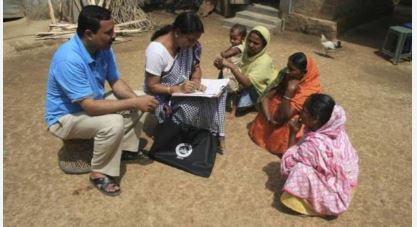
The Union Government will conduct India’s first-ever ‘Individual Entitlement Survey’ covering 10 lakh households of Particularly Vulnerable Tribal Groups (PVTGs) to assess whether benefits of 39 central government schemes are reaching the most vulnerable tribal communities at the grassroots level.
What is the Individual Entitlement Survey?
- Nodal Ministry: Ministry of Tribal Affairs
- Objective:
- To map scheme-wise coverage gaps among PVTG households
- To identify eligible beneficiaries who remain uncovered and enable corrective action by line ministries
- Schemes Covered:
- 39 schemes across 18 central ministries/departments, including:
- Mahatma Gandhi National Rural Employment Guarantee Scheme (MGNREGS)
- Social security schemes for unorganised workers
- Old-age and social pensions
- Financial assistance for meritorious Scheduled Tribe students
- Flagship welfare schemes such as LPG connections
- 39 schemes across 18 central ministries/departments, including:
Scope & Coverage
- Households: ~ 10 lakh PVTG households
- Population Covered: ~ 48 lakh individuals
- Geographical Spread:
- 1,000 blocks dominated by PVTGs
- 75 recognised PVTGs across 18 States and Andaman & Nicobar Islands (UT)
Methodology & Implementation
- Execution: Through State Governments
- Ground Support:States may engage NGOs, panchayat officials, or local functionaries
- Digital Tool:A mobile application developed by the National e-Governance Division (NeGD)
- Data Collection Features:
- House-to-house survey
- Scheme-wise eligibility and benefit status
- Geo-tagging (latitude & longitude) and household photographs
- Post-Survey Outcome:
- Issuance of a ‘Universal Entitlement Card’ to every PVTG household/member
- Card will clearly mention entitlements and coverage status under tracked schemes
What are Particularly Vulnerable Tribal Groups (PVTGs)?
- Definition:A sub-classification of Scheduled Tribes that are more vulnerable due to extreme socio-economic backwardness
- Constitutional Basis:Article 342(1) empowers the President to notify Scheduled Tribes
- Historical Evolution:
- 1973:Dhebar Commission identified Primitive Tribal Groups (PTGs)
- 1975: First list of 52 PTGs notified
- 1993: 23 more groups added
- 2006: Renamed as PVTGs
- Total:75 PVTGs out of 705 Scheduled Tribes
- Key Characteristics:
- Small, isolated and homogeneous populations
- Pre-agricultural or simple subsistence economy
- Low literacy and poor health indicators
- Lack of written language and limited access to infrastructure
- Stagnant or declining population growth
- State-wise Concentration:
- Odisha: Highest number (13)
- Andhra Pradesh & Telangana: 12
- Jharkhand & Bihar: ~9
Major Government Initiatives for PVTGs
- PM-JANMAN (Pradhan Mantri Janjati Adivasi Nyaya Maha Abhiyan):
- Covers 75 PVTGs across 18 States/UTs, 22,544 villages, 220 districts
- Focus on connectivity, services and protection of near-extinct tribes
- PM-PVTG Development Mission:Aims to improve housing, drinking water, sanitation, health, nutrition, education and road access
- Janjatiya Gaurav Divas:
- Celebrated on Birsa Munda’s birth anniversary
- Recognises tribal contributions to India’s cultural heritage and freedom struggle