
Junk DNA

- 10 Nov 2025
In News:
For decades, large portions of the human genome were dismissed as “junk DNA”- genetic material assumed to have little or no functional value. However, advances in genetics, genomics, and artificial intelligence are rapidly reshaping this understanding. Recent research, particularly the discovery of cancer-linked mutations in non-coding DNA, highlights how so-called junk DNA plays a crucial role in gene regulation, genome architecture, evolution, and disease.
Understanding Junk DNA
In genetics, junk DNA refers to regions of DNA that do not code for proteins. While DNA’s primary role is to provide instructions for protein synthesis, not all DNA sequences serve this function.
- In the human genome, nearly 98% of DNA is non-coding, whereas in simpler organisms like bacteria, only about 2% of DNA is non-coding.
- A part of non-coding DNA is known to have clear functions, such as producing:
- Transfer RNA (tRNA)
- Ribosomal RNA (rRNA)
- Regulatory RNAs
- However, a substantial fraction neither codes for proteins nor produces RNA, and its function remained unclear- hence the term junk DNA.
Over time, scientists have accumulated evidence that these regions are not entirely useless. Some DNA fragments that were originally non-functional have acquired functions through exaptation—a process by which structures or sequences evolve new roles not originally shaped by natural selection.
Emerging Functional Significance of Non-Coding DNA
Modern genomics has revealed that non-coding DNA plays a vital role in:
- Gene regulation (switching genes on or off),
- Chromatin organisation,
- Genome stability,
- Evolutionary innovation.
These roles become especially critical in understanding complex diseases such as cancer, where gene regulation and genome structure are often disrupted.
Breakthrough Discovery: Cancer Mutations in ‘Junk’ DNA
A recent study by the Garvan Institute of Medical Research, published in Nucleic Acids Research, marks a major breakthrough. Using artificial intelligence and machine learning, researchers identified a new class of cancer-driving mutations hidden in non-coding DNA.
Key Findings
- Mutations were found in non-coding regions across at least 12 cancer types, including breast, prostate, and colorectal cancers.
- Every tumour sample analysed had at least one mutation in these critical non-coding regions.
- These mutations were located at specific DNA sites that bind a protein called CTCF (CCCTC-binding factor).
Role of CTCF and Genome Architecture
CTCF is a key protein that helps fold long strands of DNA into precise three-dimensional (3D) structures inside the nucleus. These structures act as genomic “anchors”, bringing distant DNA regions together and controlling which genes are expressed.
- Some CTCF binding sites are “persistent anchors”, meaning they are present across many cell types.
- Mutations at these sites disrupt the 3D organisation of the genome, leading to abnormal gene activation or suppression.
- Such disruptions give cancer cells a survival and growth advantage, turning these sites into mutational hotspots.
To identify these sites, researchers developed an AI-based tool called CTCF-INSITE, which analysed genomic and epigenomic data from over 3,000 tumour samples using data from the International Genome Consortium.
Implications for Cancer Diagnosis and Treatment
This discovery has far-reaching implications:
- Universal cancer targets: Since the same non-coding mutations appear across multiple cancers, therapies could potentially work across cancer types rather than being mutation-specific.
- Early diagnosis: Alterations in these genomic anchors could serve as biomarkers for early cancer detection.
- New treatment strategies: Researchers plan to use CRISPR gene-editing to study how correcting these mutations affects cancer progression.
- AI in healthcare: The study demonstrates how artificial intelligence can uncover hidden patterns in vast biological data sets.
GPS Spoofing

- 10 Nov 2025
In News:
The recent disruption of flight operations at Indira Gandhi International (IGI) Airport, Delhi, due to GPS spoofing, has brought renewed attention to emerging non-traditional threats to civil aviation. Though commonly associated with conflict zones and electronic warfare environments, this incident highlights how cyber–electromagnetic threats can spill over into civilian airspace, raising serious concerns for aviation safety, national security, and technological resilience.
What is Spoofing and GPS Spoofing?
A spoofing attack is a category of cyberattack in which false data is masqueraded as coming from a trusted source to deceive systems or users. Common forms include:
- GPS spoofing
- IP spoofing (often linked with DDoS attacks)
- SMS and Caller ID spoofing
GPS spoofing specifically involves the broadcast of counterfeit satellite navigation signals that imitate genuine Global Positioning System (GPS) signals. Unlike GPS jamming, which simply blocks or degrades signals, spoofing is more dangerous because it feeds incorrect but believable navigation data to receivers.
Since real GPS satellite signals are extremely weak when they reach Earth, a receiver may mistakenly prioritise stronger fake signals, calculating incorrect position, altitude, speed, and timing. The ultimate objective is to induce the target—such as an aircraft—to act on false navigation information.
The IGI Airport Incident: What Happened?
At IGI Airport, spoofed GPS signals corrupted aircraft navigation systems, particularly affecting flights approaching Runway 10/28, a key runway heavily used during winter operations. The spoofing interfered with the Required Navigation Performance (RNP) system, which is a satellite-based precision landing mechanism.
As a result:
- Pilots received incorrect positional data during approach.
- Precision landings using GPS became unreliable.
- Several flights, including those of Air India and Vistara, were diverted.
- Air traffic congestion increased, especially during easterly wind conditions when alternative runways were constrained.
This marked the first known GPS spoofing incident in Delhi’s civilian airspace, making it unusual, as such attacks are typically reported in active conflict or military zones.
Response by Aviation Authorities
Delhi International Airport Ltd (DIAL) and aviation authorities responded swiftly:
- Cautionary alerts were issued to pilots via the ATIS (Airport Terminal Information System).
- Airlines were advised to temporarily suspend RNP-based landings.
- Aircraft were instructed to rely on ground-based navigation aids such as:
- ILS (Instrument Landing System)
- VOR (VHF Omnidirectional Range)
- Visual approach procedures
- The installation and commissioning of a new ILS for Runway 10/28 was expedited, with validation trials conducted by airlines like IndiGo.
Indian pilots’ training in fallback navigation methods played a critical role in preventing accidents.
Why GPS Spoofing is Dangerous for Aviation
GPS spoofing poses serious safety risks, especially in civil aviation:
- Incorrect altitude and position data can compromise approach and landing.
- Sudden false deviations may prompt dangerous corrective manoeuvres.
- Errors in timing can affect autopilot systems, collision avoidance, and air traffic coordination.
- Over-reliance on satellite navigation without redundancy can increase vulnerability.
Globally, the threat is rising. According to the International Air Transport Association (IATA), there were over 4.3 lakh incidents of GPS jamming or spoofing in 2024, a 62% increase compared to 2023, mostly over conflict-prone regions.
Global and Geopolitical Dimension
GPS spoofing is frequently reported in:
- Black Sea region
- West Asia and the Middle East
- Active military or electronic warfare zones
Experts believe the Delhi incident may have been caused by spillover of electronic warfare activities from conflict zones in West Asia. Under certain atmospheric conditions, distorted or spoofed signals can travel up to 2,500 km, affecting regions far removed from the actual source. Similar disruptions have previously impacted civilian flights over Turkey, Russia, and Ukraine.
This underlines a critical reality: modern warfare technologies can have unintended transnational consequences, blurring the line between military and civilian domains.
INS Arnala

- 08 Jun 2025
In News:
The Indian Navy is set to commission 'Arnala', the first warship under the Anti-Submarine Warfare Shallow Water Craft (ASW-SWC) series at the Naval Dockyard in Visakhapatnam. The commissioning will be presided over by Chief of Defence Staff, General Anil Chauhan.
About INS Arnala
- Type: First in the series of 16 Anti-Submarine Warfare Shallow Water Crafts (ASW-SWC)
- Builder:
- Primary: Garden Reach Shipbuilders & Engineers (GRSE), Kolkata
- Partner: L&T Shipbuilders
- Delivery Date: May 8, 2025
- Indigenous Content: Over 80%
- Partners Involved:
- BEL, L&T, Mahindra Defence, MEIL
- 55+ MSMEs involved in the supply chain
Capabilities & Features
- Length: 77 meters
- Displacement: 1,490+ tonnes
- Propulsion: Diesel engine-waterjet system (a first for a warship of this size in India)
- Roles:
- Anti-submarine operations in coastal/shallow waters
- Subsurface surveillance
- Search and Rescue (SAR)
- Low-intensity maritime operations
Significance
- Aatmanirbhar Bharat Milestone: Highlights indigenous shipbuilding and defence manufacturing capabilities
- Boost to Coastal Defence: Enhances the Navy’s reach in shallow and strategic coastal zones
- Employment & Industrial Growth: Significant MSME and domestic defence industry involvement
Heritage & Symbolism
- Name Origin: Inspired by Arnala Fort, near Vasai, Maharashtra
- Built by the Marathas in 1737 under Chimaji Appa
- Historically guarded the Vaitarna River mouth and northern Konkan coast
- Design Symbolism:
- Armoured hull reflects the resilient walls of Arnala Fort
- Advanced sensors and weapons echo the fort’s cannons
- Crest:
- Stylised auger shell – precision, strength, vigilance
- Motto: Arnave Shauryam — “Valour in the Ocean”
Raika Tribe

- 14 May 2025
In News:
The Raika community's deep-rooted knowledge of pasture cycles, animal health, and biodiversity continues to play a vital role in sustaining the delicate ecological balance of Rajasthan’s arid regions.
Who are the Raikas?
The Raika tribe, also known as Rabaris, is an indigenous pastoralist community predominantly residing in the arid and semi-arid landscapes of Rajasthan, especially around Kumbhalgarh in Rajsamand district.
Their identity is intricately linked to camel herding, particularly the breeding of the hardy Marwari camel—a breed renowned for its strength, endurance, and adaptability to desert conditions.
Cultural and Ecological Significance
For the Raikas, camel herding is more than just a livelihood—it is a way of life. Their cultural practices, seasonal migrations, and oral traditions are closely tied to their pastoral role.
Over generations, they have cultivated extensive traditional knowledge about:
- Pasture Cycles: Insight into optimal grazing periods and routes to maintain vegetation health.
- Animal Health: Natural methods to ensure the well-being of livestock, particularly camels.
- Biodiversity Management: Sustainable herding practices that promote ecological resilience.
Their traditional migratory routes enable camels to graze on medicinal desert plants, which not only improve animal health but also contribute to preserving the region’s unique biodiversity and ecological stability.
PL-15 Missile
- 14 May 2025
In News:
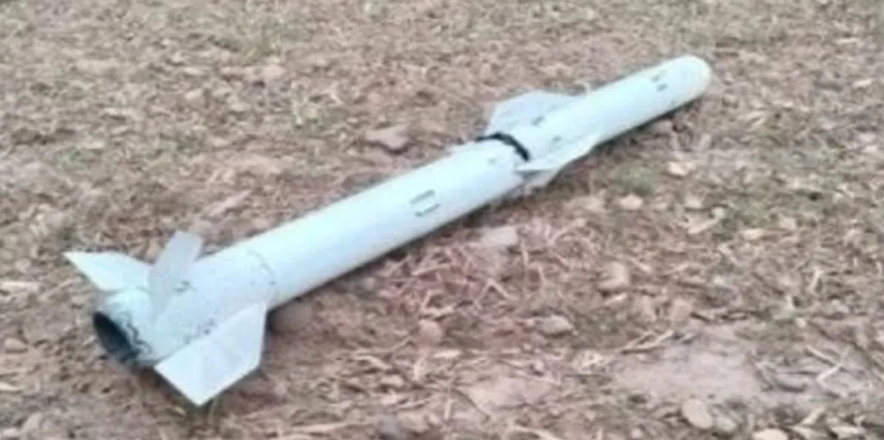
Amid rising tensions between India and Pakistan, a fully intact Chinese-made PL-15 long-range air-to-air missile has reportedly been recovered in Hoshiarpur, Punjab. The incident has sparked security and strategic concerns, given the missile's advanced capabilities and origin.
Overview of the PL-15 Missile
Also known as the "Thunderbolt-15," the PL-15 is a cutting-edge beyond-visual-range air-to-air missile (BVRAAM) developed by China’s 607 Institute and produced by the China Aerospace Science and Industry Corporation (CASIC). It is specifically designed to engage enemy aircraft at extended distances, far beyond the visual range of the launching platform.
Key Features:
- Propulsion and Speed:The missile is powered by a dual-pulse solid-propellant rocket motor, enabling it to reach speeds of over Mach 5.
- Range Capabilities:The domestic Chinese version has an estimated operational range of 200 to 300 km. The export version, the PL-15E, is officially rated for a maximum range of 145 km, though in practice this may be limited to 100–120 km depending on the launch conditions and platform.
- Warhead:It carries a high-explosive fragmentation warhead weighing between 20 and 25 kg, engineered to effectively neutralize maneuvering aerial targets.
- Guidance System:The PL-15 is equipped with an advanced guidance package that includes:
- Inertial navigation
- Beidou satellite updates
- Two-way datalink for real-time mid-course adjustments
- Terminal active radar homing with an AESA (Active Electronically Scanned Array) radar seeker
Mumps outbreak: Worrying symptoms to watch out for, preventive tips (India TV)
- 15 Dec 2023
Why is it in the News?
A mumps outbreak has recently been reported in several states across the country, causing concern among public health officials.
What is Mumps Disease?
- Mumps is a contagious disease caused by the mumps virus, which belongs to the paramyxovirus family.
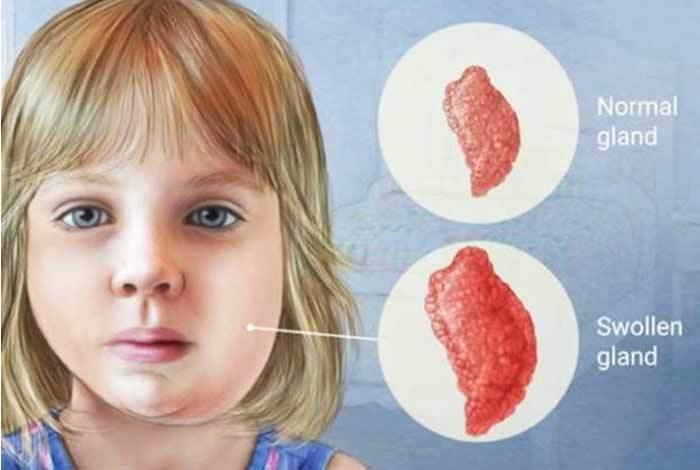
- It typically involves painful swelling in the parotid salivary glands, located on the sides of the face below and in front of the ears.
- These swollen glands often give the infected person a characteristic "chipmunk-cheek" appearance.
- Humans are the only known host for the mumps virus, which is spread via direct contact or by airborne droplets from the upper respiratory tract of infected individuals.
- Transmission of mumps: Mumps is spread through contact with the saliva or respiratory droplets of an infected person. This can happen through coughing, sneezing, kissing, sharing utensils, or close contact.
- Symptoms:
- Mumps typically manifest after an incubation period of 2 to 4 weeks, starting with nonspecific symptoms like myalgia, headache, malaise, and low-grade fever.
- Within days, these initial symptoms progress to the swelling of the parotid salivary glands, either unilaterally or bilaterally, with other salivary glands affected in 10% of cases.
- Prevention: The best way to prevent mumps is to get vaccinated with the MMR (measles, mumps, and rubella) vaccine.
- The MMR vaccine is safe and effective for most people.
- Other preventive measures include practising good hand hygiene, avoiding close contact with sick people, and covering your coughs and sneezes.
- Treatment: There is no specific treatment for mumps. Most people recover on their own within a few weeks.
- Treatment focuses on relieving symptoms, such as with pain relievers and fever reducers.
- In general, mumps is a mild, self-limiting disease that resolves without lasting effects.
- However, complications can arise, including encephalitis or sensorineural deafness.
- Orchitis, a painful inflammation of the testes, occurs in approximately 20% of young adult males who contract mumps.