
Global Cooling Watch 2025 Report
- 15 Nov 2025
In News:
United Nations Environment Programme (UNEP) released the Global Cooling Watch 2025 report at COP30 in Belém, Brazil, projecting that global cooling demand may triple by 2050 under current trends, resulting in a major rise in emissions and power system stress.
About Global Cooling Watch 2025 Report
- Nature: UNEP’s second global assessment on cooling and its environmental, economic, and equity dimensions.
- Purpose:
- Assess global cooling trends and future projections
- Present a Sustainable Cooling Pathway for near-zero emissions
- Support the Global Cooling Pledge framework
Key Findings and Trends
1. Rising Cooling Demand
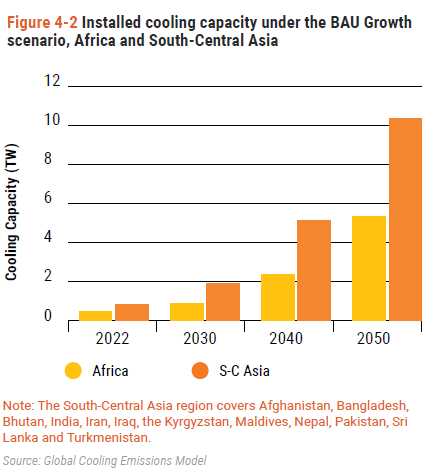
- Cooling capacity expected to increase 2.6 times (from 22 TW to 58 TW) by 2050.
- Driven by urban expansion, rising incomes, and worsening heatwaves.
2. Emission Expansion
- Cooling-related emissions may reach 10.5 billion tonnes CO?e by 2050.
- Nearly double 2022 levels without stringent policy measures.
3. Developing Country Surge
- Cooling demand in Article 5 (developing) countries projected to grow fourfold, deepening infrastructure disparities.
4. Escalating Power Consumption
- Global cooling electricity use may rise from 5,000 TWh (2022) to 18,000 TWh (2050).
- Significant implications for peak load management, especially in tropical regions.
5. Heat Inequality
- Over 2 billion people lack access to affordable, efficient cooling systems.
- Heightened vulnerability to extreme heat stress.
6. Passive Cooling Potential
- Passive measures (reflective roofs, ventilation design, urban greening) can reduce indoor temperatures by up to 8°C.
- Potential to cut energy consumption by 15-55%.
7. Refrigerant Transition
- Switching from HFCs to low-GWP refrigerants may avert up to 0.4°C of warming this century.
8. Global Cooling Pledge Progress
- 72 countries + 80 organizations have joined.
- Target: 68% reduction in cooling-sector emissions by 2050.
Successes Highlighted
- Strengthened international cooperation via the Global Cooling Pledge.
- Wider adoption of passive cooling in building policies.
- Technological improvements boosting efficiency by around 50%.
- Enhanced private sector involvement in sustainable cooling solutions.
- Tiered access initiatives improving cooling equity.
Limitations and Challenges
- Persistent inequality in access to cooling in tropical developing nations.
- Global funding currently covers less than 20% of adaptation and resilience needs.
- Fragmented policy coordination across sectors.
- Delays in HFC phase-down and inadequate refrigerant disposal.
- Continued dependence on fossil-fuel-based electricity.
UNEP Recommendations
- Implement a Sustainable Cooling Pathway combining:
- Passive cooling design
- High-efficiency cooling appliances
- Rapid integration of renewable energy
- Strengthen Kigali Amendment implementation and ensure full refrigerant lifecycle recovery.
- Increase green finance through concessional loans, PPP models, and climate bonds.
- Make passive cooling standards mandatory in building codes and urban planning.
- Provide targeted subsidies and access programs for heat-vulnerable populations.