
Global Alliance for Improved Nutrition (GAIN)
- 11 Nov 2025
In News:
A recent report by the Global Alliance for Improved Nutrition (GAIN) highlights that targeted nutrition investments in agri-food value chains can play a crucial role in reducing gender inequalities, enhancing productivity, and strengthening food system resilience. The report, The Case for Investment in Nutritious Foods Value Chains: An Opportunity for Gender Impact, stresses the need for increased financial support to nutritious food enterprises, particularly small and medium enterprises (SMEs) in emerging economies.
Women in Agri-Food Systems
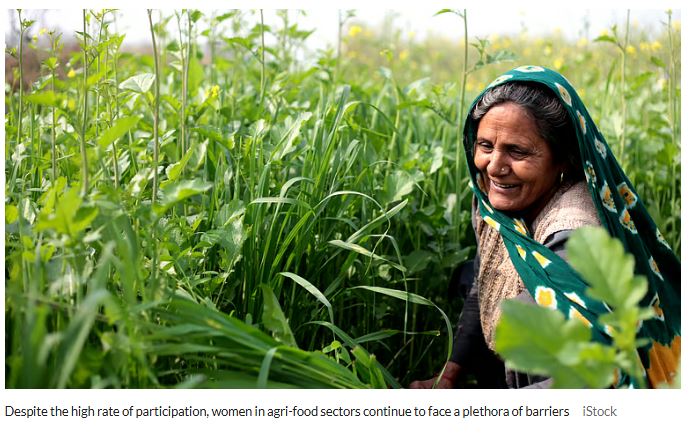
According to the Food and Agriculture Organization (FAO), women constitute about 38% of the global agri-food workforce. However, their participation is significantly higher in developing regions—66% in Sub-Saharan Africa and 71% in South Asia, including India. Despite this, women face persistent structural barriers such as limited access to land, credit, agricultural inputs, technology, extension services, and formal employment opportunities.
Discriminatory social norms, weak legal protections, and insecure working conditions further restrict women’s economic independence and expose them to gender-based violence and informal labour arrangements.
Nutrition as an Economic and Developmental Opportunity
The report underlines that food security cannot be achieved by focusing on production alone; nutrition outcomes must be central to agri-food investments. From a business perspective, investing in nutritious food value chains improves supplier productivity, builds resilient supply chains, and helps attract and retain women workers, thereby enhancing workforce diversity.
FAO estimates suggest that closing the gender gap in access to productive resources could raise women’s farm yields by 20–30%. Moreover, eliminating gender gaps in productivity and wages across agri-food systems could increase global GDP by nearly 1% (around $1 trillion).
Women’s empowerment has also been directly linked to improved household diets and better child nutrition outcomes, reinforcing the intergenerational benefits of gender-focused nutrition investments.
Geography-Specific Value Chains
The GAIN report analyses six nutritious food value chains across three regions:
- Sub-Saharan Africa: Cashew nuts and poultry
- Latin America: Aquaculture and quinoa
- South Asia: Tomatoes and dairy
For instance, Africa is the world’s largest producer of raw cashew nuts, yet only about 10% of processing occurs locally. Women dominate manual processing activities such as shelling and sorting, indicating scope for investment in local processing and value addition.
In South Asia, women play a critical role in tomato cultivation and dairy activities, but typically lack control over credit and modern agricultural technologies, which remain male-dominated.
Gender-Lens Investing and 2X Criteria
The report advocates the use of the 2X Criteria, a global framework for gender-lens investing updated in June 2024. It provides benchmarks for investments that promote women’s leadership, quality employment, access to finance, entrepreneurship, and gender-responsive products and services.
Gender-lens investments are especially important in male-dominated or informal sectors such as aquaculture, where women often remain underrepresented in leadership and ownership roles.
About GAIN and FAO
GAIN is a Switzerland-based foundation launched at the United Nations in 2002 to address malnutrition globally. Headquartered in Geneva, it works with governments, businesses, and civil society to make nutritious food more affordable, available, and desirable, reaching over 667 million vulnerable people across 30+ countries.
FAO is a specialized UN agency leading international efforts to combat hunger, improve nutrition, and ensure food security. Its sister organizations include the World Food Programme (WFP) and the International Fund for Agricultural Development (IFAD).