
Burevestnik Missile

- 04 Nov 2025
In News:
Russia has announced the successful testing of its Burevestnik nuclear-powered, nuclear-capable cruise missile, significantly escalating global concerns regarding a renewed nuclear arms race. The missile, known in Russia as 9M730 Burevestnik (“Storm Petrel”), is part of a new class of strategic weapons first unveiled in 2018.
About the Burevestnik Missile
- Type: Ground-launched, low-flying cruise missile.
- Capabilities:
- Nuclear-powered propulsion system.
- Nuclear warhead–capable.
- Designed for unlimited range and unpredictable flight trajectory.
- NATO Code Name: SSC-X-9 Skyfall.
- Developer: Russia.
- Introduced: One of six new strategic weapons announced by President Putin in 2018.
Key Features
1. Nuclear Propulsion System
- Powered by a miniaturised nuclear reactor.
- Reactor heats incoming air to generate thrust — replacing traditional chemical fuel.
- Enables theoretically unlimited flight time, constrained only by material durability and guidance systems.
- Offers the ability to loiter for days and strike from unexpected directions.
2. Long Range & Stealth
- Russia claims a test in 2023/2025 achieved:
- 14,000 km travel
- 15 hours of flight
- Low-altitude flight path makes detection by radar extremely difficult.
- Unpredictable trajectory designed to defeat missile defence systems.
3. Strategic Role
- Intended as a second-strike or surprise-attack weapon that can bypass US and NATO missile shields.
- Falls outside current New START definitions, as it is neither an ICBM, SLBM, nor heavy bomber.
Technical Background
- Nuclear-powered missiles were previously explored under the 1960s US Project Pluto (SLAM) but abandoned due to extreme safety risks.
- According to the Nuclear Threat Initiative (NTI), the Burevestnik uses a compact reactor similar in concept to nuclear ramjet technology.
Arms Control Context – New START Treaty
- New START Treaty (effective 2011, extended to 2026) limits deployed strategic nuclear weapons of the US and Russia.
- Russia suspended participation in February 2023.
- The Burevestnik is not restricted under New START, as it represents a new category of strategic cruise missile not covered under existing treaty definitions.
- Russia’s testing signals an attempt to sidestep treaty limits and intensify the nuclear competition.
Burevestnik Missile
- 20 Aug 2025
In News:
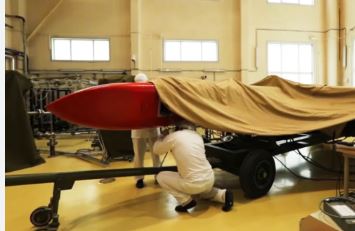
According to recent reports, Russia is preparing to conduct fresh trials of the 9M730 Burevestnik – a nuclear-powered cruise missile that has often been described as a “unique” and formidable addition to Moscow’s strategic arsenal.
About the Burevestnik
- The term Burevestnik translates to “storm petrel” in Russian.
- It is a ground-launched, nuclear-powered cruise missile, also capable of carrying a nuclear warhead.
- The system was first unveiled by the Russian President in 2018, as part of six advanced strategic weapons.
- NATO has designated it as SSC-X-9 “Skyfall.”
- In theory, its nuclear propulsion allows it to circle the globe multiple times before striking a target, making it an unprecedented strategic weapon.
Key Features
- Nuclear Propulsion: The missile uses a compact nuclear reactor that heats the surrounding air for thrust.
- Extended Range: Unlike traditional engines restricted by fuel capacity, the nuclear design enables a potential range of up to 22,000 km (14,000 miles).
- Low-Altitude Flight: The system is engineered to fly close to the ground, significantly reducing its detectability by conventional air-defence radars.
- Strategic Significance: Its combination of long endurance and stealthy trajectory poses challenges to existing missile defence systems.