
Ambaji Marble
- 18 Nov 2025
In News:
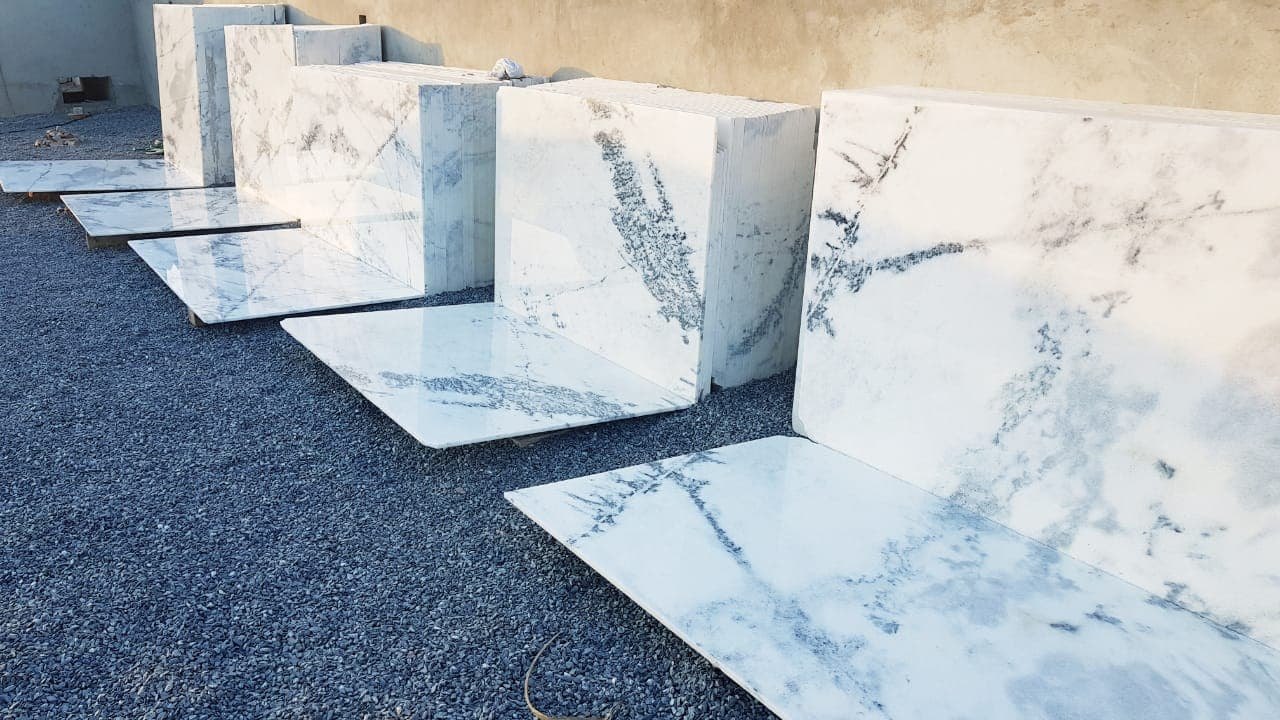
Ambaji Marble, a high-quality white marble quarried in Gujarat, has recently been awarded the Geographical Indication (GI) tag, recognising its uniqueness, regional authenticity, and commercial value. The GI status provides legal protection to producers in the Ambaji region and helps preserve the heritage and branding associated with this premium stone.
Origin and Location
- Named after Ambaji, a town in Banaskantha district, Gujarat.
- Quarried predominantly in the Arasur Hills of the Aravalli range.
- Known historically for its use in religious and monumental architecture.
Characteristics of Ambaji Marble
Appearance
- Milky white colour, often considered among the purest shades of natural marble.
- Displays subtle grey or beige veining, formed by natural mineral impurities during crystallisation.
- Smooth texture and uniform structure make it desirable for fine architectural work.
Durability
- Noted for its long-lasting shine and high resistance to weathering.
- Its dense crystalline structure enhances its strength and longevity.
Applications
Ambaji Marble is widely used in:
- Temples and religious structures- prominently in the Ambaji Temple itself
- Memorials and monuments
- High-end flooring and interior décor
- Architectural sculptures and carvings
Its aesthetic appeal and durability make it a preferred material for cultural and heritage buildings.
Geological Background – Understanding Marble
Marble is a metamorphic rock formed from limestone under conditions of high heat and pressure.
Composition
- Primarily composed of calcite (CaCO?)
- May contain:Clay minerals, Quartz, Micas, Pyrite, Iron oxides, Graphite
These impurities contribute to veining patterns and variations in colour.
Formation Process
- During regional metamorphism at convergent plate boundaries, limestone recrystallises into a mass of interlocking calcite crystals, producing marble.
- Dolomitic marble forms when dolostone undergoes similar metamorphic conditions.
- Marble can also form via contact metamorphism, where heat from an intrusive magma body alters adjacent limestone deposits.
Significance of the GI Tag
The GI recognition of Ambaji Marble is important because it:
- Protects the unique identity of the stone
- Ensures economic benefits for local quarrying communities
- Helps prevent market dilution by inferior substitutes
- Promotes tourism and heritage conservation in the Ambaji region