
Discovery of Two New Army Ant Species in the Eastern Ghats
- 17 Feb 2026
In News:
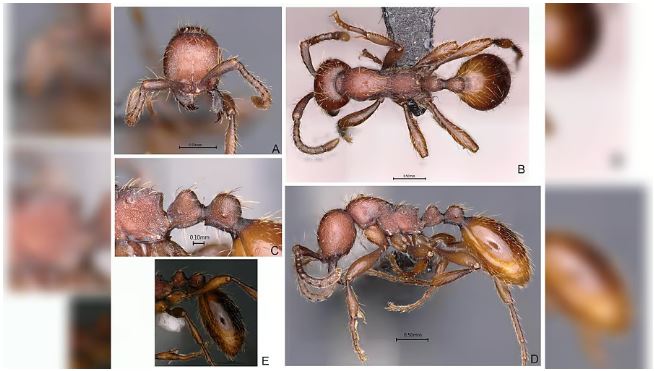
In a significant contribution to India’s biodiversity records, researchers from Karnataka and Odisha have discovered two new species of army ants - Aenictus chittoorensis and Aenictus lankamallensis - in the Eastern Ghats of Andhra Pradesh. The discovery highlights the rich yet underexplored biodiversity of peninsular India and underscores the ecological importance of invertebrate fauna in tropical ecosystems.
About Army Ants
Army ants belong to the subfamily Dorylinae and are known for their nomadic and highly predatory lifestyle. Unlike many other ant species, army ants do not construct permanent nests. Instead, they continuously move in search of food, making them one of the most dynamic components of tropical forest ecosystems.
They are predominantly found in tropical regions and are considered among the “big cats” of the insect world due to their aggressive and coordinated hunting behavior.
Distinctive Characteristics
- Nomadic Lifestyle: Army ants lack permanent nests. Instead, they form temporary living structures called bivouacs, created entirely from the interlocked bodies of worker ants.
- Massive Coordinated Raids: Colonies conduct synchronized raids, overwhelming insects and small invertebrates in their path. Their raids can drastically alter local arthropod populations.
- Morphological Features:
- Large, sharp mandibles
- Strong stinging ability
- Robust body structure adapted for predation
- Chemical Communication: Army ants are practically blind and rely heavily on chemical pheromones to navigate and communicate. They mark trails and follow scent paths laid by other workers.
- Colony Structure:
- A single queen lays all eggs.
- Female workers perform tasks such as foraging, protecting the colony, and tending to larvae.
This high degree of social organization reflects advanced eusocial behavior.
Ecological Role: Keystone Predators
Army ants are considered keystone predators in tropical ecosystems. Their ecological contributions include:
- Regulating arthropod populations by consuming large quantities of insects daily.
- Influencing forest biodiversity by reshaping prey communities.
- Supporting ecological networks — several bird species are known to follow army ant raids to capture fleeing insects.
By controlling invertebrate populations, they help maintain ecological balance and prevent outbreaks of certain insect species.
Significance of the Discovery
- Biodiversity Documentation: The identification of Aenictus chittoorensis and Aenictus lankamallensis adds to India’s documented insect diversity and strengthens taxonomic knowledge of the Eastern Ghats.
- Eastern Ghats as a Biodiversity Hotspot: Though less celebrated than the Western Ghats, the Eastern Ghats possess significant endemic diversity. Discoveries such as this underline the need for systematic biodiversity surveys in these fragmented hill ranges.
- Conservation Imperative: Habitat fragmentation, deforestation, mining, and climate change threaten forest ecosystems in the Eastern Ghats. The discovery reinforces the urgency of conserving lesser-known invertebrate fauna alongside charismatic megafauna.
- Scientific Relevance: Understanding army ant behavior and ecological dynamics can contribute to broader ecological research on predator-prey relationships and forest ecosystem functioning.