
Bee Corridor
- 19 Feb 2026
In News:
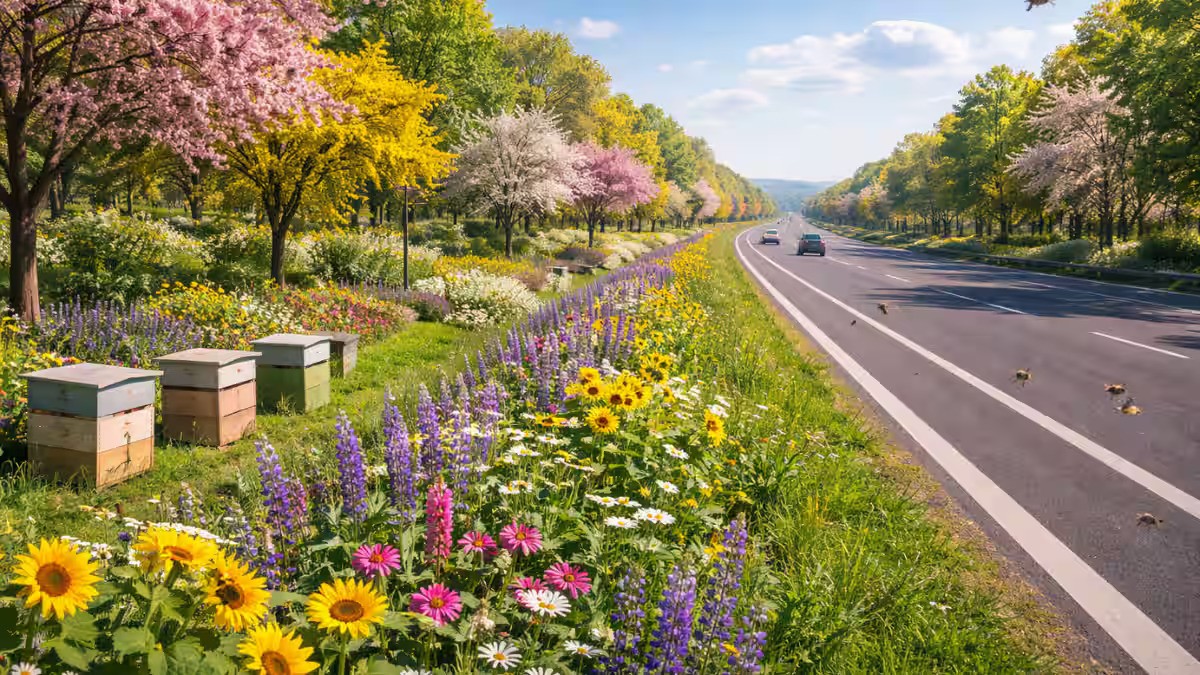
The National Highways Authority of India (NHAI) has launched India’s first dedicated ‘Bee Corridors’ along National Highways as part of sustainable and ecological infrastructure development.
What are Bee Corridors?
- Definition: Continuous linear stretches of pollinator-friendly vegetation developed along National Highways.
- Composition: Flowering trees, shrubs, herbs and grasses providing year-round nectar and pollen.
- Design Principle: Staggered seasonal flowering to ensure near-continuous bloom cycles.
- Shift in Approach: From ornamental roadside plantations to biodiversity-supportive ecological plantations.
Objectives
To reduce ecological stress on honeybees and other pollinators by ensuring sustained nectar sources, thereby strengthening agricultural productivity and ecological balance.
- Promote pollinator conservation.
- Integrate biodiversity into highway infrastructure.
- Support climate-sensitive and sustainable plantation planning.
Key Features
1. Native, Nectar-Rich Species
Plantation will include native species such as: Neem, Karanj, Mahua, Palash, Bottle Brush, Jamun and Siris. These species support biodiversity and pollinator habitats.
2. Staggered Blooming Cycle
- Species selected to flower in different seasons.
- Ensures continuous food supply for honeybees and wild pollinators.
3. Habitat Support Measures
- Retention of flowering weeds.
- Preservation of dead wood and hollow trunks beneficial for pollinators.
4. Strategic Spacing
- Flowering clusters planted every 500 metres to 1 kilometre.
- Based on the average foraging distance of honeybees.
- Corridors to be developed along suitable NH stretches and vacant NHAI land parcels depending on agro-climatic conditions.
Implementation Plan (2026–27)
- Total Plantation Target: ~40 lakh trees along National Highways.
- Under Bee Corridor Initiative: ~60% of total plantation.
- Initial Phase: At least three dedicated pollinator corridors to be developed.
- NHAI field offices to identify suitable highway sections.
Significance
Ecological Significance
- Enhances pollination services essential for agriculture and horticulture.
- Helps counter declining pollinator populations.
- Strengthens ecosystem resilience and biodiversity.
Economic Significance
- Improved pollination boosts crop productivity.
- Supports rural livelihoods dependent on agriculture and apiculture.
Infrastructure Significance
- Integrates environmental sustainability into highway development.
- Aligns infrastructure expansion with climate and biodiversity goals.