
Rural Employment Guarantee in Limbo
- 29 Aug 2026
In News:
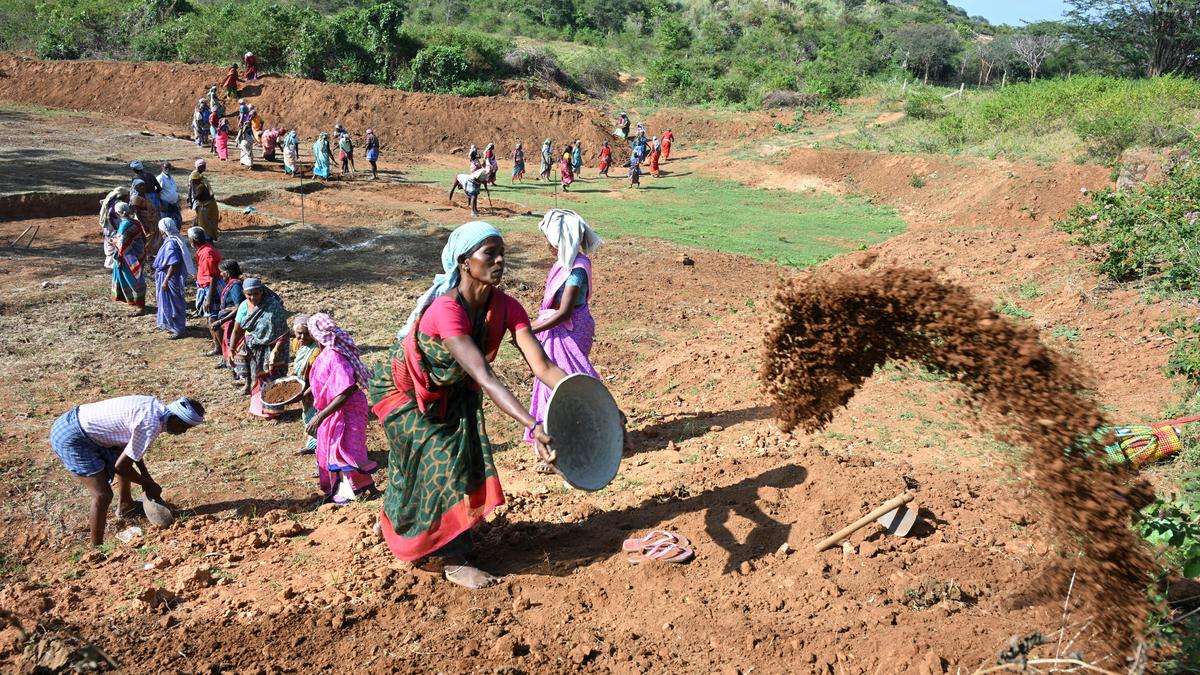
The transition from the Mahatma Gandhi National Rural Employment Guarantee Act (MGNREGA), 2005 to the Viksit Bharat–Guarantee for Rozgar and Ajeevika Mission (Gramin) (VB-G RAM G) Act, 2025 has raised concerns over a sharp contraction in rural employment generation.
The new framework increases the statutory employment guarantee from 100 to 125 days per household, but administrative delays, changes in financing and new compliance requirements have reportedly disrupted work generation during the transition.
The Emerging Employment Gap
During April–July 2026, only around 70 crore person-days of employment were generated, about 43% below the average of 2024–25 (128 crore) and 2025–26 (119 crore).
The contraction has been particularly severe in poorer States. In 10 of 19 major States, including Uttar Pradesh, Madhya Pradesh and Jharkhand, employment generation reportedly fell by 60–85%. July 2026 alone recorded only around 8.3–9 crore person-days, more than 40% lower than July 2025.
This is significant because the pre-monsoon agricultural slack season traditionally generates a large share of annual rural employment, leaving landless labourers and vulnerable households with limited alternatives.
MGNREGA vs VB-G RAM G
The transition represents a substantial change in the architecture of the employment guarantee.
Under MGNREGA, employment was a demand-driven legal entitlement, with the Centre bearing the full cost of unskilled wages. The new VB-G RAM G framework provides 125 days of guaranteed work, but operates as a Centrally Sponsored Scheme, with a 60:40 Centre-State funding ratio for general States and 90:10 for Himalayan and North-Eastern States.
It also introduces normative allocations, effectively creating State-wise expenditure ceilings, integrates rural employment planning with Viksit Gram Panchayat Plans, and permits a work pause of up to 60 days during peak agricultural seasons.
Thus, the reform seeks to link employment generation with durable rural infrastructure and decentralised planning, but simultaneously introduces greater fiscal and administrative constraints.
Why Has Implementation Slowed?
- Delayed rule-making: Although the Act was passed in December 2025, draft rules emerged only in late May 2026 and were finalised at the end of June, creating an operational gap during the initial months of the financial year.
- Fiscal constraints: The 60:40 cost-sharing arrangement places a greater financial burden on States. Cash-strapped States may consequently delay approval of works or release of funds.
- Technology-related exclusion: Mandatory facial recognition, biometric authentication and digital muster rolls can create difficulties in areas with weak connectivity or inadequate digital infrastructure.
- Normative spending ceilings: Unlike the earlier demand-driven framework, predetermined allocations may incentivise local administrations to restrict the opening of works when allocations approach their limits.
Budget–Implementation Disconnect
The Union Budget 2026–27 allocated ?95,692 crore for VB-G RAM G, with the overall projected expenditure reaching around ?1.5 lakh crore after accounting for State contributions. Yet, the reported contraction in actual employment generation illustrates that budgetary allocation alone cannot guarantee employment access.
The key challenge is ensuring that financial resources translate into timely work opportunities at the Gram Panchayat level.
Way Forward
The transition needs to protect the rights-based character of rural employment while improving administrative efficiency. Centre-State fund flows should be streamlined, potentially through revolving mechanisms that prevent wage payments from being held up by reconciliation issues.
Digital verification should have offline and non-biometric alternatives so that technology does not become a barrier to accessing a statutory entitlement. Panchayats also require greater administrative capacity, digital infrastructure and training to prepare and implement Viksit Gram Panchayat Plans.
Most importantly, normative allocations should function as planning benchmarks rather than rigid barriers to employment when genuine demand rises. Regular social audits, effective grievance redressal and enforcement of the unemployment allowance when work is not provided within 15 days of demand are essential safeguards.
Conclusion
The VB-G RAM G Act seeks to modernise rural employment policy by combining a higher employment guarantee with rural infrastructure and decentralised planning. However, the transition demonstrates a crucial lesson: expanding a statutory entitlement on paper is meaningful only when institutional capacity, financing and administrative systems enable citizens to exercise it in practice. Protecting demand-driven access while resolving fiscal, technological and implementation bottlenecks will be central to making the new rural employment guarantee an effective social-security instrument.
Rural & Tribal Development: From Welfare Delivery to Empowerment
- 19 Aug 2026
In News:
India’s rural and tribal development strategy is increasingly moving beyond welfare distribution towards capability enhancement, livelihood security, social inclusion and decentralised governance. The approach combines basic services with infrastructure, digital connectivity, financial inclusion, skilling and targeted interventions for vulnerable communities.
Strengthening the Foundations of Rural Welfare
Fiscal decentralisation has gained importance, with transfers to Panchayats rising from ?2.36 lakh crore under the 15th Finance Commission (2021–26) to ?4.35 lakh crore under the 16th Finance Commission (2026–31). Rural development allocation increased from ?87,765 crore in 2016–17 to ?2.73 lakh crore in 2026–27, while tribal affairs allocation rose to ?15,421.97 crore.
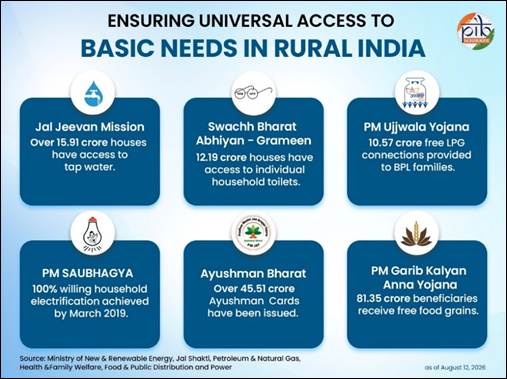
Basic services have expanded significantly. Under the Jal Jeevan Mission, rural tap-water connections rose from 3.23 crore in August 2019 to over 15.91 crore by August 2026, with about 2.89 lakh villages reporting complete household coverage. Swachh Bharat Mission-Grameen has facilitated over 12.19 crore toilets, while PM Ujjwala Yojana has provided more than 10.57 crore LPG connections to women from poor households.
Human Capital and Digital Inclusion
The emphasis is increasingly on human capabilities. Under Samagra Shiksha, 4,073 schools were upgraded and 25,000 schools received skill-education support. Female primary dropout declined from 4.6% in 2013–14 to 0.1% in 2025–26. Girls’ secondary GER increased from 75.5% to 83.4% over the same period. Kasturba Gandhi Balika Vidyalayas expanded to 5,639 sanctioned institutions.
Rural connectivity is also being strengthened through PMAY-G, PMGSY and BharatNet. Over 3.91 crore rural houses have been sanctioned under PMAY-G, while 99.6% of eligible habitations had all-weather road connectivity under PMGSY by June 2026. Around 2.19 lakh Gram Panchayats were connected through BharatNet.
From Beneficiaries to Economic Participants
DAY-NRLM has mobilised10.19 crore households into 94.46 lakh SHGs, with 3.46 crore LakhpatiDidis, highlighting the role of women-led collective enterprise. Financial inclusion has expanded through PM Jan Dhan Yojana, with accounts reaching 58.90 crore, while PM MUDRA loans crossed 59.14 crore by July 2026. PM Vishwakarma has registered over 30 lakh traditional artisans, combining skilling with toolkit support.
Tribal and Vulnerable-Group Empowerment
Tribal development increasingly follows a convergence-based approach. PM-JUGA brings together 17 Ministries, while PM-JANMAN targets Particularly Vulnerable Tribal Groups through infrastructure and livelihood interventions. Eklavya Model Residential Schools increased from 129 in 2014–15 to 511 by August 2026, serving about 1.68 lakh students.
Way Forward
The central challenge is to convert coverage into quality outcomes. Future policy must focus on effective decentralisation, quality education and healthcare, sustainable livelihoods, tribal participation, social accountability and last-mile delivery. The ultimate objective should be to transform welfare recipients into rights-bearing, economically empowered and socially secure citizens.
Can Rural Education Transform Migration Patterns? Reimagining Opportunities Beyond Cities
- 28 Oct 2025
In News:
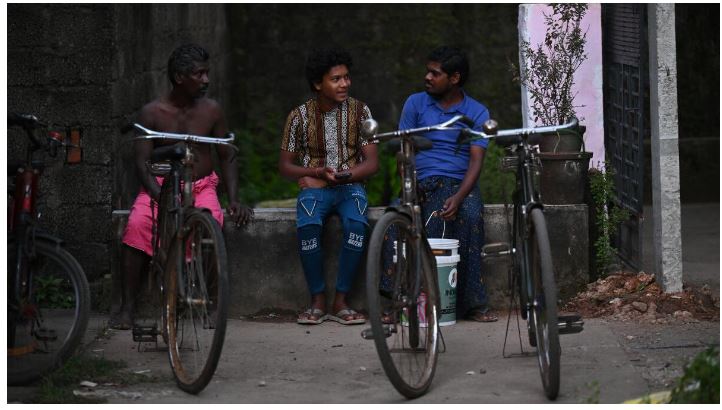
Migration has been a central feature of India’s socio-economic evolution, but the growing exodus of rural youth to urban centres signals deep developmental imbalances. While migration is natural in a dynamic economy, its scale—particularly among young people—highlights failures in generating dignified rural livelihoods, aligning education with market needs, and creating resilient local ecosystems.
Understanding the Scale and Nature of Youth Migration
- Magnitude: Nearly 29% of India’s population are migrants; 89% originate from rural areas.
- Age Profile: Over half of all migrants are aged 15–25, indicating the loss of India’s most productive demographic.
- Pandemic Exposure: The 2020 Covid-19 lockdown forced 40 million workers to return home, revealing the fragility of informal urban employment.
- Gender Dynamics: Men migrate mainly for work, while 86.8% of women migrate due to marriage, reflecting persistent social norms.
- Socio-economic Profile: Higher migration rates among SC, OBC, and low-income groups show distress-driven mobility.
Drivers of Youth Migration from Rural India
a. Rural Employment Deficit
- Limited non-farm jobs; 49% migrants work as daily wagers and 39% in temporary industrial roles.
- Low returns from agriculture due to fragmented landholdings and climate exposure.
b. Education–Employment Mismatch
- Rural education lacks industry-relevant skills.
- Graduate unemployment exceeds 15% (CMIE 2024), indicating inadequate employability.
c. Income and Infrastructure Gaps
- Rural incomes fail to meet basic needs.
- Weak connectivity, inadequate credit access, and poor logistics hinder local enterprise formation.
d. Urban Pull Factors
- Cities offer perceived opportunities, higher wages, and mobility.
- However, migrants face unsafe housing, exploitation, and precarious informal jobs—88% lack social security.
Impact of Migration on Rural and Urban Landscapes
a. Urban Challenges
- Overcrowding, pollution, rising pressure on housing and infrastructure.
- Growth of slums in megacities like Delhi and Mumbai.
b. Rural Depopulation
- Loss of youth weakens agricultural productivity and local governance.
- Declining rural social capital affects community cohesion.
c. Social and Psychological Effects
- Family separation leads to stress, anxiety, and economic insecurity among dependents.
- Women migrants rarely enter the workforce, deepening gender gaps.
Policy Interventions and Initiatives
- MGNREGA ensures wage support during lean seasons, reducing distress migration.
- DDU-GKY, PMKVY provide vocational training to improve employability.
- PM-Mudra, Start-Up India, SVEP encourage rural entrepreneurship.
- 10,000 FPO initiative strengthens farmer collectives and value chains.
- BharatNet, PMGSY, rural BPOs expand digital and physical connectivity.
Way Forward: Reimagining Rural Education and Ecosystems
a. Integrating Education with Local Economies
- Embed vocational, digital, and agri-tech skills into rural curricula.
- Link schools and colleges to local enterprises and industries.
b. Diversifying Rural Non-Farm Sectors
- Develop employment in handicrafts, food processing, logistics, renewable energy, and agri-tourism.
c. Building Digital Ecosystems
- Invest in 5G connectivity, e-commerce platforms, tele-work hubs, and digital service centres.
d. Encouraging Local Entrepreneurship
- Promote success stories like Raigad’s BalaramBandagale to inspire reverse migration and rural innovation.
e. Strengthening Social Protection
- Ensure universal portability of PDS, health insurance, and pensions for mobile workers.
Conclusion
India must shift from a model where migration is a compulsion to one where it becomes a choice. Strengthening rural education, diversifying local economies, and empowering youth with market-ready skills can address structural causes of migration. A balanced rural–urban development framework—anchored in employment-linked learning, digital connectivity, and entrepreneurship—will help revitalise rural India and support inclusive, sustainable growth.