
Industrial Disasters in India
- 25 Apr 2026
In News:
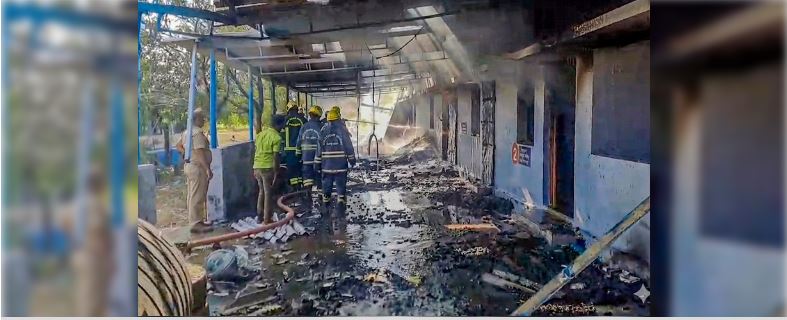
The recent explosion at a fireworks unit in Virudhunagar, Tamil Nadu—a recurring site of such tragedies—serves as a grim reminder of the systemic failures within India's industrial safety landscape. Despite a robust legal framework born from the ashes of the Bhopal Gas Tragedy, a persistent cycle of accidents reveals deep-seated gaps in regulatory enforcement, corporate accountability, and labor protection.
Structural Causes of Industrial Disasters
The recurring nature of these accidents is not a matter of chance but a result of several structural deficiencies:
- The "Monitoring Vacuum": While the government seeks to streamline "Ease of Doing Business" by reducing the so-called "Inspector Raj," it has inadvertently created a regulatory void. In many states, over 40% of factory inspector posts are vacant, making the physical verification of thousands of units a mathematical impossibility.
- The Self-Certification Loophole: The Occupational Safety, Health and Working Conditions (OSH) Code, 2020, encourages third-party audits and self-certification. In the hyper-competitive MSME sector, this often leads to falsified safety protocols and the operation of high-risk units under shell names to bypass the Doctrine of Absolute Liability.
- Informalization of High-Risk Labor: Approximately 50-70% of hazardous floor work is outsourced to daily-wage contractors. These workers often lack training on Material Safety Data Sheets (MSDS). Companies frequently exploit their informal status to evade liability, offering "ex-gratia" payments instead of legal compensation under the Public Liability Insurance Act, 1991.
- Infrastructure and Urban Sprawl: Many disasters occur in aging "brownfield" plants where management views retrofitting as a "dead investment." Furthermore, unplanned urban encroachment has erased mandatory buffer zones, turning localized industrial fires into community-wide catastrophes.
Multi-Dimensional Implications
Industrial disasters in India carry consequences that extend far beyond the factory gates:
- Macro-Economic Risks: Frequent disasters deter high-value Foreign Direct Investment (FDI) and damage India's prospects in the "China Plus One" global supply chain strategy. These incidents also create "stranded assets," contributing to Non-Performing Assets (NPAs) in the banking sector.
- Social and Demographic Toll: Disasters often trap families in generational poverty by eliminating the sole breadwinner. Chemical leaks leave a legacy of congenital anomalies and chronic illnesses, turning a potential demographic dividend into a liability.
- Environmental Degradation: Leaks of Volatile Organic Compounds (VOCs) or heavy metals cause irreversible toxicity in groundwater and soil, destroying local agriculture and forcing distress migration.
The Legal Framework for Industrial Safety
India possesses a comprehensive, yet fragmented, set of laws designed to mitigate these risks:
- Environment Protection Act (EPA), 1986: Established after Bhopal to set emission and discharge standards.
- Public Liability Insurance Act (PLIA), 1991: Mandates insurance for immediate relief to victims.
- The Doctrine of Absolute Liability: Established in M.C. Mehta v. Union of India (1987), it holds hazardous enterprises liable for harm without any exceptions or "Acts of God" defenses.
- Disaster Management Act, 2005: Provides the framework for NDMA-led proactive mitigation and response.
Way Forward: From Negligence to "Certainty of Safety"
To break the "Bhopal-to-Virudhunagar" trajectory, India must transition from a reactive to a proactive safety culture:
- National Industrial Safety Authority (NISA): An independent statutory body should be created to centralize oversight, modeled after the Atomic Energy Regulatory Board (AERB).
- Technological Integration: High-risk Major Accident Hazard (MAH) units should be mandated to use AI-driven predictive maintenance and IoT sensors that beam real-time data to state servers.
- Insurance-Linked Compliance: Corporate insurance premiums and utility tariffs should be tied directly to real-time safety audit scores, making safety a financial necessity.
- Cumulative Impact Assessments: Authorities must freeze permits in over-saturated industrial clusters to prevent the dangerous concentration of hazardous materials.
Conclusion
India cannot afford to be a "trial-and-error" laboratory for industrial growth. True economic progress must be synonymous with the safety of its citizens. Legislative intent must be backed by administrative teeth to ensure that "Ease of Doing Business" does not come at the cost of human life.
Industrial Disasters in India
- 25 Apr 2026
In News:
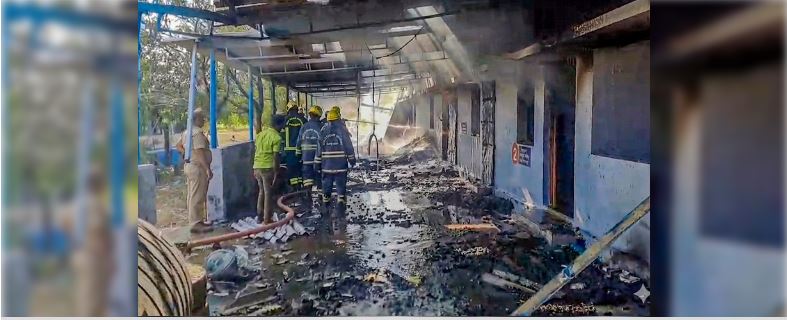
The recent explosion at a fireworks unit in Virudhunagar, Tamil Nadu—a recurring site of such tragedies—serves as a grim reminder of the systemic failures within India's industrial safety landscape. Despite a robust legal framework born from the ashes of the Bhopal Gas Tragedy, a persistent cycle of accidents reveals deep-seated gaps in regulatory enforcement, corporate accountability, and labor protection.
Structural Causes of Industrial Disasters
The recurring nature of these accidents is not a matter of chance but a result of several structural deficiencies:
- The "Monitoring Vacuum": While the government seeks to streamline "Ease of Doing Business" by reducing the so-called "Inspector Raj," it has inadvertently created a regulatory void. In many states, over 40% of factory inspector posts are vacant, making the physical verification of thousands of units a mathematical impossibility.
- The Self-Certification Loophole: The Occupational Safety, Health and Working Conditions (OSH) Code, 2020, encourages third-party audits and self-certification. In the hyper-competitive MSME sector, this often leads to falsified safety protocols and the operation of high-risk units under shell names to bypass the Doctrine of Absolute Liability.
- Informalization of High-Risk Labor: Approximately 50-70% of hazardous floor work is outsourced to daily-wage contractors. These workers often lack training on Material Safety Data Sheets (MSDS). Companies frequently exploit their informal status to evade liability, offering "ex-gratia" payments instead of legal compensation under the Public Liability Insurance Act, 1991.
- Infrastructure and Urban Sprawl: Many disasters occur in aging "brownfield" plants where management views retrofitting as a "dead investment." Furthermore, unplanned urban encroachment has erased mandatory buffer zones, turning localized industrial fires into community-wide catastrophes.
Multi-Dimensional Implications
Industrial disasters in India carry consequences that extend far beyond the factory gates:
- Macro-Economic Risks: Frequent disasters deter high-value Foreign Direct Investment (FDI) and damage India's prospects in the "China Plus One" global supply chain strategy. These incidents also create "stranded assets," contributing to Non-Performing Assets (NPAs) in the banking sector.
- Social and Demographic Toll: Disasters often trap families in generational poverty by eliminating the sole breadwinner. Chemical leaks leave a legacy of congenital anomalies and chronic illnesses, turning a potential demographic dividend into a liability.
- Environmental Degradation: Leaks of Volatile Organic Compounds (VOCs) or heavy metals cause irreversible toxicity in groundwater and soil, destroying local agriculture and forcing distress migration.
The Legal Framework for Industrial Safety
India possesses a comprehensive, yet fragmented, set of laws designed to mitigate these risks:
- Environment Protection Act (EPA), 1986: Established after Bhopal to set emission and discharge standards.
- Public Liability Insurance Act (PLIA), 1991: Mandates insurance for immediate relief to victims.
- The Doctrine of Absolute Liability: Established in M.C. Mehta v. Union of India (1987), it holds hazardous enterprises liable for harm without any exceptions or "Acts of God" defenses.
- Disaster Management Act, 2005: Provides the framework for NDMA-led proactive mitigation and response.
Way Forward: From Negligence to "Certainty of Safety"
To break the "Bhopal-to-Virudhunagar" trajectory, India must transition from a reactive to a proactive safety culture:
- National Industrial Safety Authority (NISA): An independent statutory body should be created to centralize oversight, modeled after the Atomic Energy Regulatory Board (AERB).
- Technological Integration: High-risk Major Accident Hazard (MAH) units should be mandated to use AI-driven predictive maintenance and IoT sensors that beam real-time data to state servers.
- Insurance-Linked Compliance: Corporate insurance premiums and utility tariffs should be tied directly to real-time safety audit scores, making safety a financial necessity.
- Cumulative Impact Assessments: Authorities must freeze permits in over-saturated industrial clusters to prevent the dangerous concentration of hazardous materials.
Conclusion
India cannot afford to be a "trial-and-error" laboratory for industrial growth. True economic progress must be synonymous with the safety of its citizens. Legislative intent must be backed by administrative teeth to ensure that "Ease of Doing Business" does not come at the cost of human life.