
Heritage Conservation Architect
- 17 Dec 2025
In News:
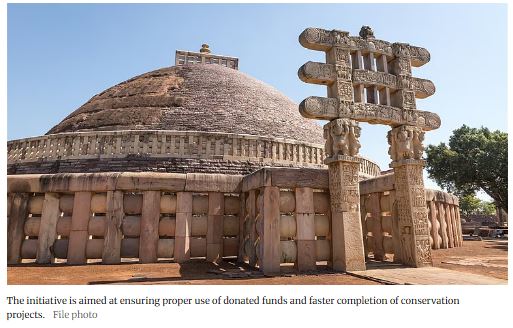
The Ministry of Culture has initiated a new framework to empanel heritage conservation architects to strengthen the scientific conservation and restoration of monuments protected by the Archaeological Survey of India (ASI). The move is aimed at improving the quality, accountability, and speed of conservation projects, especially those supported by private and corporate funding.
Who is a Heritage Conservation Architect?
A heritage conservation architect is a specialised professional trained in preserving historic structures using methods that respect original materials, design, and cultural significance. Their role goes beyond regular architectural practice, as it requires adherence to internationally accepted conservation principles such as minimal intervention, reversibility, and authenticity.
The Initiative Explained
The Ministry has begun creating a national panel of ASI-approved conservation architects. This panel will serve as a vetted pool of experts who can be engaged for conservation projects at protected monuments.
The reform is closely linked to the National Cultural Fund (NCF), which was established in 1996 to mobilise public and private funds, including Corporate Social Responsibility (CSR) contributions, for safeguarding India’s cultural heritage. Under the revised framework, donors can now directly engage empanelled architects for projects funded through the NCF.
Key Features of the Reform
A central feature of the initiative is greater flexibility for donors. Private entities and corporates funding conservation can choose architects from the ASI-approved panel for monuments they wish to support. This is expected to encourage higher private participation and faster project execution.
However, ASI oversight remains mandatory. All conservation works, regardless of funding source, will be monitored by ASI to ensure adherence to scientific conservation standards and legal safeguards under heritage protection laws.
Empanelled architects will have clearly defined responsibilities. These include preparing Detailed Project Reports (DPRs), designing conservation strategies, providing project management assistance, and supervising the execution of works.
The actual on-ground restoration will be carried out by agencies selected by donors, but only after due approval from ASI. This ensures that while funding and execution may involve private actors, technical integrity and regulatory control remain with the government.
Eligibility and Tenure
To qualify for empanelment, architects must demonstrate prior experience in conserving or restoring heritage structures that are over 100 years old. This ensures that only professionals with relevant technical expertise handle sensitive monuments.
Empanelment will initially be valid for three years, subject to annual performance review, creating a system of accountability and quality assurance.
Significance
This initiative represents a shift toward a public–private partnership model in heritage conservation. It seeks to combine professional expertise, private funding, and state oversight to address long-standing challenges such as funding shortages, project delays, and uneven conservation quality.
If implemented effectively, the system can enhance preservation outcomes while ensuring that India’s vast architectural heritage is conserved using globally accepted scientific methods.
Conclusion
The empanelment of heritage conservation architects under ASI supervision is a structural reform that balances professionalisation, accountability, and stakeholder participation. It reflects a modern approach to heritage management where conservation is treated not merely as maintenance, but as a specialised, knowledge-driven discipline essential for safeguarding India’s cultural legacy.