
Farmer Producer Organisations (FPOs) and Climate-Resilient Agriculture
- 31 May 2026
In News:
With the India Meteorological Department (IMD) forecasting a weaker southwest monsoon during 2026 due to El Niño conditions, the Union Ministry of Agriculture and Farmers' Welfare has initiated contingency measures to safeguard the kharif season. A key component of this strategy is leveraging the nationwide network of 10,000 Farmer Producer Organisations (FPOs) to disseminate climate-resilient farming practices, encourage cultivation of drought-resistant crops, and strengthen farmers' preparedness against rainfall deficits.
What are Farmer Producer Organisations (FPOs)?
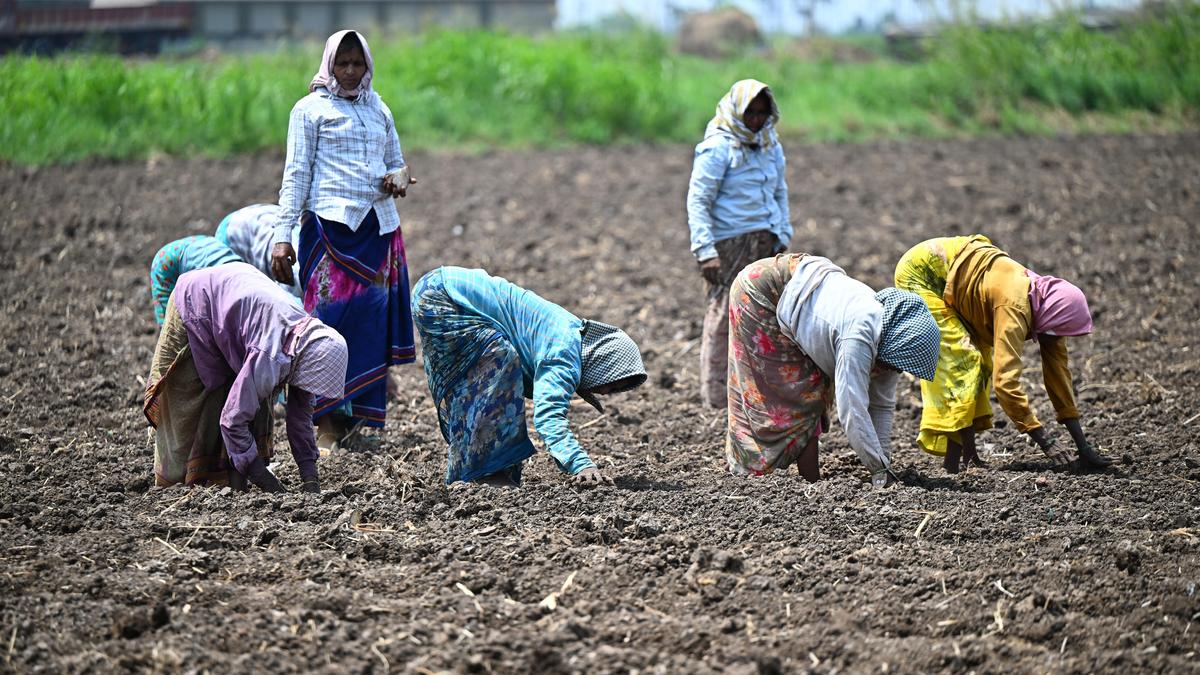
Farmer Producer Organisations (FPOs) are collective institutions formed primarily by small and marginal farmers to improve their economic position through aggregation, collective marketing and better access to technology, finance and agricultural services. Registered either as Producer Companies under the Companies Act or Cooperative Societies under State Cooperative Acts, FPOs combine the professional management of corporate entities with the democratic governance of cooperatives. This enables farmers to pool resources, reduce production costs, negotiate better prices and participate more effectively in agricultural value chains.
Objectives of FPOs
The primary objective of FPOs is to overcome the limitations of fragmented landholdings by promoting collective action. They aggregate farmers' produce to improve market access, enhance bargaining power while purchasing inputs and selling produce, facilitate institutional credit and insurance, promote value addition and processing, provide technical guidance, and encourage adoption of modern and climate-resilient agricultural technologies. In doing so, FPOs improve both farm profitability and long-term sustainability.
Government Initiatives to Promote FPOs
- Recognising their importance, the Government launched the Central Sector Scheme for Formation and Promotion of 10,000 FPOs in 2020 with a financial outlay of ?6,865 crore. The scheme aims to establish and nurture 10,000 new FPOs by 2027-28.
- The scheme provides financial assistance of up to ?18 lakh over three years for management and capacity building, an Equity Grant of up to ?15 lakh, and a Credit Guarantee Facility up to ?2 crore to improve institutional credit access. It follows a Cluster-Based Business Organisation (CBBO) approach and is implemented through agencies such as NABARD, SFAC, NCDC and various State-level institutions.
- The scheme is complemented by initiatives like NABARD's Producer Organisation Development Fund (PODF), SFAC's Equity Grant and Credit Guarantee Scheme, the ?1 lakh crore Agricultural Infrastructure Fund (AIF), and support under the Mission for Integrated Development of Horticulture (MIDH).
Current Status
The FPO movement has expanded significantly in recent years. More than 10,000 FPOs have already been formed across the country, representing over 63 lakh farmer members. These organisations are engaged in crop cultivation, horticulture, dairy, fisheries, beekeeping and other allied agricultural activities, making them an important institutional pillar for rural development.
Monsoon Outlook and Need for Climate Resilience
The IMD has projected that the Southwest Monsoon (June–September) 2026 is likely to be 90% of the Long Period Average (LPA), with a model error of ±4%. The LPA for the country, calculated using the 1971–2020 dataset, is 87 cm.
More importantly, rainfall over the Monsoon Core Zone is expected to remain below normal (less than 94% of LPA). This zone includes major rain-fed agricultural states such as Maharashtra, Gujarat, Rajasthan, Madhya Pradesh, Chhattisgarh, Jharkhand, Karnataka, Telangana and Odisha, where crop production is highly dependent on timely monsoon rainfall.
Government's Strategy Through FPOs
To reduce the impact of a weak monsoon, the Ministry has prepared a comprehensive list of 10,000 FPOs already practising climate-resilient agriculture. These organisations are being used as demonstration centres to spread awareness and encourage adoption of sustainable farming practices.
The Ministry is organisingdaily state-wise webinars on natural farming and climate-smart agriculture while promoting mulching, drip irrigation, mixed cropping, and cultivation of drought-resistant crops, particularly millets and pulses. This institutional approach allows successful practices to be replicated rapidly across farming communities.
Climate-Resilient Practices Being Promoted
Among the various interventions, mulching has emerged as one of the most effective low-cost technologies. By covering the soil with crop residues or other organic material, mulching reduces evaporation losses, conserves soil moisture, suppresses weeds and improves soil fertility, enabling crops to withstand prolonged dry spells.
The Ministry is also encouraging farmers to diversify towards crops that require less water. Millets such as ragi, jowar and bajra, along with pulses like moong, urad and horse gram (kulthi), are naturally drought tolerant and better suited to uncertain rainfall conditions. Mixed cropping is being promoted simultaneously to reduce production risks and improve farm resilience.
Jharkhand: A Model for Climate-Resilient Farming
The government's strategy is already reflected in the work of several FPOs in Jharkhand. The Torpa Mahila Krishi Bagwani Swavlambi Sahkari Samiti Limited in Khunti district, comprising nearly 4,000 farmers, has adopted natural mulching using straw and gunny bags. Anticipating deficient rainfall, its members are shifting from water-intensive paddy cultivation to millets and pulses during the Kharif 2026 season while motivating neighbouring farmers to adopt similar practices.
Similarly, the Senem Nirem Farmer Producer Company Limited has successfully implemented natural mulching techniques that improve soil moisture retention through inexpensive interventions, helping crops survive extended dry periods.
Significance
Farmer Producer Organisations have evolved beyond being marketing institutions and are increasingly becoming vehicles for agricultural transformation. They empower small and marginal farmers, who constitute nearly 86% of India's farming population, by improving market access, reducing dependence on intermediaries, facilitating adoption of modern technology and ensuring effective delivery of government schemes.
The current strategy demonstrates that FPOs can also serve as critical institutions for climate adaptation, enabling rapid dissemination of climate advisories, promotion of sustainable farming practices and diversification towards resilient cropping systems. As climate variability becomes more frequent, strengthening FPOs will be essential for ensuring agricultural sustainability, improving farmer incomes and enhancing India's food security.