
Deficient Winter Rains and Early Onset of Summer in India
- 11 Mar 2026
In News:
Several regions of northern and western India have recently experienced an unusually early rise in temperatures, marking the premature onset of summer conditions. Day temperatures in some areas were 8–13°C above normal, reaching levels that qualify as heatwave conditions. The phenomenon is largely linked to deficient winter rainfall, weak Western Disturbances, and reduced soil moisture, which together have accelerated land heating and altered seasonal weather patterns.
Western Disturbances: Key Winter Weather System
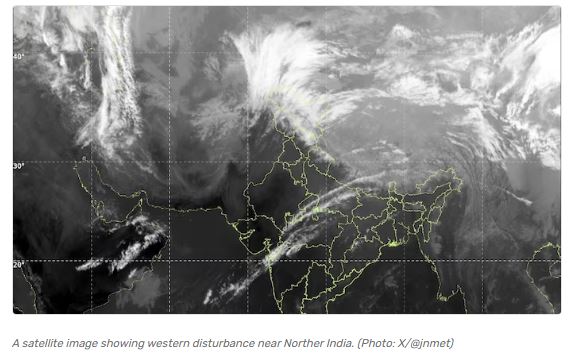
A Western Disturbance is an eastward-moving extratropical weather system that originates in the Mediterranean region and travels across West Asia toward the Indian subcontinent through the westerly winds.
As the system approaches northwestern India via Pakistan, it gathers moisture. When this moist air interacts with the Himalayan mountain ranges, it rises and cools, leading to cloud formation, rainfall, and snowfall.
Western Disturbances are most active between December and February and constitute the primary source of winter precipitation in northern India. They provide rainfall and snowfall to states such as:
- Jammu and Kashmir
- Himachal Pradesh
- Uttarakhand
- Punjab
- Haryana
This precipitation is essential for maintaining soil moisture, supporting agriculture, and regulating seasonal temperatures.
Deficient Winter Rainfall
The current early heat conditions are closely associated with an unusually dry winter season. According to the India Meteorological Department, the January–February rainfall was only about 16 mm across India, which is around 60% below the normal level. February also ranked as the third driest since 1901.
The main reasons behind the rainfall deficit include:
- Reduced Western Disturbances since November 2025, leading to lower snowfall and rainfall across the Himalayan region.
- Weak interaction between westerly and easterly winds, which normally facilitates moisture transport into central and northern India.
- Lower snowfall in the Himalayas, reducing the cooling effect usually associated with winter precipitation.
Early Heatwave Conditions
The India Meteorological Department (IMD) had earlier forecast above-normal temperatures for March in several regions including the western Himalayan region, central India, and peninsular India.
These predictions materialised early in the month as several places recorded unusually high temperatures. For instance:
- Parts of Himachal Pradesh recorded temperatures above 25°C, which is uncommon for March.
- Similar warm conditions were observed in Jammu & Kashmir and Ladakh, where summers usually peak in May–June.
Such early warming is rare and reflects a disruption in typical seasonal weather patterns.
Role of Dry Soil in Rising Temperatures
Dry winter conditions significantly influence surface temperatures. Normally, soil moisture absorbs heat and slows the warming of land surfaces. However, when rainfall and snowfall are deficient, the soil becomes dry and heats up rapidly, causing temperatures to rise quickly during late winter and early spring.
Thus, low soil moisture acts as a feedback mechanism, intensifying heatwave conditions and accelerating the onset of summer.
Implications for Agriculture
The sudden temperature rise poses risks to standing rabi crops, which are sensitive to heat stress during their maturation stage. Crops likely to be affected include: Wheat, Mustard, Gram, Groundnut, Sesame, Sorghum, and Safflower
Horticultural crops such as potato and apples may also face productivity challenges. Farmers have been advised to increase irrigation to maintain soil moisture, but this could further strain local water resources, particularly in regions already facing water scarcity.
Conclusion
The early onset of summer in India highlights the critical role of winter rainfall and Western Disturbances in regulating the country’s climate and agricultural cycle. Persistent deficiencies in winter precipitation can accelerate warming, intensify heatwaves, and threaten agricultural productivity. Strengthening climate monitoring systems, improving irrigation management, and enhancing resilience in cropping systems will be essential to mitigate the impacts of such emerging climate variability.