
El Niño and Its Impact on India's Economy
- 08 Jul 2026
In News:
The India Meteorological Department (IMD) has forecast below-normal rainfall in July after a 40% rainfall deficit in June, raising concerns over a possible Super El Niño and its impact on India's agriculture, inflation and overall economic growth.
What is El Niño?
El Niño is the warm phase of the El Niño–Southern Oscillation (ENSO), characterised by the abnormal warming of sea surface temperatures in the central and eastern equatorial Pacific Ocean. It weakens the atmospheric circulation that supports the Indian southwest monsoon, often resulting in below-normal rainfall. A Super El Niño is an exceptionally strong event capable of causing severe droughts and prolonged rainfall deficits. Major drought years such as 1972, 1982, 2009 and 2015 coincided with strong El Niño events.
Why is the Monsoon Important for India?
The Southwest Monsoon (June–September) provides nearly 75% of India's annual rainfall and remains the backbone of the economy. It supports agriculture, replenishes reservoirs and groundwater, sustains hydropower generation and ensures rural livelihoods. Since nearly 46% of India's workforce depends on agriculture, any disruption in the monsoon has economy-wide consequences.
Economic Impact of a Weak Monsoon
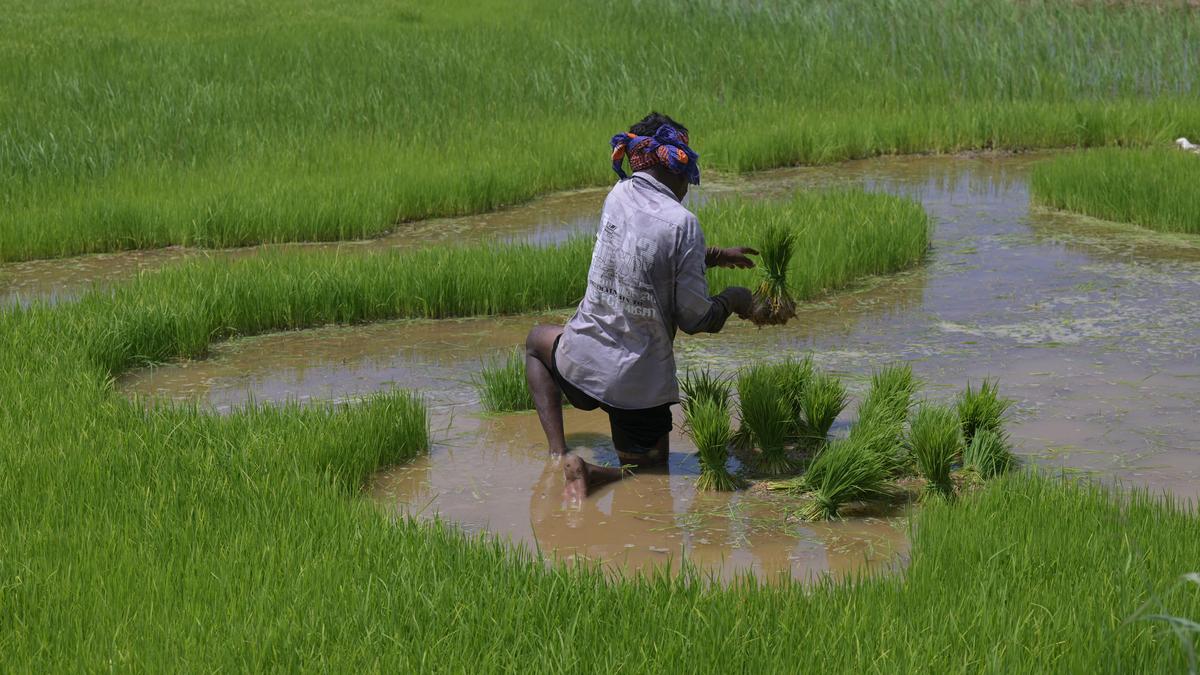
A deficient monsoon directly affects kharif crops such as paddy, maize, pulses and cotton. Although India recorded a record foodgrain production of 357.73 million tonnes in 2024–25, continued rainfall deficiency could reduce agricultural output and slow rural income growth.
Lower farm incomes weaken rural demand, affecting industries such as tractors, two-wheelers, construction and consumer goods. Reduced agricultural production also pushes up food prices, especially vegetables, pulses and edible oils, increasing inflationary pressures. The Reserve Bank of India (RBI) has already cautioned that an adverse monsoon could weaken India's growth-inflation outlook.
A severe El Niño–drought combination could lower GDP growth by 20–65 basis points. Lower domestic production may also increase food imports, widen the Current Account Deficit (CAD) and put pressure on the Indian Rupee.
Lessons from Past El Niño Events
India's experience shows that the impact of El Niño depends not only on rainfall but also on policy preparedness. The 2009 El Niño resulted in sharp agricultural contraction and double-digit inflation because irrigation coverage was limited. In contrast, although 2015 also witnessed poor monsoon conditions, inflation remained relatively moderate due to effective food stock management, restrained MSP increases and favourable global commodity prices.
India's Preparedness
The Government has identified 315 districts as vulnerable to poor monsoon conditions, including 111 districts with inadequate irrigation facilities. Reservoir storage, monitored by the Central Water Commission (CWC), remains slightly below both last year's level and the long-term average, indicating the need for careful water management if rainfall deficiency continues.
Way Forward
India needs to move beyond post-disaster relief towards climate-resilient agriculture. Expanding irrigation, promoting drought-resistant crop varieties, improving weather forecasting, strengthening water conservation and encouraging climate-smart farming practices will reduce long-term vulnerability. Simultaneously, greater investment in agricultural research and diversification of rural livelihoods can help build resilience against increasingly frequent climate shocks.