
The Special Intensive Revision (SIR): Redefining India’s Electoral Landscape
- 27 Apr 2026
In News:
The foundation of any vibrant democracy lies in the integrity of its voter lists. In India, the Election Commission of India (ECI) is constitutionally mandated to maintain the electoral roll—a constituency-wise record of eligible citizens. Recently, the transition from routine annual updates to a Special Intensive Revision (SIR) has sparked a significant shift in India’s democratic arithmetic, balancing the need for technical accuracy with the imperative of universal inclusion.
Understanding the Revision Framework
Electoral rolls in India are updated through two distinct mechanisms:
- Summary Revision: An annual exercise involving minor corrections, additions of new voters (attaining 18 years), and deletions of the deceased.
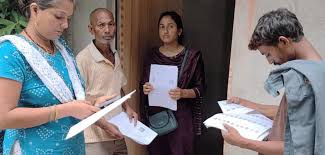
- Special Intensive Revision (SIR): A more rigorous, ground-up process involving fresh enumeration and physical verification. Unlike summary revisions, which update existing lists, SIR essentially drafts a new roll to eliminate deep-seated inaccuracies. The last such comprehensive exercise was conducted between 2002 and 2004.
The "Slimming" of the Electorate: Key Trends
Historically, India’s electorate has grown in tandem with its population—from 17 crore in 1951 to over 96 crore in recent years. However, SIR 2025 has disrupted this upward trajectory:
- Massive Trimming of "Ghost Voters": The SIR has led to a substantial reduction in voter numbers by identifying ASDD entries (Absent, Shifted, Dead, and Duplicate). In 13 States and UTs, the electorate base dropped from 51 crore to below 46 crore, representing a decline of over 10% in major states like Uttar Pradesh, West Bengal, and Tamil Nadu.
- The Statistical Turnout Paradox: A smaller, "purified" voter list has led to record-breaking turnout percentages.
- Tamil Nadu: Recorded over 85% turnout, significantly higher than the 73.63% in the previous Assembly election.
- West Bengal: Witnessed turnout levels exceeding 92% in initial phases.
Note: These high percentages are partly a mathematical result of removing non-existent voters from the denominator, reflecting a more realistic picture of active democratic participation.
- Reversing the Billion Mark: Before the SIR, India’s electorate was projected to hit the 100-crore (1 billion) milestone. Current trends suggest that once the nationwide revision is complete, the final count may settle around 90 crore, effectively reversing the advance toward a billion-strong list.
The Process: Deletion, Recovery, and Verification
The SIR is a two-way street of cleaning and enrolling. While deletions are prominent at the draft stage, a "recovery" occurs in the final roll through fresh registrations:
- Uttar Pradesh: Dropped from 15.44 crore to 12.55 crore in draft rolls, but rose to 13.39 crore in the final list after fresh enrollments.
- Technological and Physical Scrutiny: The exercise utilizes digital platforms and ground-level enumeration. However, the "burden of proof" has largely shifted to the citizen, requiring rigorous documentation to re-establish eligibility.
Challenges and Concerns: The Inclusion-Accuracy Balance
While SIR improves the "obesity" of the roll, it presents several challenges relevant to administrative ethics and social justice:
- Risk of Disenfranchisement: Vulnerable groups—including migrant laborers, the homeless, and those in remote areas—often lack the documentation required by strict SIR verification, leading to accidental exclusion on technical grounds.
- The Focus on Vulnerable Groups: To counter the narrative of pure deletion, the ECI has intensified focus on Particularly Vulnerable Tribal Groups (PVTGs), the third-gender community, and Persons with Disabilities (PwD) through campaign-mode enrollments.
- Administrative Neutrality: SIR is a tool for electoral hygiene, not a demographic policing mechanism. The challenge for election managers is to ensure that the pursuit of a "clean" list does not violate the fundamental right to franchise.
Conclusion
While a "slim" roll indicates a more accurate and credible electoral base, the ultimate litmus test for the Election Commission remains its celebrated resolve: "No voter to be left behind." Ensuring that technical accuracy does not become a barrier to democratic participation is the next great challenge for India’s electoral management.