
Ecocide: Strengthening International Law Against the Ecological Toll of War
- 01 May 2026
In News:
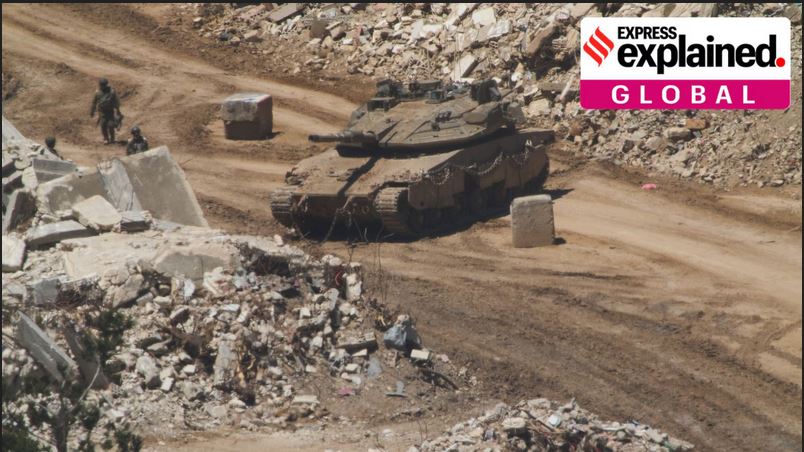
The escalating conflicts in the Middle East—evidenced by Lebanon’s 2026 accusations of "physical and ecological" reshaping of its southern landscape and Iran’s reports of "black rain" following bombings of fuel depots—have brought a decades-old concept to a critical legal crossroads. While the Rome Statute currently recognizes four "core" international crimes—genocide, crimes against humanity, war crimes, and the crime of aggression—there is a burgeoning global movement to codify 'Ecocide' as the fifth.
Understanding Ecocide: From Vietnam to the Modern Era
Ecocide refers to the most extreme forms of environmental destruction caused by human action. It is characterized by unlawful or wanton acts committed with the knowledge that there is a substantial likelihood of severe, widespread, or long-term damage to the environment.
- Historical Roots: Coined in 1970 by Yale biologist Arthur W. Galston, the term originally described the devastation caused by Agent Orange during the Vietnam War. It gained political traction in 1972 when Swedish Prime Minister Olof Palme used it at the UN Conference on the Human Environment.
- Early Adoption: Vietnam became the first nation to codify ecocide in domestic law (1990). Today, countries including Russia, Ukraine, Chile, France, and Belgium have integrated the concept into their national legal frameworks.
- The Standardized Definition (2021): To bridge the gap between activism and law, an expert panel for Stop Ecocide International proposed a formal definition to facilitate its inclusion in the Rome Statute, focusing on "wanton acts" with "long-term" consequences.
The Legal Gap: Ecocide vs. Existing Frameworks
A common critique of the ecocide movement is that environmental damage is already addressed by international law. However, proponents argue that existing mechanisms are fundamentally limited by their anthropocentric (human-centered) nature.
Current international laws, such as the Rome Statute, place humans at the center of harm. Environmental damage is typically only prosecuted if it is "disproportionate" to military advantage and results in direct human suffering, such as displacement or death. Furthermore, these provisions are largely restricted to active warfare (War Crimes).
In contrast, the proposed ecocide framework is eco-centric, recognizing the environment as a victim in its own right. It focuses on the "substantial likelihood" of severe harm regardless of immediate human impact and is intended to apply during both peace and war, addressing issues like massive industrial pollution alongside military devastation.
Institutional Hurdles and Shortfalls
Despite the existence of the Geneva Conventions and the Environmental Modification Convention (ENMOD), several factors prevent effective prosecution:
- Jurisdictional Limits: The International Criminal Court (ICC) generally only has jurisdiction over State Parties. For instance, recent allegations involving Iran and Lebanon face hurdles as neither is a party to the Rome Statute, necessitating a UN Security Council referral.
- The "Human" Requirement: Current laws often require proof that environmental damage directly caused displacement, suffering, or death among humans to be prosecutable as a war crime.
- High Evidentiary Thresholds: Proving "intent" to cause widespread environmental destruction is notoriously difficult in a theater of war, where "military necessity" is frequently invoked as a defense.
- Lack of Precedent: To date, no direct international prosecution has been launched specifically for environmental destruction caused by warfare, leaving the law as a "moral force" rather than a functional deterrent.
The Path Forward: Towards a Fifth Crime
The momentum for ecocide is shifting from advocacy to formal policy. In October 2025, the International Union for Conservation of Nature (IUCN) recognized ecocide as a crime. More significantly, the Council of Europe adopted a convention in 2025 that allows for the prosecution of severe environmental crimes committed abroad within European domestic courts.
Way Forward
- Rome Statute Amendment: This requires a two-thirds majority of the Assembly of States Parties to formally include ecocide as a core crime.
- Domestic Codification: Following the lead of Belgium and Chile to create a "bottom-up" pressure on international norms.
- Universal Jurisdiction: Utilizing the principle that certain crimes are so grave that they can be prosecuted by any state, regardless of where the crime was committed.
- Non-Anthropocentric Jurisprudence: Supporting the International Court of Justice (ICJ) in developing principles that recognize the intrinsic rights of nature.
Conclusion
The recognition of ecocide represents a vital shift in holding global actors accountable for the permanent scarring of the planet. While current international law remains a "guardrail of shame," formalizing ecocide would transform it into a binding legal deterrent, ensuring that the "physical and ecological landscape" is no longer considered collateral damage in human conflicts.