
Puducherry’s Community-Led Green Transformation
- 13 Nov 2025
In News:
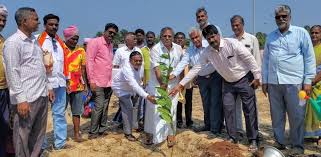
In an era of accelerating climate change and rapid urbanisation, Indian cities face the dual challenge of ecological degradation and declining public participation in environmental stewardship. Against this backdrop, Puducherry has emerged as an innovative model of community-driven greening, demonstrating how environmental governance can be both scientifically sound and socially embedded. Under the leadership of P. Arulrajan, an Indian Forest Service officer, Puducherry has launched a holistic programme aimed at doubling its green cover by 2030.
Vision and Objectives
Puducherry’s current forest and tree cover stands at about 12.57%, significantly below what is desirable for climate resilience and urban sustainability. The initiative sets an ambitious yet clear goal: to raise green cover to at least 24% by 2030. Unlike conventional afforestation drives that rely primarily on government machinery, Puducherry’s approach places citizens at the centre of ecological restoration, integrating administrative innovation, ecological science, and cultural values.
Key Innovations in the Programme
One of the most distinctive elements is the Spiritual Van Initiative, which links tree planting with traditional belief systems. Citizens are encouraged to plant three trees associated with their planet, rashi, and nakshatra, thereby aligning environmental action with personal and cultural identity. This strategy transforms tree planting from a bureaucratic activity into a value-driven, emotionally resonant practice, increasing long-term ownership and care.
Another pillar is the Amma Vanam Programme, a large-scale plantation drive that has facilitated the planting of over one lakh trees. The programme mobilises diverse social groups, including Mahatma Gandhi National Rural Employment Guarantee Act (MGNREGA) workers, self-help groups, students, and fishing communities. This convergence not only accelerates plantation efforts but also links livelihood support with environmental outcomes, reinforcing the idea that ecology and economy are interdependent.
To nurture environmental consciousness among children, Puducherry has introduced seed-filled pencils, which can be planted after use. These low-cost tools enable children to green roadsides and unused spaces, embedding eco-literacy and stewardship at an early age. Such micro-interventions, while simple, have a multiplier effect by shaping attitudes rather than merely increasing tree counts.
Ecological and Administrative Dimensions
The programme adopts an integrated green governance model, combining scientific site selection, native species choice, and ecosystem-specific restoration. Special emphasis is placed on sand dune regeneration, urban greening, and coastal ecosystem recovery, which are critical for Puducherry’s vulnerability to cyclones, sea-level rise, and erosion. Rather than isolated plantations, the focus is on functional ecosystems that enhance biodiversity and climate resilience.
Administratively, the initiative demonstrates effective inter-departmental convergence and community partnerships, reducing costs and improving sustainability. Citizen participation also ensures better survival rates of plantations, a common weakness in top-down afforestation programmes.
Significance and Broader Lessons
Puducherry’s greening effort illustrates that environmental policy need not be technocratic or alienating. By grounding conservation in local culture, collective action, and scientific planning, it offers a replicable model for other States and urban regions. The initiative strengthens civic responsibility, promotes inclusive climate action, and aligns well with India’s broader commitments to sustainable development and climate adaptation.
Conclusion
Puducherry’s experience underscores a crucial lesson for contemporary environmental governance: lasting ecological transformation is as much a social process as a scientific one. By harmonising tradition, participation, and policy, Puducherry is not merely planting trees, it is cultivating a culture of sustainability, making its green transition both resilient and people-centric.