
Judicial Accountability and Resignation of Judges
- 22 Jul 2026
In News:
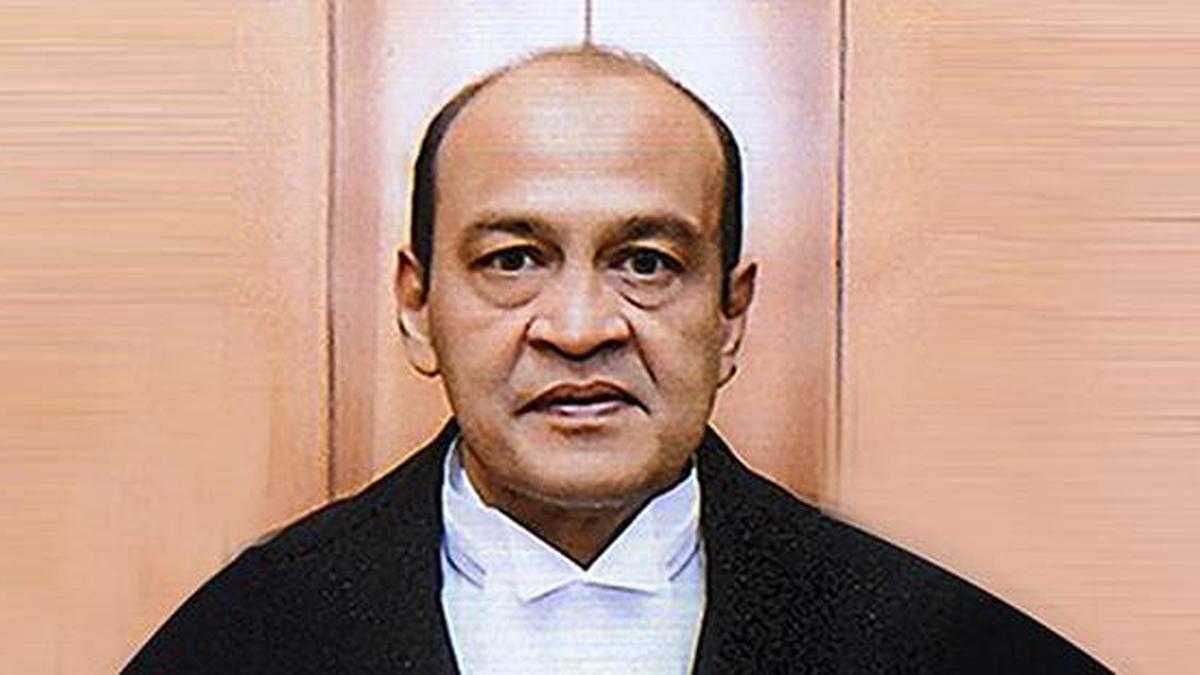
The report of the Inquiry Committee constituted against former Allahabad and Delhi High Court judge Justice Yashwant Varma is set to be tabled in Parliament during the Monsoon Session. The case has revived debate on judicial accountability, the constitutional power of judges to resign at will, and whether the existing legal framework allows judges facing serious allegations to evade the process of removal by resigning before Parliament acts.
Background
The controversy began in March 2025, when partially burnt currency notes were allegedly discovered in an outhouse attached to Justice Varma's official residence. Following the incident, the Speaker of the Lok Sabha constituted an Inquiry Committee under the Judges (Inquiry) Act, 1968, to investigate allegations of misbehaviour.
Before Parliament could initiate removal proceedings, Justice Varma submitted his resignation on 9 April 2026. The Inquiry Committee nevertheless completed its investigation, and its report is now expected to be placed before Parliament.
Constitutional Framework
The Constitution grants certain constitutional functionaries, including judges of the Supreme Court and High Courts, the power to resign voluntarily. A judge's resignation becomes effective upon submitting a written resignation to the President and does not require formal acceptance.
This position was affirmed by the Supreme Court in Union of India v. Gopal Chandra Misra (1978), where a Constitution Bench held that the resignation of a judge operates ex proprio vigore (by its own force) and takes effect immediately unless a future date is specified. The requirement of acceptance, applicable to Members of Parliament and State Legislatures, does not apply to judges.
This provision is intended to safeguard judicial independence, ensuring that judges are not compelled to remain in office against their will or subjected to executive pressure.
Removal of Judges
Judges of the Supreme Court and High Courts can be removed only on the grounds of proved misbehaviour or incapacity under Article 124(4) of the Constitution, read with Article 217 for High Court judges. The procedure is governed by the Judges (Inquiry) Act, 1968.
The process involves the admission of a motion in Parliament, constitution of an Inquiry Committee, submission of its report, and passage of the removal motion by both Houses through a special majority, followed by an order of removal by the President.
Accountability Loophole
The present case highlights a significant gap in the constitutional framework. Since Justice Varma resigned before Parliament could consider the removal motion, he ceased to hold judicial office and therefore cannot be removed. Although the Inquiry Committee's report may still be laid before Parliament and made public, the statutory removal process effectively comes to an end.
This creates a situation where a judge facing serious allegations can avoid formal parliamentary scrutiny and removal simply by resigning before the process concludes. Such a loophole raises concerns regarding transparency, public confidence in the judiciary, and the effectiveness of existing accountability mechanisms.
Suggested Reforms
Legal experts have suggested that this issue requires a constitutional amendment rather than judicial interpretation. One proposal is that where removal proceedings are pending, a judge's resignation should become effective only after acceptance by the Chief Justice of India, thereby preserving judicial independence while preventing misuse of the resignation provision. Another suggestion is to allow Parliament to discuss the Inquiry Committee's findings even after the judge has resigned, ensuring public accountability despite the termination of removal proceedings.
Significance
The Justice Yashwant Varma case highlights the need to strike a careful balance between judicial independence and judicial accountability. While the constitutional power to resign protects judges from external pressure, it should not inadvertently become a means to escape scrutiny in cases involving serious misconduct. Strengthening the legal framework while preserving the independence of the judiciary will be essential for maintaining public trust in India's constitutional institutions.