
Census 2027: Balancing Comprehensive Enumeration with Privacy and Statistical Integrity
- 12 Sep 2026
In News:
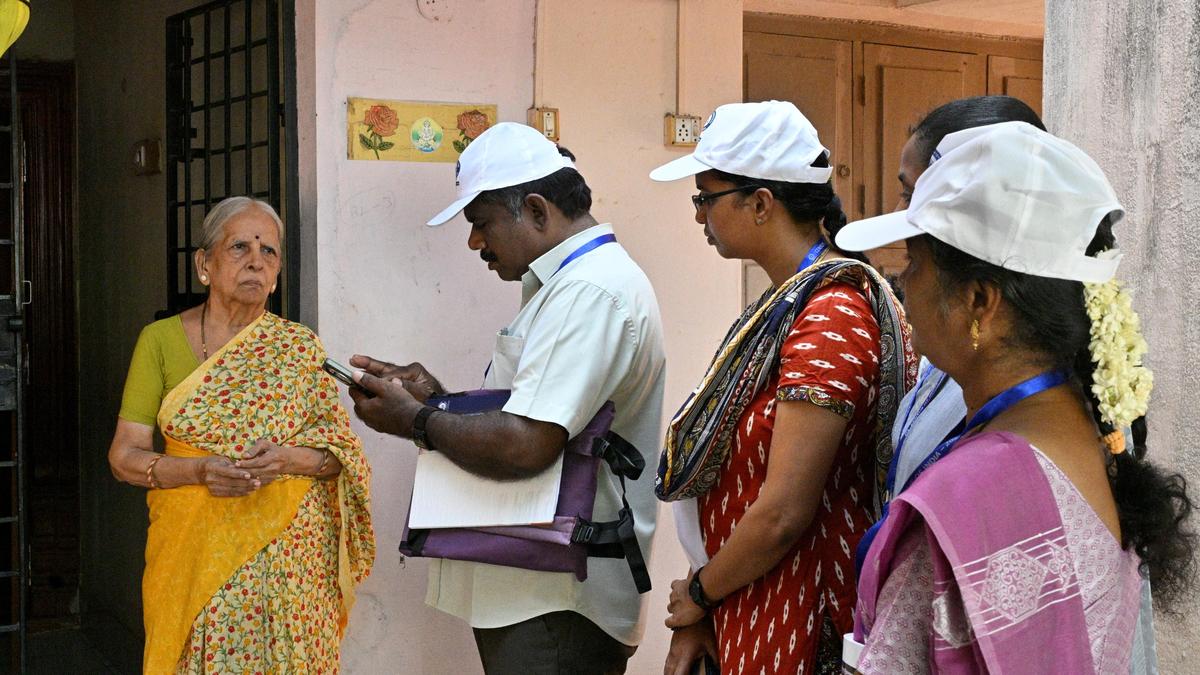
The Office of the Registrar General & Census Commissioner, India (ORGI) has notified a 40-question schedule for the Population Enumeration phase of Census 2027, compared with 29 questions in the 2011 Census. The expanded questionnaire includes details relating to Aadhaar, Voter ID, mobile number, nationality, parents’ details and bank accounts. While these data can support socio-economic planning, their inclusion has raised concerns about privacy, data security and the appropriate scope of a population census.
Census as a Statistical Exercise
The Census is fundamentally a statistical exercise designed to collect, process and analyse demographic, social and economic information at the smallest geographical level. The inclusion of questions relating to parental birth details, nationality and multiple identity documents has raised concerns that the Census could increasingly overlap with administrative exercises such as the National Population Register (NPR).
The Census Act, 1948 provides confidentiality safeguards for information collected during enumeration. However, maintaining a clear distinction between statistical enumeration and population or citizenship profiling is important for preserving public trust.
Caste Enumeration: A Methodological Challenge
Census 2027 will also collect caste information. While Scheduled Castes and Scheduled Tribes will be recorded using predefined lists, other caste identities, including OBCs, will be entered through respondents' declarations.
An open-ended approach may result in different spellings, regional names, sub-caste identities and multiple classifications for the same community. The 2011 Socio-Economic and Caste Census (SECC) reportedly generated around 46 lakh caste names, highlighting the challenge of standardisation.
Therefore, collecting extensive caste data without a robust classification and validation mechanism could produce a large database that remains difficult to analyse and use for evidence-based policy.
Privacy and Digitalisation
Census 2027 will be India's first fully digital Census, with provision for self-enumeration. Digitalisation can improve efficiency and data processing, but collecting multiple personal identifiers also increases risks of:
- Data breaches and unauthorised access;
- Cross-linking of databases;
- De-anonymisation;
- Misuse of information beyond its original purpose.
The UN Fundamental Principles of Official Statistics emphasise confidentiality of individual information and its use strictly for statistical purposes. Hence, data minimisation and purpose limitation should remain central to the Census framework.
Other Challenges
The expansion from 29 to 40 questions may increase respondent fatigue and the possibility of inaccurate responses, particularly where respondents lack detailed information about other household members. Institutional households such as hostels and old-age homes may face greater difficulties.
The de facto enumeration approach may also create challenges in accurately capturing migrant workers who are away from their usual place of residence during enumeration.
Way Forward
- Standardise caste data through a scientifically validated and consultative classification system.
- Follow data minimisation, collecting personal identifiers only when demonstrably necessary.
- Establish clear legal and administrative firewalls between Census, NPR and NRC-related processes.
- Strengthen cybersecurity through end-to-end encryption, access controls and independent security audits.
- Conduct a robust Post-Enumeration Survey (PES) to identify undercounting and duplication.
- Improve coverage of migrants through complementary statistical methods while maintaining confidentiality.
- Ensure transparency regarding data storage, access, retention and permitted uses.
Conclusion
Census 2027 presents an opportunity to modernise India's statistical system, but its credibility will depend on maintaining the right balance between comprehensive data collection, statistical utility and individual privacy. A trusted Census must ensure that information collected for statistical purposes remains confidential, proportionate, secure and protected from unrelated administrative use. Strengthening methodological standards and data-governance safeguards will be essential for producing reliable evidence for India's future policymaking.