
Beyond the "Green Desert": Rethinking Invasive Alien Species Management in India
- 14 May 2026
In News:
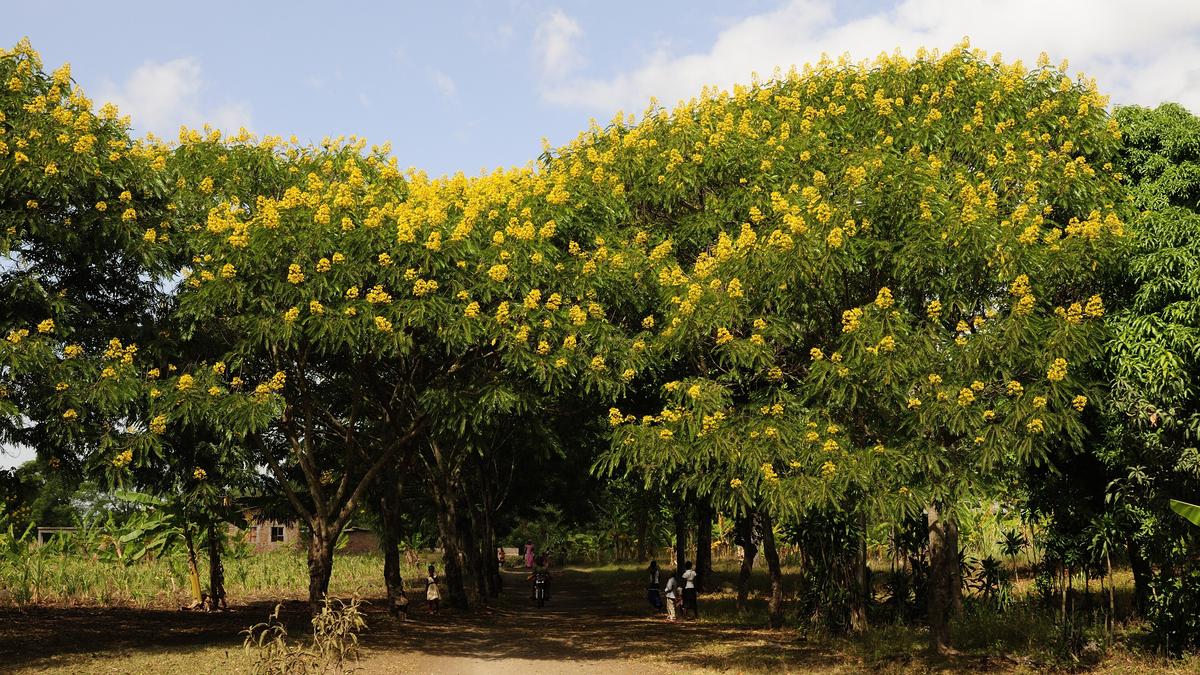
The fight against Invasive Alien Specieslike Prosopis juliflora, Lantana camara, and Senna spectabilis has reached a critical juncture in India. While mechanical removal campaigns are intensifying, ecological experts argue that treating these species as the "sole enemy" overlooks a vital truth: invasive species are often "ecological first responders" to landscapes already weakened by human intervention.
The Genesis of Invasion: Drivers of Spread
The proliferation of Invasive Alien Species in India is not an accidental phenomenon but a result of intersecting historical, agricultural, and biological factors.
- Historical and Colonial Legacies: Many invasive plants were introduced intentionally. Prosopis juliflora (Vilayati Babul) was brought in 1877 for arid greening, while Lantana camara arrived in the 19th century as an ornamental plant. Colonial forestry further simplified diverse landscapes into monocultures of teak or eucalyptus, creating "ecological vacancies" that invasive species quickly filled.
- Agricultural and Hydrological Shifts: The expansion of canals and borewells altered moisture regimes, favoring deep-rooted phreatophytes like P. juliflora. Furthermore, India’s heavy urea consumption (35–40 million tonnes annually) has enriched soils with nitrogen, enabling species like Senna spectabilis to outcompete native flora that thrive in nutrient-poor soils.
- Grazing and Fragmentation: With a livestock population of roughly 500 million, heavy grazing suppresses palatable native plants. Thorny or chemically defended invasives, which cattle avoid, expand unchecked. Simultaneously, infrastructure development creates "edge habitats"—disturbed zones where invasive species colonize before native trees can regrow.
- Global Trade and Biology: Contaminated timber or grain shipments (e.g., Parthenium arriving with wheat) and ballast water discharge from ships at ports like Mumbai introduce foreign larvae and seeds. Biologically, these species are "climate generalists" with high seed viability and a lack of local natural predators, allowing them to form dense monocultures.
Ecological and Socio-Economic Consequences
The "invasion" transforms healthy ecosystems into "green deserts"—areas that look lush but are biologically sterile.
- Biodiversity and Wildlife: Invasive Alien Species contribute to 60% of global extinctions. Through allelopathy, some species release chemicals that prevent native seeds from germinating. This depletes natural forage for herbivores like elephants and deer, leading to population declines and increased Human-Wildlife Conflict (HWC) as animals stray into human settlements for food.
- Economic Impact: A 2025 study estimated that invasive plants have cost India over ?8.3 lakh crore over the last 60 years. Aquatic weeds like Water Hyacinth clog irrigation canals—reducing crop yields by up to 40%—and block navigation, destroying local fishing livelihoods.
- Public Health: Species like Parthenium cause asthma and dermatitis, while others provide breeding grounds for disease-carrying mosquitoes.
- Cultural Erosion: The disappearance of native plants leads to the loss of indigenous knowledge related to traditional medicine and crafts, such as basket weaving.
Global and National Policy Frameworks
India’s management of Invasive Alien Species is guided by international commitments and domestic legislation.
Global Initiatives
- Convention on Biological Diversity (CBD): Article 8(h) mandates members to prevent and eradicate alien species.
- Kunming-Montreal Global Biodiversity Framework (KM-GBF):Target 6 specifically aims to halve the negative impacts of Invasive Alien Species by 2030.
- IUCN ISSG: Provides the Global Invasive Species Database (GISD) for monitoring.
- Ballast Water Management Convention: Regulates the discharge of foreign water from ships to prevent marine invasions.
India-Specific Initiatives
- National Biodiversity Action Plan (NBAP): Aligned with the Biological Diversity Act, 2002, to protect indigenous ecosystems.
- NAPINVAS: A MoEFCC initiative focused on early detection and long-term containment.
- Plant Quarantine Order, 2003: Regulates imports to prevent the accidental introduction of pests and weeds.
Way Forward: A Holistic Restoration Strategy
Experts suggest that removal alone is insufficient; the focus must shift toward landscape restoration.
- Biosecurity Upgrades: International entry points require molecular diagnostics and X-ray scanners to detect hidden seeds. Ports must strictly enforce ballast water treatment.
- Precision Monitoring: Utilizing tools like the "Greening and Browning Atlas of India" can help distinguish between healthy native growth and rapid invasive colonization.
- Biological Control and Replanting: Importing "natural enemies" (insects/fungi) can control spread, provided strict biosafety protocols are followed. Crucially, cleared sites must be immediately replanted with native species like Neem or local grasses to prevent the "re-invasion" of the vulnerable soil.
- Community Empowerment: Leveraging tribal expertise and digital apps for reporting sightings ensures that management is localized and sustainable.
Conclusion
Invasive species are symptomatic of deeper ecological malaise—nutrient loading, habitat fragmentation, and hydrological disruption. To reclaim India’s biodiversity, policy must move beyond mechanical clearing. Success lies in integrating high-tech biosecurity with community-led restoration, ensuring that our landscapes are resilient enough to resist "ecological first responders" and support indigenous life once again.