
India–Finland Relations
- 10 Mar 2026
In News:
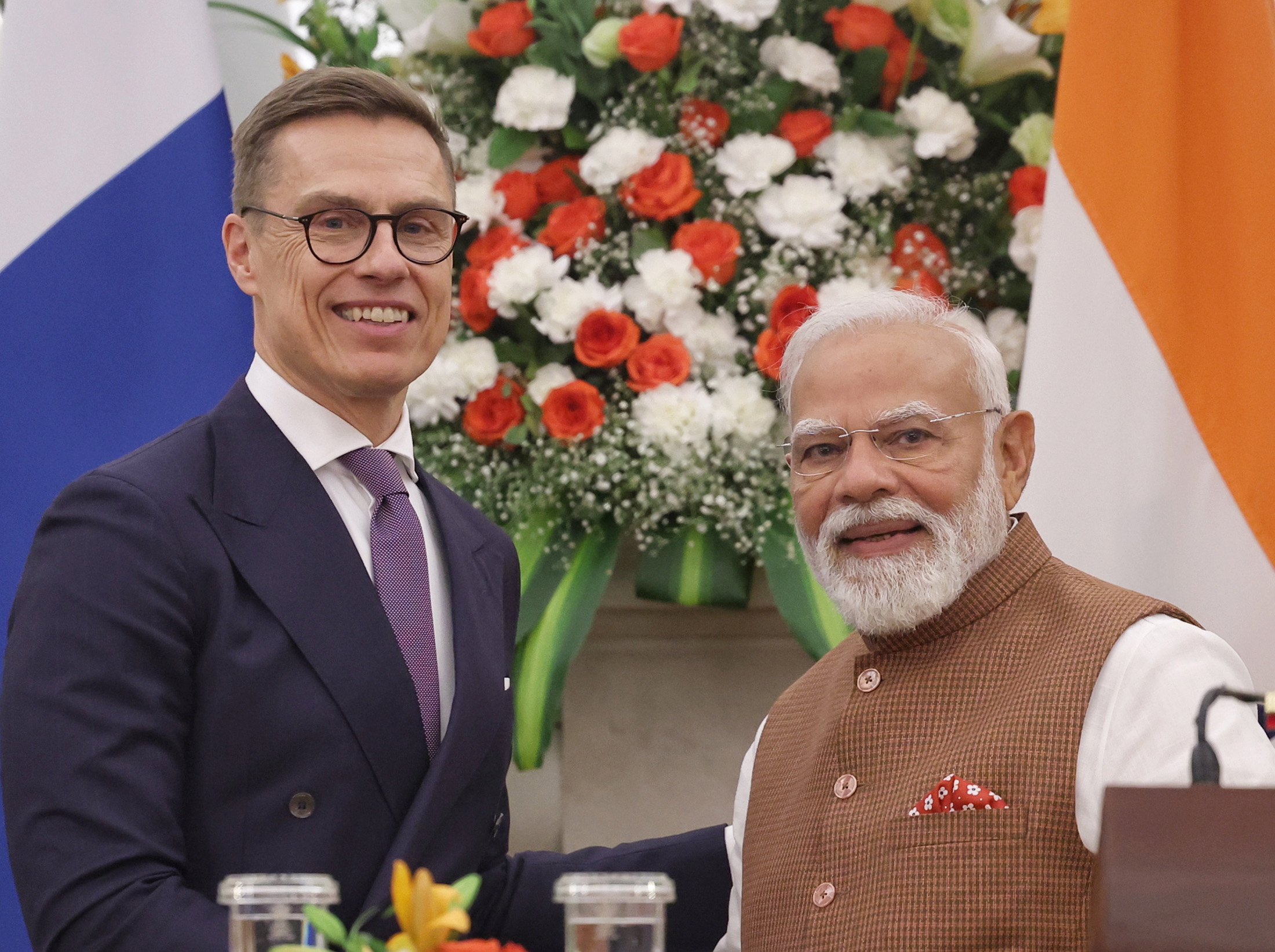
India and Finland have elevated their bilateral relationship to a “Strategic Partnership in Digitalisation and Sustainability” following high-level talks between the Narendra Modi and Alexander Stubb in New Delhi. This development marks a significant step in strengthening cooperation between India and the Nordic region, particularly in technology, sustainability, and global governance. The partnership also complements broader economic engagement between India and the European Union, including the recently concluded India–EU Free Trade Agreement (2026).
Key Outcomes of the India–Finland Talks
The bilateral discussions resulted in several institutional initiatives aimed at expanding cooperation in emerging sectors and economic engagement.
Institutional and Economic Initiatives
- A target to double bilateral trade by 2030.
- Establishment of a Joint Working Group on Digitalisation.
- Formation of a Joint Task Force on 6G telecommunications.
- Strengthening collaboration between the startup ecosystems of both countries.
- Creation of a consular dialogue mechanism to enhance people-to-people exchanges.
Agreements Signed
Three major agreements were signed in the areas of:
- Migration and Mobility – facilitating movement of skilled professionals, students, and talent between the two countries.
- Environmental cooperation – promoting sustainable development and environmental protection.
- Statistical collaboration – improving data exchange and policy research.
These agreements aim to promote economic exchanges, knowledge sharing, and sustainable growth.
Areas of Strategic Cooperation
1. Digital Technology and Emerging Technologies: The partnership emphasises cooperation in advanced technological domains such as:
- Artificial Intelligence (AI)
- 6G telecommunications
- Quantum computing
- Digital infrastructure
Both countries aim to promote secure, trustworthy digital ecosystems and resilient technological supply chains.
2. Sustainability and Circular Economy: Finland is globally recognised for its expertise in the circular economy, which focuses on resource efficiency and sustainable production systems.
Key initiatives include:
- Joint hosting of the World Circular Economy Forum in India.
- Expanded cooperation in clean energy, climate action, and environmental protection.
This collaboration aligns with India’s sustainable development goals and climate commitments.
3. Defence, Space, and Critical Technologies: India and Finland also agreed to enhance collaboration in:
- Defence and security technologies
- Space cooperation
- Semiconductors and critical minerals supply chains
Such cooperation is important for ensuring technological self-reliance and resilient global supply chains.
Examples of Existing India–Finland Cooperation
The partnership builds upon several existing areas of collaboration where Finnish technological expertise complements India’s large-scale implementation capabilities.
- Telecommunications: The Finnish company Nokia has played a significant role in India’s telecommunications sector, connecting millions through mobile network infrastructure.
- Infrastructure Development: Finnish architectural expertise contributed to the design and construction of the Chenab Rail Bridge, a landmark engineering project in India.
- Bioenergy Collaboration: India and Finland collaborated in establishing the bamboo-to-bioethanol refinery in Numaligarh, Assam, one of the largest such facilities in the world, contributing to renewable energy production.
Education and Mobility Cooperation
Finland’s globally reputed education system provides opportunities for deeper cooperation with India.
Key areas of collaboration include:
- Teacher training programmes
- School-to-school partnerships
- Research on future education models
- Facilitation of student and skilled worker mobility
Finland is increasingly becoming a preferred destination for Indian students and professionals.
Arctic and Polar Cooperation
Finland is an important partner for India in the Arctic region. Cooperation focuses on:
- Arctic and polar scientific research
- Climate change monitoring
- Sustainable resource management
This aligns with India’s India’s Arctic Policy, which emphasises scientific research and environmental protection.
Background of India–Finland Relations
India and Finland established diplomatic relations in 1949. Since then, bilateral engagement has expanded across trade, technology, and education.
- Bilateral trade: Approximately €1.5–2 billion annually, with Finland maintaining a slight trade surplus.
- Investment: More than 100 Finnish companies operate in India, including major firms such as Wartsila, Fortum, UPM, Lindstrom, and Ahlstrom.
Challenges and Way Forward
Despite growing engagement, several challenges remain.
1. Limited Trade Volume: Bilateral trade remains modest relative to potential. The India–EU FTA could expand trade and investment opportunities.
2. Geographical Distance and Market Awareness: Limited connectivity and awareness among businesses hinder deeper economic cooperation. Expanding startup and innovation partnerships could bridge this gap.
3. Technological Competition: Global competition in emerging technologies requires joint research and development initiatives to remain competitive.
4. Geopolitical Uncertainties: Ongoing global conflicts and shifting alliances could affect economic and technological cooperation.
Convergence on Global Governance
Both countries emphasised shared commitments to:
- Reform of global governance institutions
- Strengthening multilateralism
- Eliminating terrorism in all forms
- Restoring a rules-based international order
Conclusion
The elevation of India–Finland relations to a strategic partnership reflects the increasing importance of technology, sustainability, and innovation in modern diplomacy. By combining Finland’s technological expertise and educational excellence with India’s scale, market size, and economic growth, the partnership has the potential to deepen India’s engagement with the Nordic region, strengthen India–EU relations, and contribute to resilient global supply chains and sustainable development.