
Pre-Conception and Pre-Natal Diagnostic Techniques (PCPNDT) Act, 1994
- 02 Jul 2026
In News:
The PCPNDT Act, 1994 has come under renewed discussion amid calls by medical experts to modernise its provisions. They argue that while the Act has played a crucial role in preventing sex-selective abortions, certain provisions now restrict the use of portable and AI-enabled ultrasound devices for early disease diagnosis, particularly in underserved rural areas.
About the PCPNDT Act
The Pre-Conception and Pre-Natal Diagnostic Techniques (Prohibition of Sex Selection) Act, 1994, commonly known as the PCPNDT Act, was enacted to curb the misuse of prenatal diagnostic technologies for sex determination, which had led to a declining child sex ratio due to female foeticide. The Act was amended in 2003 to prohibit sex selection both before and after conception, thereby strengthening the legal framework against gender-biased practices.
The legislation regulates the use of prenatal diagnostic techniques while permitting them only for the detection of specific genetic abnormalities, chromosomal disorders, congenital malformations, haemoglobinopathies, and certain sex-linked diseases.
Key Provisions
The Act mandates that all genetic counselling centres, genetic laboratories, genetic clinics, ultrasound clinics, and imaging centres must be registered with the appropriate authority before conducting prenatal diagnostic procedures.
It strictly prohibits:
- Sex selection before or after conception.
- Disclosure of the sex of the foetus under any circumstances.
- Advertisement of facilities offering sex determination.
The Act also regulates the sale and installation of ultrasound machines by requiring manufacturers and suppliers to sell equipment only to registered facilities. Detailed patient records and documentation are mandatory for every prenatal diagnostic procedure, and violations attract stringent civil and criminal penalties, including imprisonment and cancellation of registration.
Achievements
The PCPNDT Act has established an important legal framework to combat female foeticide and has reinforced the constitutional commitment to gender equality. It has contributed to improved regulation of diagnostic centres and has played a role in the gradual improvement of the sex ratio at birth in several parts of the country.
Emerging Challenges
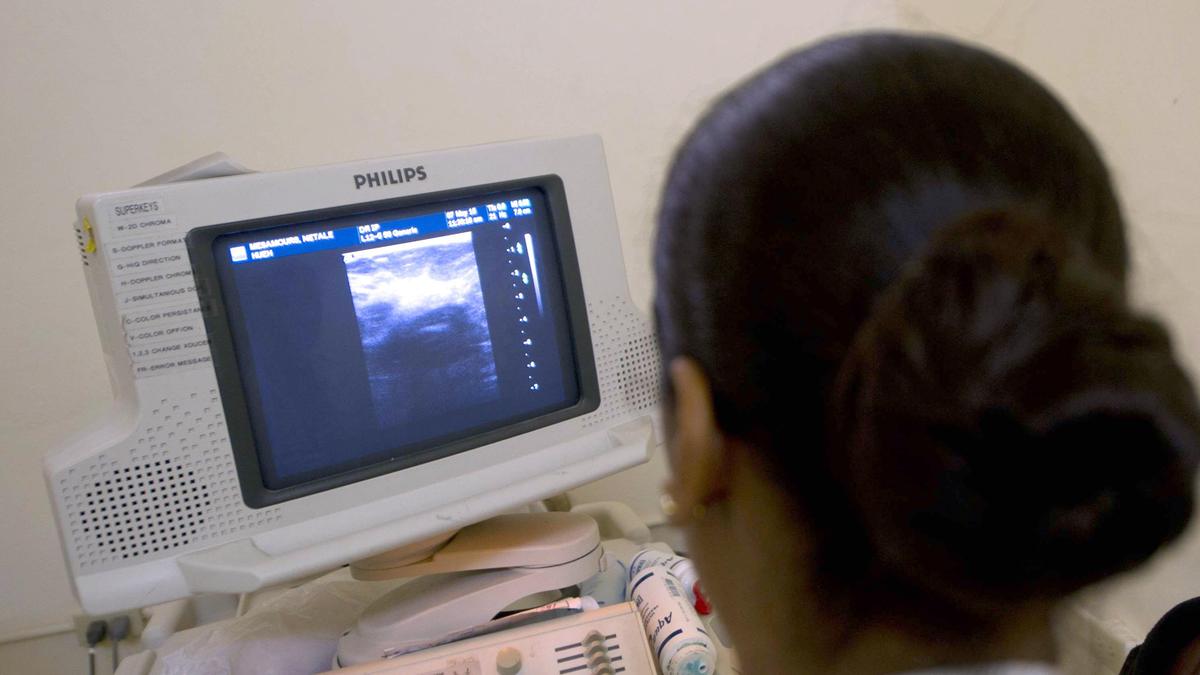
Rapid advances in medical technology have created new challenges for the existing legal framework. Modern portable ultrasound devices, particularly those equipped with high-frequency linear probes, are increasingly used for diagnosing conditions such as breast cancer, soft tissue disorders, and vascular diseases. These probes are technically incapable of imaging a foetus for sex determination, yet they remain subject to the same restrictions applicable to conventional obstetric ultrasound machines.
Experts also point to the growing role of Artificial Intelligence (AI) in ultrasound imaging. AI-assisted systems can support image acquisition, assist frontline health workers in diagnosis, and improve access to healthcare in remote regions. However, the current provisions of the PCPNDT Act do not distinguish between conventional obstetric ultrasound and purpose-specific diagnostic technologies.
Suggested Reforms
Medical experts have proposed updating the Act while preserving its original objective of preventing sex selection. Major recommendations include:
- Permitting the use of portable high-frequency ultrasound devices for community-based diagnosis of diseases such as breast cancer.
- Incorporating provisions for AI-enabled ultrasound systems that include technical safeguards preventing their use for prenatal sex determination.
- Revising regulations to facilitate early disease detection in underserved rural areas without compromising the Act's core objective.
Significance
The PCPNDT Act remains one of India's most important social legislations for addressing gender-biased sex selection and protecting the rights of the girl child. However, advances in portable imaging and Artificial Intelligence have transformed the scope of ultrasound technology beyond obstetric care. Balancing the Act's objective of preventing female foeticide with the need to improve access to life-saving diagnostic services, particularly in rural India, has emerged as an important policy challenge. A carefully calibrated regulatory framework can strengthen both women's rights and public health outcomes while ensuring that technological innovation is used responsibly.