
Reproductive Rights of Women with Intellectual Disabilities
- 27 Jun 2026
In News:
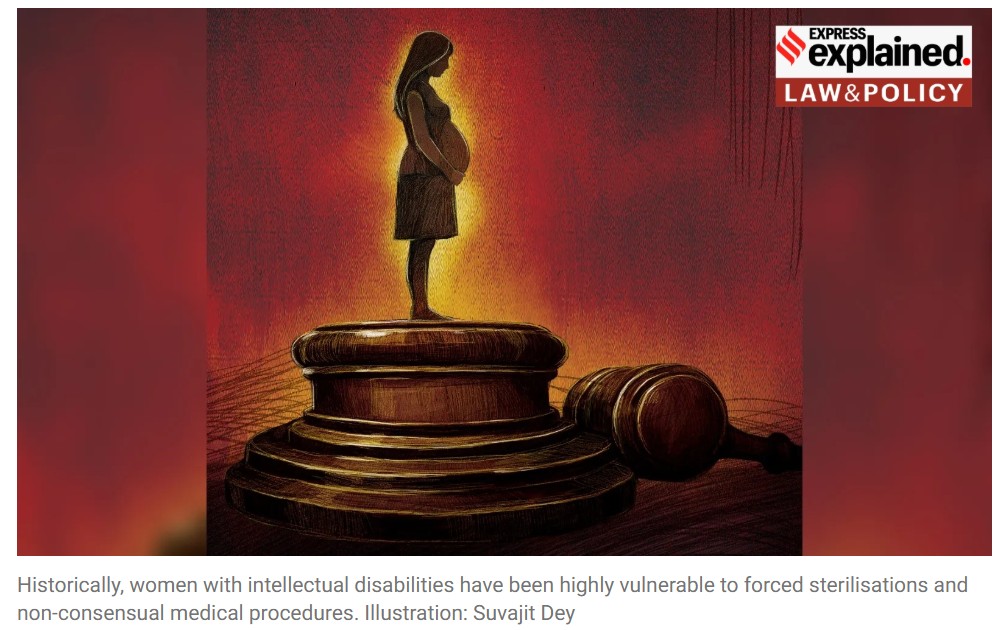
The Karnataka High Court recently permitted a total abdominal hysterectomy (surgical removal of the uterus) for a 23-year-old woman with severe intellectual and developmental disabilities after a medical board concluded that she lacked the capacity to provide informed consent and that the procedure was medically necessary. The judgment has once again highlighted the legal and ethical issues surrounding consent, reproductive autonomy, and the rights of persons with disabilities.
The Core Legal Issue: Informed Consent
Informed consent is a fundamental principle of medical ethics and law. Before any major medical procedure, a patient must voluntarily understand the nature, purpose, risks, and consequences of the treatment and provide free consent.
A legal dilemma arises when a person with severe intellectual disability lacks the cognitive capacity to make such decisions. In such cases, neither doctors nor family members can unilaterally authorise irreversible medical procedures. Judicial intervention becomes necessary to ensure that the person's rights and welfare are protected.
Doctrine of Parens Patriae
Courts exercise the doctrine of Parens Patriae (Latin for "parent of the nation") while dealing with individuals who are incapable of protecting their own interests.
Under this doctrine, the court acts as a guardian and determines what would serve the best interests of the individual by considering medical evidence, dignity, bodily integrity, and overall welfare. The objective is not to substitute the person's autonomy unnecessarily but to protect vulnerable individuals where informed decision-making is impossible.
Legal Framework
The principal legislation governing such situations is the Rights of Persons with Disabilities Act, 2016 (RPwD Act).
Section 10 of the Act explicitly prohibits subjecting any person with a disability to a medical procedure resulting in infertility without their free and informed consent. The provision was enacted to prevent the historical practice of forced sterilisation of women with intellectual disabilities, often carried out under the guise of convenience or protection.
Consequently, any departure from this principle requires strict judicial scrutiny.
Supreme Court Guidelines on Hysterectomies
In Dr. Narendra Gupta v. Union of India (2023), the Supreme Court addressed the growing incidence of unnecessary hysterectomies, particularly among women from economically weaker sections.
The Court held that such practices violate the Right to Health under Article 21 and directed all States and Union Territories to implement the Union Health Ministry's 2022 Guidelines on Preventing Unnecessary Hysterectomies. It also ordered the establishment of monitoring committees at the national, state, and district levels and directed action, including blacklisting, against hospitals performing medically unjustified hysterectomies without informed consent.
Abortion and Intellectual Disability
The legal position regarding abortion presents a distinct challenge.
Under the Medical Termination of Pregnancy (MTP) Act, 1971, a guardian may consent to abortion only in the case of a woman suffering from mental illness.
However, the law does not extend this provision to women with intellectual disabilities. Their own consent remains legally mandatory, even where cognitive capacity is severely impaired. This has resulted in several complex judicial interventions involving pregnancies arising from sexual assault.
Important Judicial Decisions
Some landmark judgments shaping this area include:
- Suchita Srivastava v. Chandigarh Administration (2009): The Supreme Court held that reproductive autonomy is part of Article 21, and clarified that intellectual disability is distinct from mental illness.
- Z v. State of Bihar (2017): The Court awarded compensation to an HIV-positive rape survivor after unlawful denial of abortion due to insistence on third-party consent.
- Orissa High Court (2020): Refused termination of an advanced pregnancy on medical grounds but directed compensation and comprehensive postnatal care.
- Gujarat High Court (2024): Permitted termination of a 28-week pregnancy of a minor tribal girl with intellectual disability after medical experts concluded that continuation would seriously endanger her physical and psychological well-being.
Autonomy versus Best Interests
The legal debate centres on balancing two equally important constitutional principles.
On one hand is reproductive autonomy, recognised as part of the Right to Life and Personal Liberty under Article 21 and reinforced by the United Nations Convention on the Rights of Persons with Disabilities (UNCRPD), to which India is a signatory.
On the other hand is the best interests principle, which courts invoke when an individual genuinely lacks the capacity to make informed decisions. Judicial intervention seeks to ensure that any restriction on personal autonomy is limited, proportionate, and solely aimed at protecting the person's health, dignity, and welfare.
Significance
The Karnataka High Court's decision highlights the complex intersection of constitutional rights, disability law, medical ethics, and reproductive justice. Indian courts have consistently sought to balance the autonomy of persons with disabilities with the duty to protect those who are unable to make informed decisions independently. The evolving jurisprudence reflects a rights-based approach that prioritisesdignity, bodily integrity, informed consent, and judicial oversight, while ensuring that irreversible medical procedures are undertaken only when demonstrably necessary and in the individual's best interests. The issue remains significant for governance, healthcare regulation, disability rights, and the protection of fundamental rights under Article 21.