
The Microplastic Crisis: From Chennai’s Coast to Global Regulatory Frontiers
- 30 Mar 2026
In News:
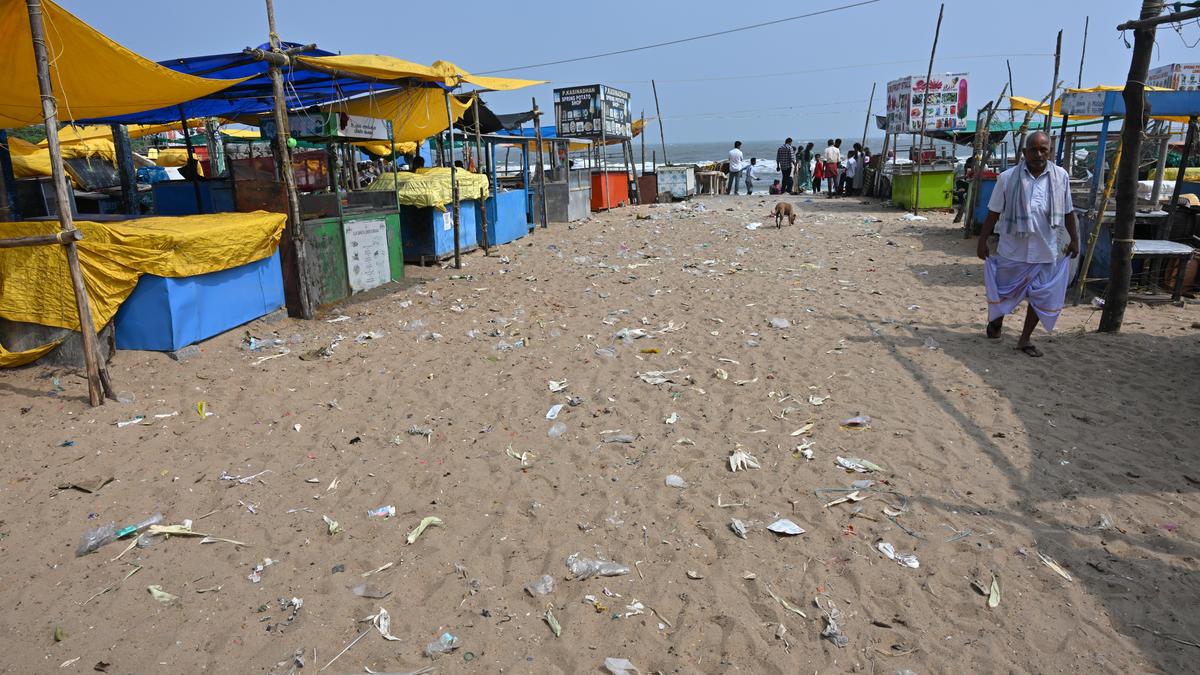
A recent 2026 study on Chennai’s beach sediments has shifted the focus of plastic pollution discourse. While the numerical abundance of microplastics in Chennai is lower than some global averages, the high prevalence of nylon fibres, mostly from fishing gear and synthetic textilespresents a disproportionately high ecological risk. This highlights a critical shift in environmental science: the type, shape, and chemical aging of polymers are more significant than their simple quantity.
Defining the Threat: Microplastics and Nanoplastics
Microplastics are solid plastic particles generally defined as being less than 5 mm in size.
- Primary Microplastics: Intentionally manufactured at microscopic scales.
- Examples:Microbeads in cosmetics (exfoliants) and Nurdles (pre-production plastic pellets).
- Secondary Microplastics: Formed through the fragmentation of larger plastic items (bottles, bags, tires) due to photodegradation (UV exposure), mechanical abrasion, and biological decay.
- Nanoplastics: Particles smaller than 1 micrometer. Due to their colloidal nature, they can bypass biological membranes, including the blood-brain barrier and the placental barrier.
The Ecological and Health "Perfect Storm"
The danger of microplastics extends beyond physical ingestion; they act as chemical and biological vectors:
- Biomagnification: Microplastics are "hydrophobic" (water-repelling), causing them to absorb Persistent Organic Pollutants (POPs) like DDT and heavy metals from seawater. As these are consumed by zooplankton and move up the food chain to apex predators (and humans), the toxin concentration increases exponentially.
- The Plastisphere & AMR: The "Plastisphere" refers to the thin biofilm of microorganisms that forms on plastic debris. This crowded environment acts as a "Trojan Horse" for superbugs, facilitating the rapid exchange of Antibiotic Resistance Genes (ARGs), thereby accelerating Antimicrobial Resistance (AMR).
- Endocrine Disruption: Additives like BPA (Bisphenol A) and Phthalates leach into the body, acting as hormone mimics that interfere with reproductive health and fetal development.
India’s Evolving Regulatory Framework
India has significantly updated its legislative toolkit to address the lifecycle of plastics:
- Plastic Waste Management Rules (2024/2025): Formally defined microplastics (1 to 1,000 microns).
- Mandatory QR/Barcoding: Introduced in 2025 for real-time tracking of plastic packaging via a centralized portal.
- Extended Producer Responsibility (EPR) 2.0: Moves beyond mere collection to Recycled Content Targets. For 2026–27, Category I (Rigid Plastics) must contain at least 40% recycled material.
- Failure to comply invokes the "Polluter Pays" principle through Environmental Compensation.
- National Plastic Pollution Reduction Campaign (NPPRC): Launched in late 2025, it targets Gram Panchayats to prevent agricultural mulch and plastic from degrading into rural soil.
Global Initiatives
- UN Global Plastics Treaty: A pending legally binding instrument aimed at addressing the full lifecycle of plastics.
- IMO Strategy (2026 Draft): Recommends a mandatory code for the maritime transport of nurdles to prevent catastrophic spills at sea.
- EU Restrictions: A phased ban on "intentionally added" microplastics in detergents and artificial turf.
Way Forward: A Risk-Based Approach
To move beyond current limitations, holistic management must include:
- Upstream Solutions: Mandating "Euro 7" style wear-and-tear standards for synthetic tires and providing tax incentives for clothing brands using >80% natural fibres (hemp, cotton, wool).
- Infrastructure Upgrades: Transitioning urban Sewage Treatment Plants (STPs) to Tertiary Treatment (Membrane Bioreactors), which can filter out up to 99% of microplastics.
- Standardization: Integrating microplastic concentration parameters into the National Ambient Air Quality Standards (NAAQS) and BIS drinking water standards.
- Green Chemistry: Funding startups focused on seaweed or starch-based polymers that mineralize completely in the environment rather than fragmenting into "invisible" particles.
Conclusion:
The microplastic crisis has transitioned from a "litter problem" to a biogeochemical emergency. As seen in Chennai, the focus must shift from volume-based monitoring to risk-based regulation, targeting high-risk polymers like nylon and synthetic rubber at their source.